Goal
Capture and radiate heat from candle flames to warm indoor spaces, providing a low-cost, portable heating solution.
Problem
Wasted heat from candles and need for a simple, portable heat source during power outages or in small spaces.
Concept Summary
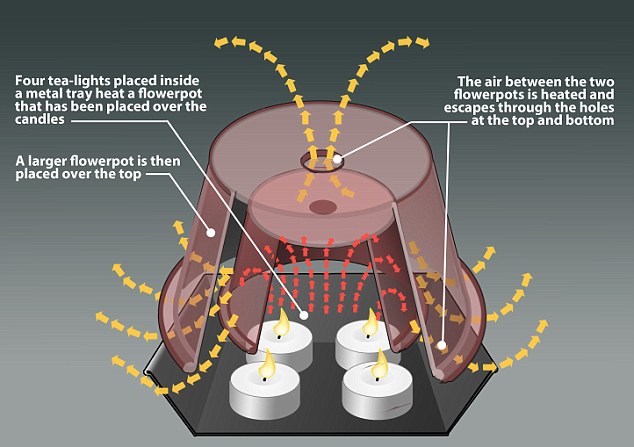
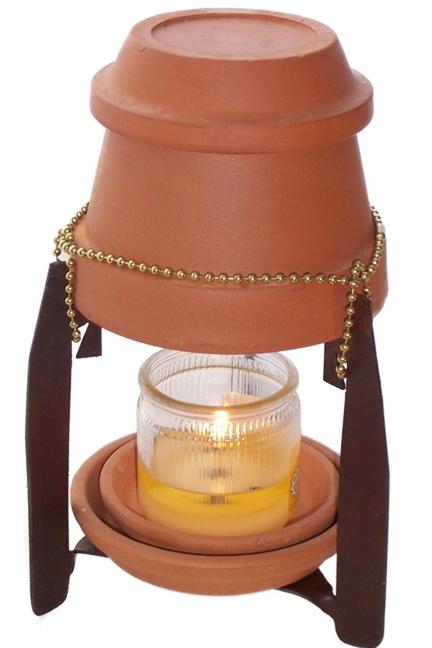
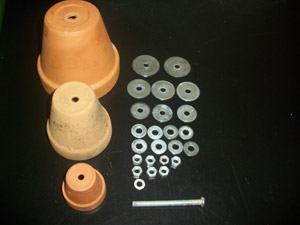
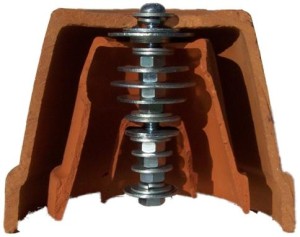
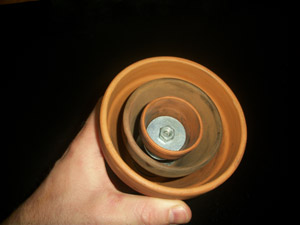
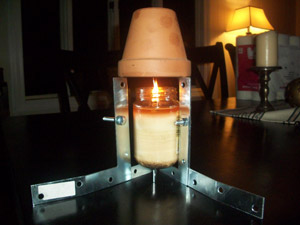
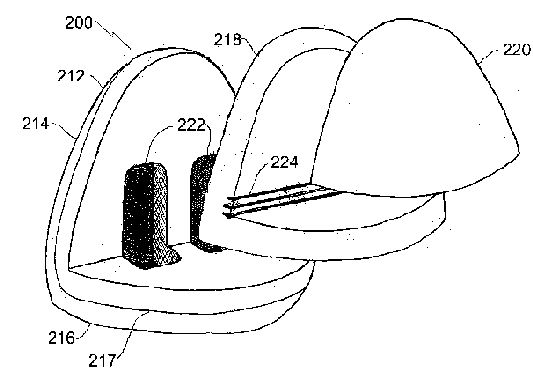
A ceramic radiator suspended above a candle flame on a steel frame absorbs the flame's heat, transfers it through nested ceramic modules, and radiates warm air into the room. The system can be built from steel, ceramic, wood, glass, and paraffin wax candles.
Principles
- Heat conduction
- Thermal radiation
- Natural convection
- Heat exchange via nested ceramic layers
Scientific Domains
Materials
- Ceramic
- Solid steel
- Wood
- Glass (clear plate)
- Paraffin wax
- Plastic (candle core)
Mechanisms of Action
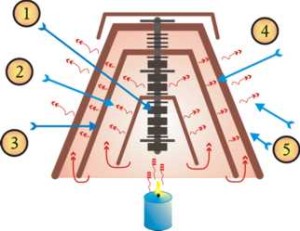
- Flame heats steel inner core
- Heat conducts to inner ceramic modulator
- Heat is transferred outward through nested ceramic modules
- Outer ceramic surface radiates heat
- Warm air circulates by convection
Energy Sources
Applications
- Room heating
- Emergency heating during power outages
- Camping and RV heating
- Small greenhouse heating
Claimed Performance
Surface temperature can reach that of an old-fashioned steam radiator; four candles raise surface temperature by ~100 deg F.
Experimental Evidence
User testimonial: "It actually takes the chill off in a room... surface can get as warm as an old fashioned steam radiator." YouTube video demonstration shows four candles raising surface temperature 100 deg F.
Replication Status
Purchased by a private consumer; DIY videos demonstrate construction and temperature increase with four candles.
Limitations
- Low total heat output compared to conventional heaters
- Requires continuous candle fuel
- Potential fire hazard if not monitored
- Heat output limited by number of candles