Goal
Convert biomass waste into stable charcoal (biochar) to sequester carbon and reduce atmospheric CO_2.
Problem
High energy consumption of traditional charcoal production and the need for effective, long-term carbon sequestration.
Concept Summary
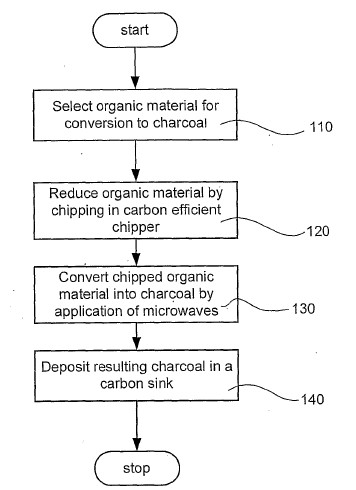
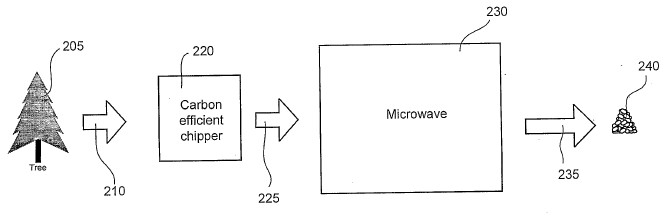
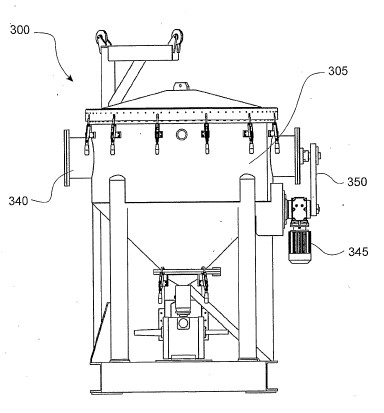
Carbonscape uses microwave dielectric heating to carbonise chipped organic material (wood waste, pine, corn, sewage, etc.) into charcoal. The process is claimed to be more energy-efficient than conventional pyrolysis and the resulting biochar can be returned to soil as a permanent carbon sink.
Principles
- Microwave dielectric heating
- Carbonisation (pyrolysis) of biomass
- Carbon sequestration in solid form
Scientific Domains
Materials
- Wood chips
- Pine waste
- Corn waste
- Sewage sludge
- Other organic biomass
Mechanisms of Action
- Microwave energy penetrates biomass chips, heating them internally
- Thermal decomposition drives off volatiles, leaving carbon-rich charcoal
- Charcoal is stored or applied to soil, locking carbon for millennia
Energy Sources
Applications
- Carbon dioxide removal
- Soil improvement
- Renewable charcoal production
- Waste biomass valorisation
Claimed Performance
Industrial-scale unit converts 40-50 % of wood debris into charcoal; one tonne of CO_2 can be fixed as charcoal per day; process is "vastly more energy efficient" than conventional methods.
Experimental Evidence
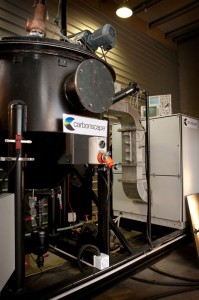
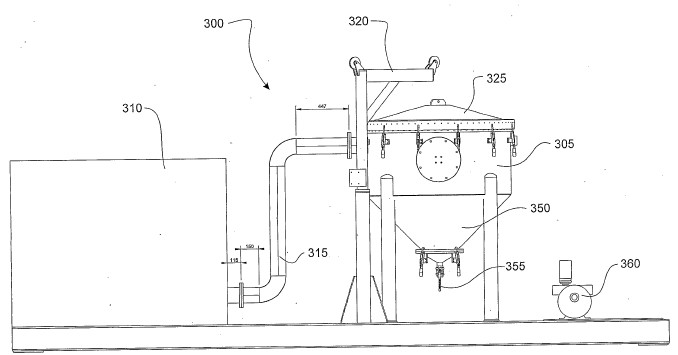
Batch-scale production has been demonstrated with a prototype machine ("black phantom") that fits in a 40-foot container; pilot runs on pine waste in commercial forests; patent WO2008079029 describes the method.
Replication Status
Batch-scale production achieved; prototype built and operated on site.
Limitations
- Scale-up from batch to continuous large-scale operation
- Electricity demand for microwave generators
- Economic viability not yet demonstrated
- Logistics of on-site deployment in remote forests
Red Flags
- Claims of "world-first" and "multi-billion dollar earning potential" may be overstated