Goal
To investigate and characterize superatom clusters, especially aluminum-iodine clusters, and explore their use as building blocks for new nanoscale materials.
Problem
Understanding how finite atomic clusters exhibit properties distinct from bulk elements and extending periodic-table concepts to cluster-based chemistry.
Concept Summary
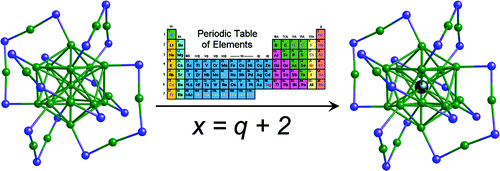
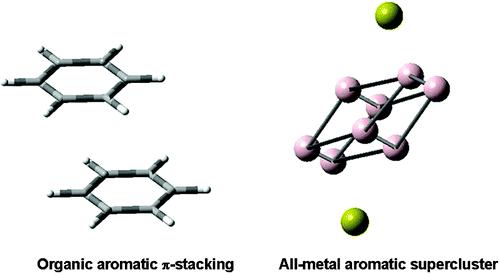
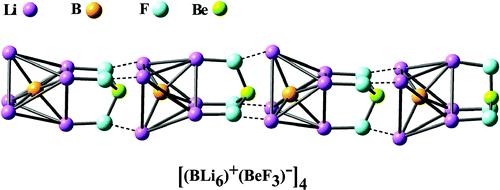
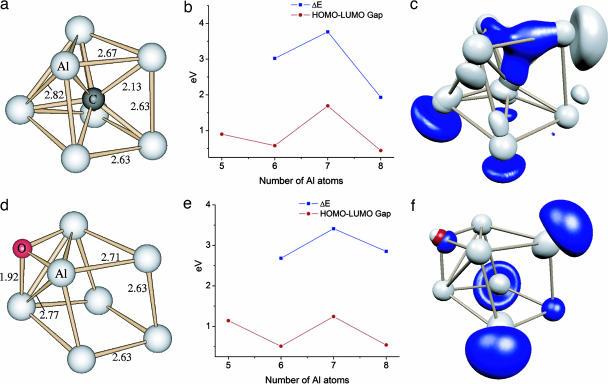
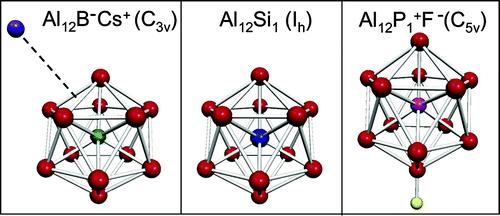
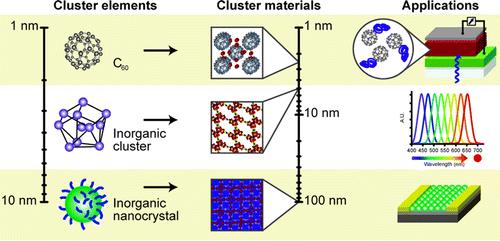
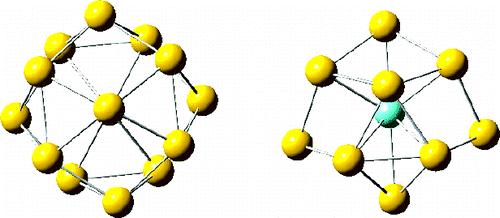
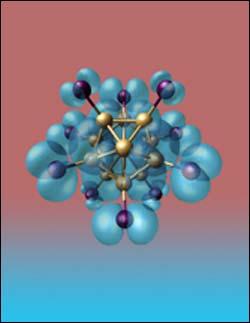
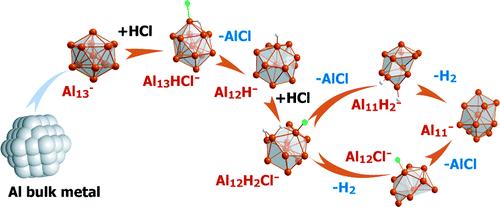
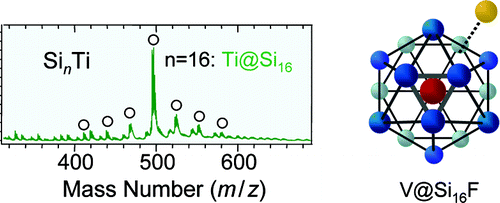
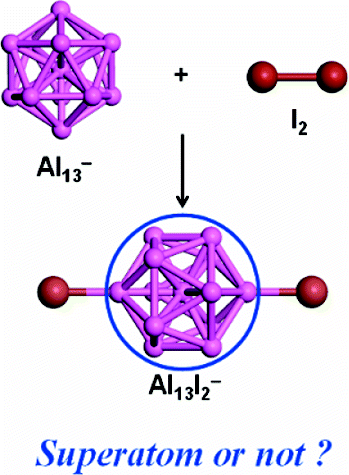
Superatom clusters are groups of atoms whose collective electrons occupy delocalized orbitals that mimic the electronic structure of single atoms. Certain aluminum clusters (e.g., Al13I^-, Al14I_3^-) display closed-shell electron counts (magic numbers) that give them halogen-like or alkaline-earth-like reactivity. The research combines gas-phase synthesis, mass-spectrometric analysis, and theoretical jellium-model calculations to identify stable cluster compositions and propose their use as modular units for designing novel materials.
Principles
- Jellium model of delocalized electrons
- Magic numbers and shell closure
- Quantum confinement in finite clusters
- Cluster-iodine bonding energetics
Scientific Domains
Materials
- Aluminum
- Iodine
- Helium
- Lithium
- Fluoride
- Platinum
- Rubidium
Mechanisms of Action
- Electron shell filling in atomic clusters
- Stabilization of clusters by achieving closed-shell electron counts
- Selective attachment of halogen atoms to cluster cores
Applications
- Catalysis
- Design of novel electronic materials
- Nanodevice components
- Tailored magnetic or optical nanoclusters
Claimed Performance
Demonstrated formation and enhanced stability of Al13I^- (superhalogen) and Al14I_3^- (alkaline-earth-like) clusters with specific electron counts.
Experimental Evidence
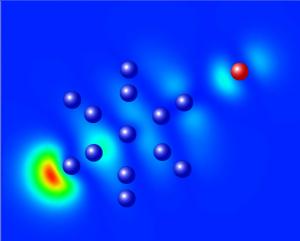
Mass spectrometry identified Al13I^- as the dominant product of Al_n^- + I_2 reactions; reactivity studies showed Al13I^- does not react with O_2; theoretical calculations located the extra electron opposite the iodine atom, supporting superhalogen behavior.
Replication Status
Experimental observations reported in multiple peer-reviewed studies (Science 2005, J. Phys. Chem. C 2009, JACS 2008).
Limitations
- Requires ultra-high vacuum and specialized mass-spectrometry equipment
- Scalability to bulk material synthesis not yet demonstrated
- Stability of clusters under ambient conditions remains uncertain
Red Flags
- Some studies (e.g., Han & Jung 2008) dispute the superatom interpretation for halogenated aluminum clusters
- Claims of extending the periodic table may be speculative without demonstrated bulk applications