Goal
Restore visual perception in patients with photoreceptor degeneration by making retinal ganglion cells light-sensitive.
Problem
Blindness caused by loss of retinal rods and cones (e.g., retinitis pigmentosa, macular degeneration).
Concept Summary
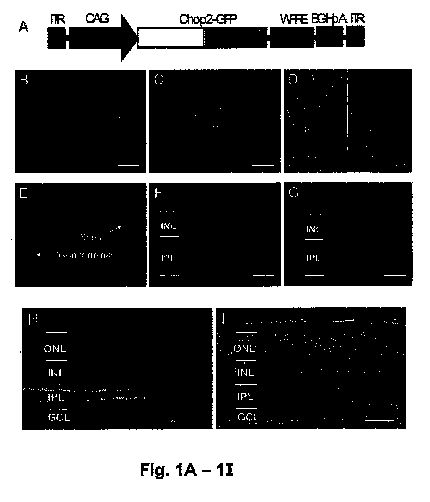
A light-gated ion channel protein (channelrhodopsin-2, ChR2) derived from algae is delivered to retinal ganglion cells via gene-therapy vectors. When illuminated, the protein opens, allowing ions to flow and generate neuronal activity that the brain interprets as visual signals, bypassing dead photoreceptors.
Detailed Description
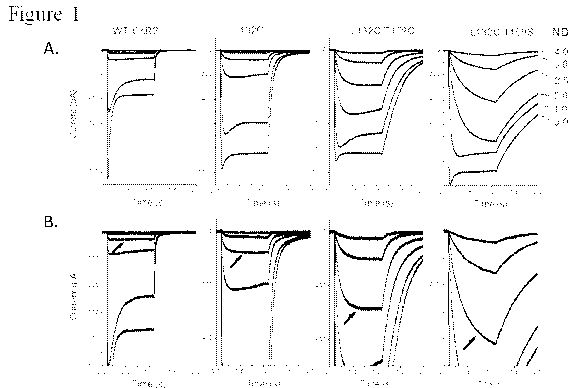
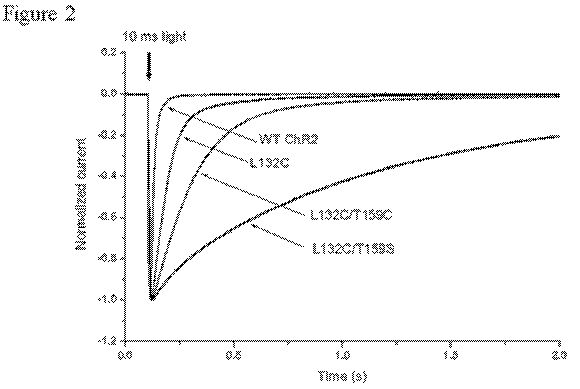
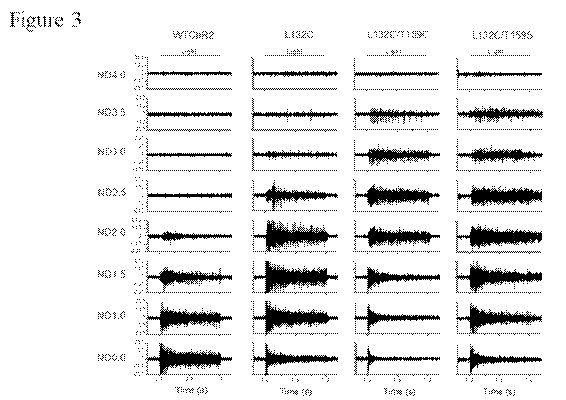
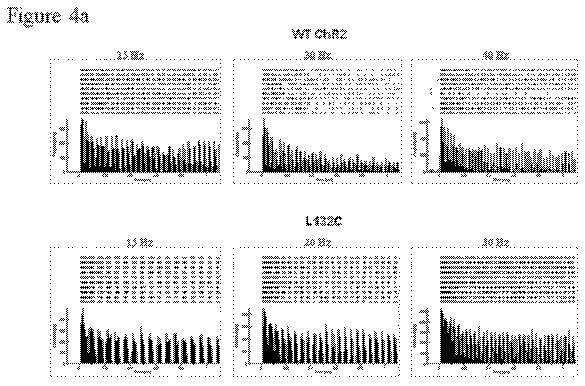
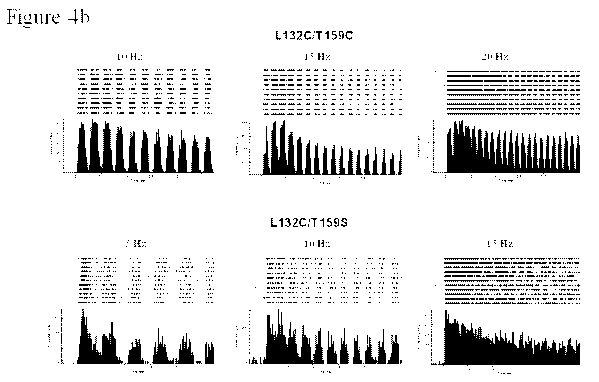
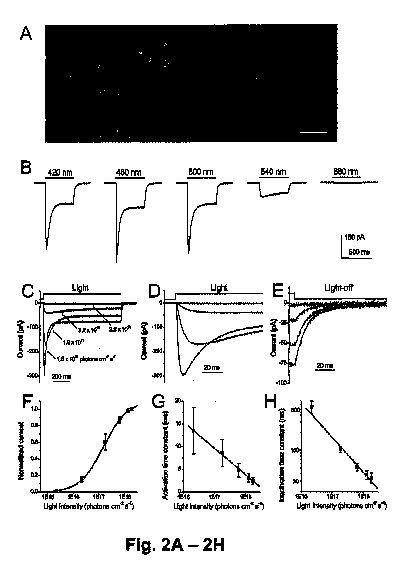
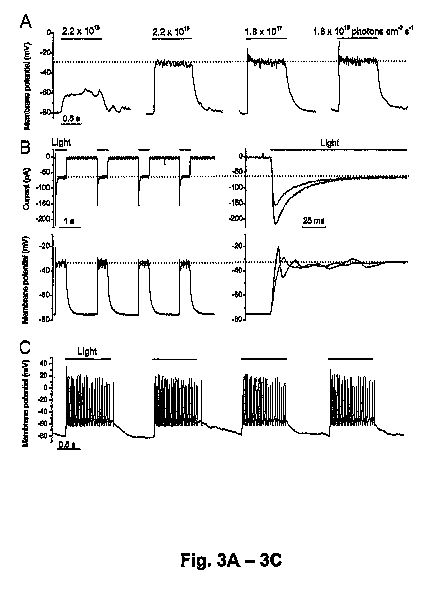
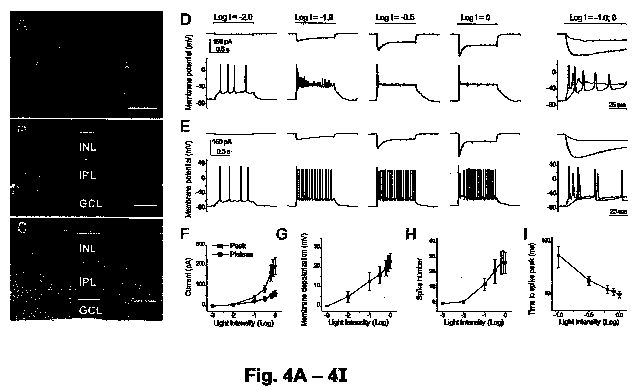
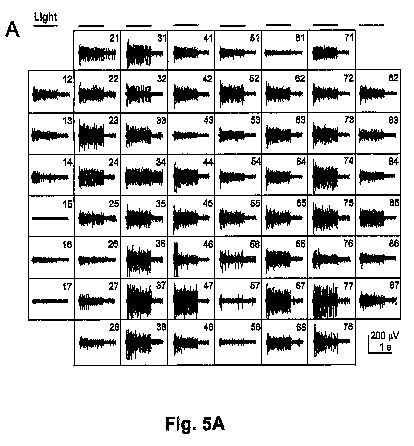
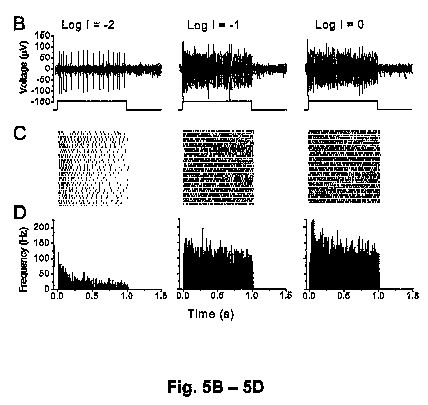
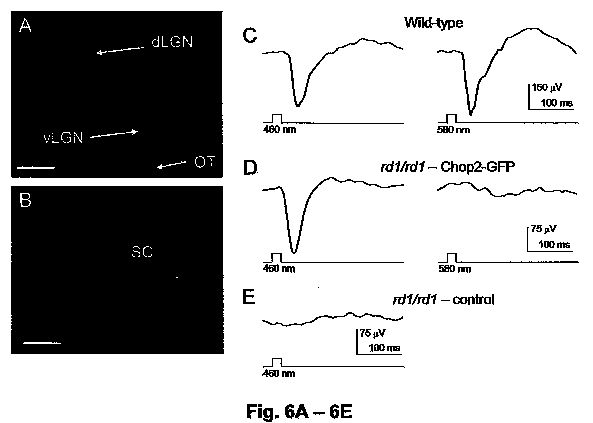
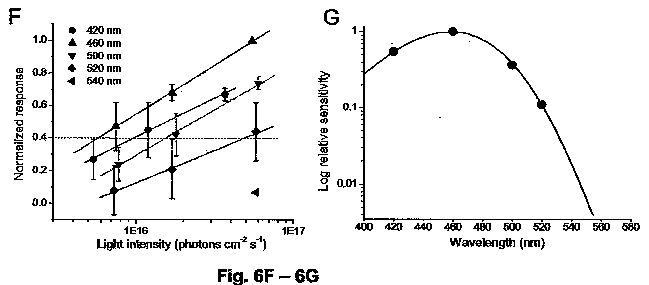
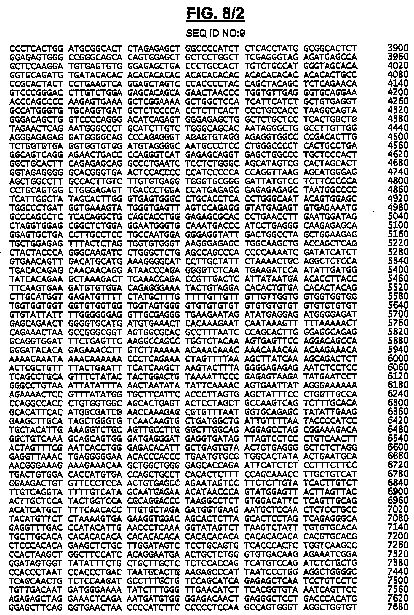
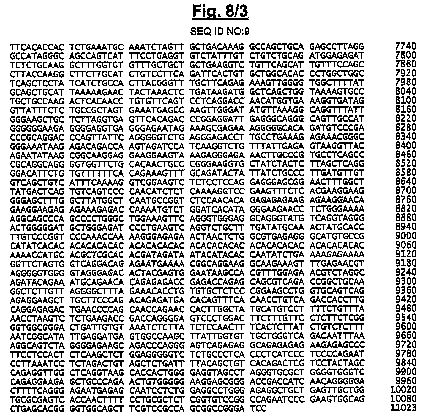
Channelrhodopsin-2 (ChR2) is a membrane-bound protein that forms a light-activated ion channel. In the native form it is ~2,000-times less sensitive than human cones, but mutant variants (e.g., L132C, T159C, double mutants) markedly improve light sensitivity. Researchers (Pan, 2006) injected a gene-therapy construct encoding ChR2 into the retinas of mice lacking photoreceptors; within weeks the mice passed standard vision tests. RetroSense Therapeutics licensed the technology, obtained FDA clearance, and plans to treat 15 blind patients with a single intra-retinal injection of a viral vector carrying the ChR2 gene. The therapy targets surviving retinal ganglion cells, enabling them to directly transduce light into electrical signals that travel to the visual cortex. The approach avoids the need for external hardware such as retinal prostheses.
Principles
- Optogenetics
- Gene therapy
- Protein engineering
- Light-gated ion channel activation
Scientific Domains
Materials
- Channelrhodopsin-2 protein (native and mutant forms)
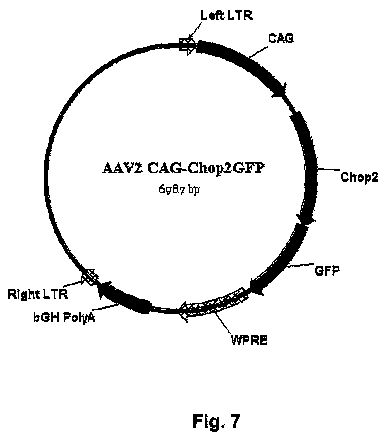
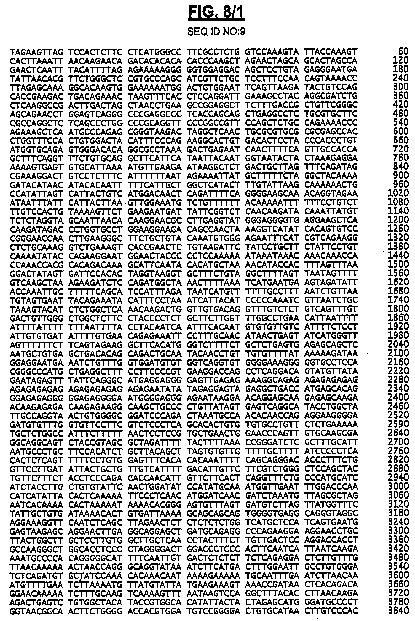
- DNA plasmids / viral vectors encoding ChR2
- All-trans-retinal chromophore
- AAV or lentiviral delivery particles
Mechanisms of Action
- Expression of ChR2 in retinal ganglion cells
- Light-induced opening of ion channel
- Depolarization of ganglion cells
- Transmission of visual signal to brain
Energy Sources
Applications
- Treatment of blindness due to photoreceptor loss
- Therapeutic approach for retinitis pigmentosa
- Potential use in macular degeneration
Claimed Performance
Restored vision in blind mice within three months after a single treatment; human trials planned for 15 patients with expected partial vision recovery (monochrome, low-light sensitivity). Mutant ChR2 variants increase light sensitivity to near outdoor lighting levels.
Experimental Evidence
2006 mouse study showed complete vision restoration after ChR2 gene delivery; 2015 FDA clearance for human trial; patent US2015044181 describing mutant ChR2 compositions and therapeutic methods.
Replication Status
FDA-approved human trial scheduled (RetroSense Therapeutics) - no independent replication reported.
Limitations
- Low light sensitivity of native ChR2 (requires bright illumination)
- Monochromatic vision; poor color discrimination
- Dependence on efficient gene delivery and expression
- Potential immune response to viral vectors
- Uncertain long-term safety and durability
Red Flags
- Claims of "cure" may be overstated before human data are available