Goal
Provide superior fluid mixing by creating and organizing vortexes that periodically implode.
Problem
Inefficient mixing in existing fluid-air systems.
Concept Summary
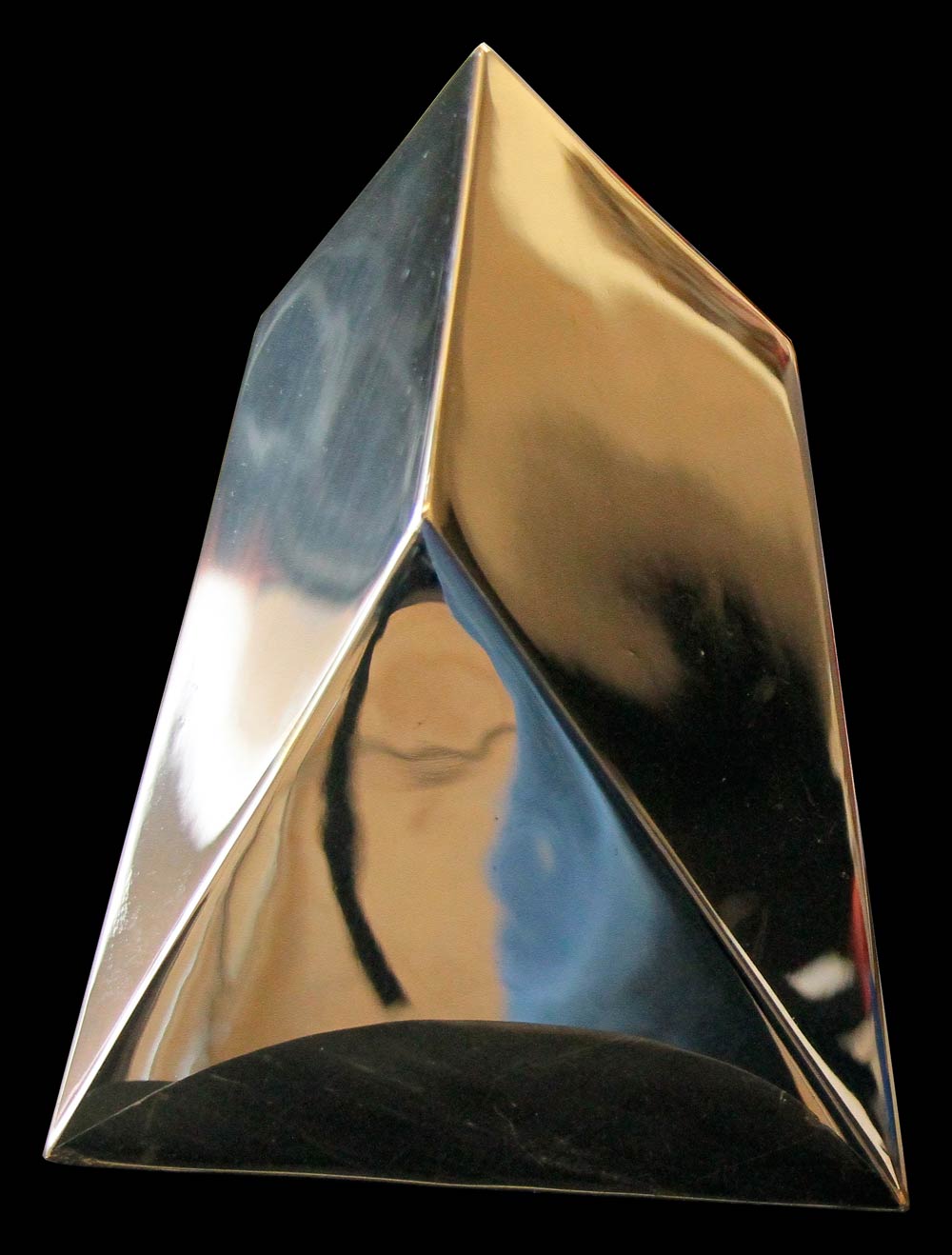
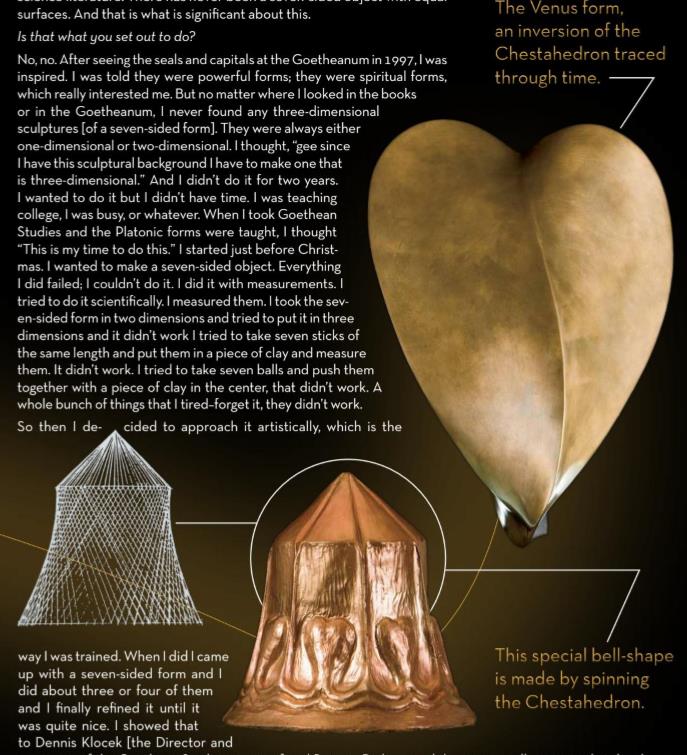
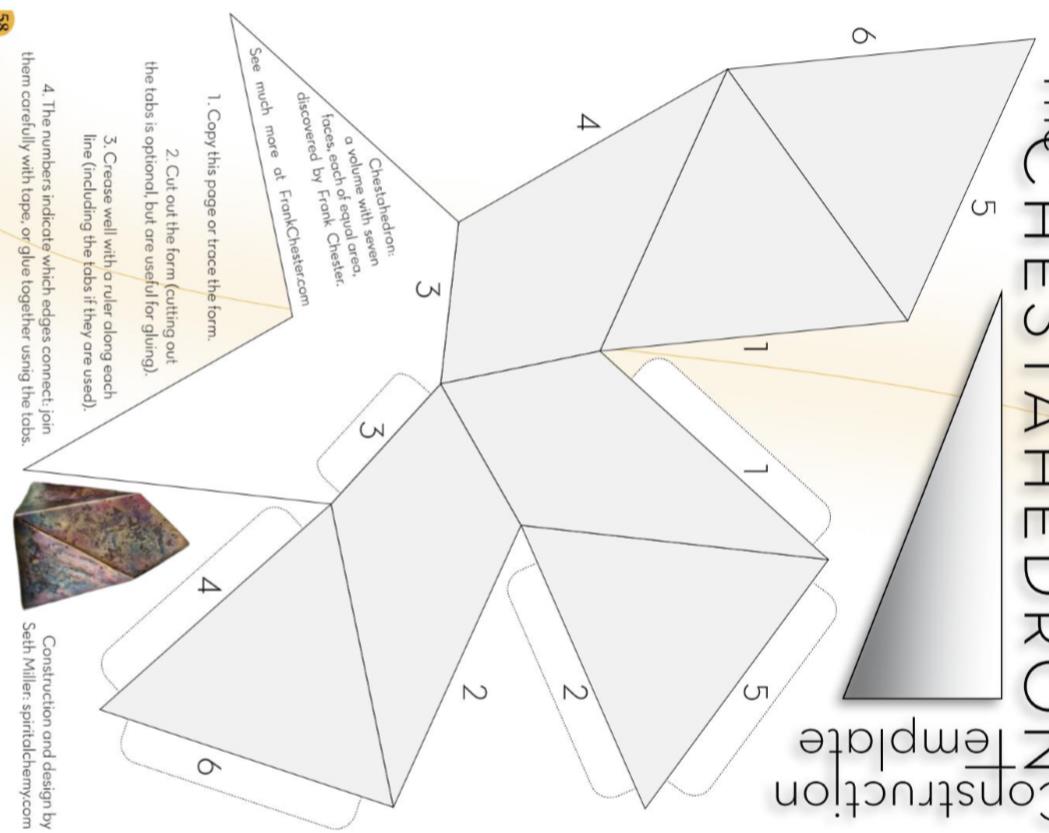
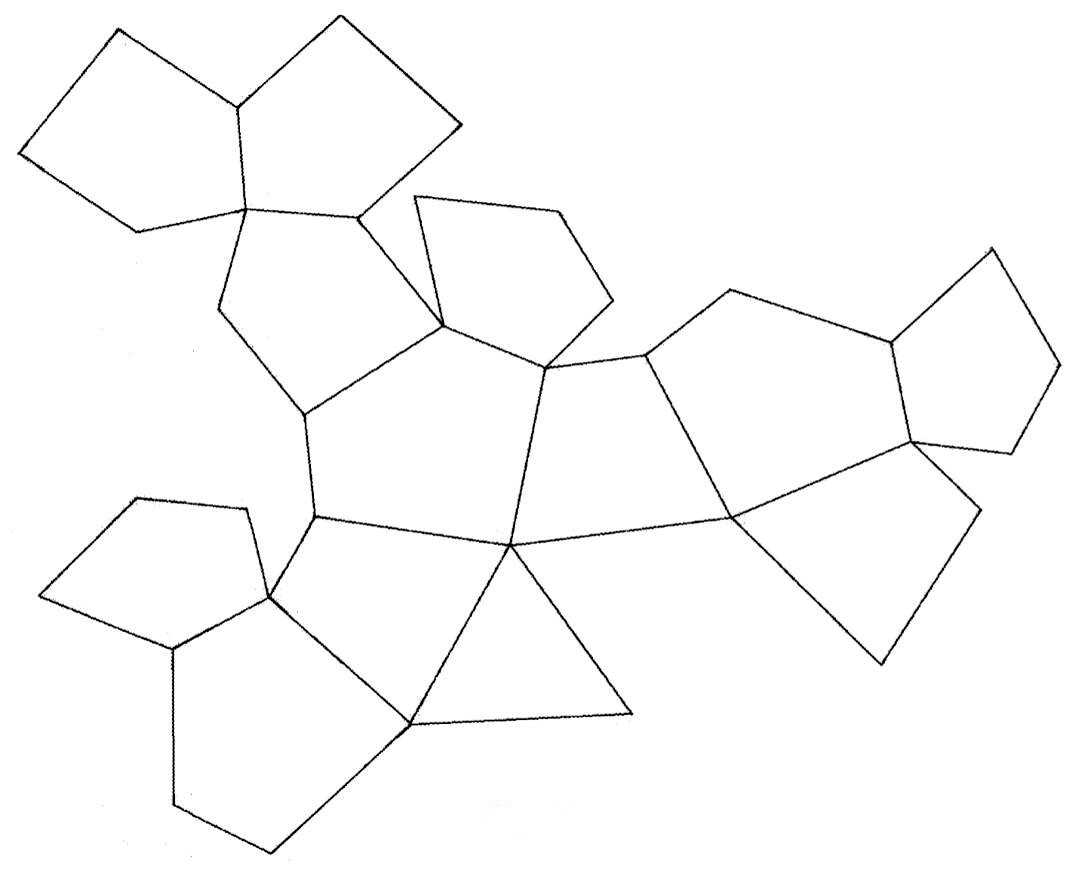
The invention uses a set of three symmetrical mixing blades, each formed from a flat planar sheet with four fold lines and a small removed sector. The blades are attached to a central shaft at an equilateral-triangle arrangement (~=26 deg from vertical). The geometry creates vortexes that periodically implode, delivering enhanced mixing while using minimal material.
Detailed Description
The patent describes a mixing blade (100) comprising a flat base (110) and several flap sections (115, 120, 125, 130). A portion of the base circle (~=1 radian) is removed to form the blade shape. Three identical blades are mounted on a shaft (300) forming a triangular pattern. The flap angles (~=45-65 deg ) and fold lines (12 deg , 42 deg , 50 deg ) are chosen to promote vortex formation and implosion when the assembly rotates in a fluid. The design claims efficient material use, easy attachment, and superior mixing dynamics.
Principles
- Fluid dynamics
- Vortex formation
- Geometric folding
- Symmetry and equilateral-triangle arrangement
Scientific Domains
Materials
- Metal sheet
- Plastic sheet
- Flat planar material
Mechanisms of Action
- Creation of rotating vortexes
- Periodic vortex implosion
- Enhanced shear and turbulence from blade geometry
Energy Sources
Applications
- Industrial fluid mixing
- Chemical processing
- HVAC air mixing
- Water treatment
- Artistic sculpture
Claimed Performance
Superior mixing efficiency compared with conventional blade designs.
Limitations
- No quantitative performance data provided
- Requires precise fabrication of fold lines
- Scalability to large-scale industrial systems not demonstrated
Red Flags
- Claims of "superior mixing" lack supporting experimental data
- No peer-reviewed validation or independent replication