Goal
Simultaneously remove nitrogen oxides (NOx), carbon particles, and unburned hydrocarbons from diesel engine exhaust using a single electrochemical filter unit.
Problem
High emissions of NOx, particulates, and hydrocarbons from diesel engines that are subject to strict EU regulations; existing solutions require multiple separate components and expensive reagents such as urea.
Concept Summary
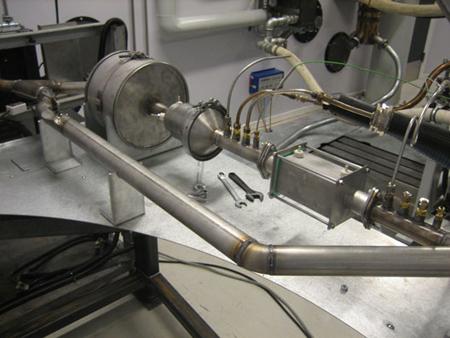
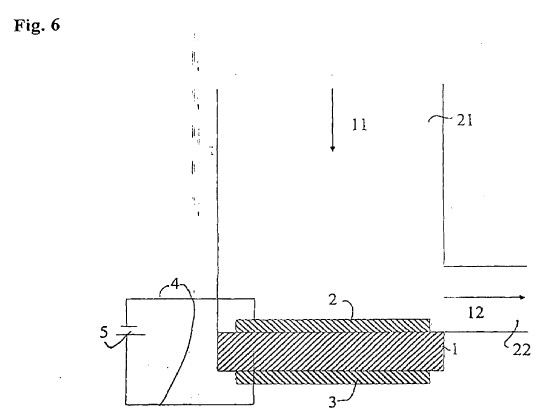
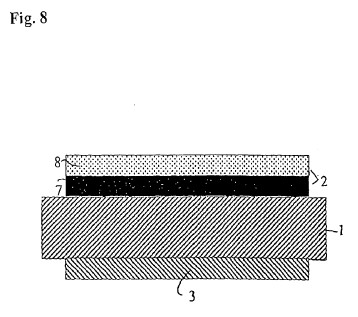
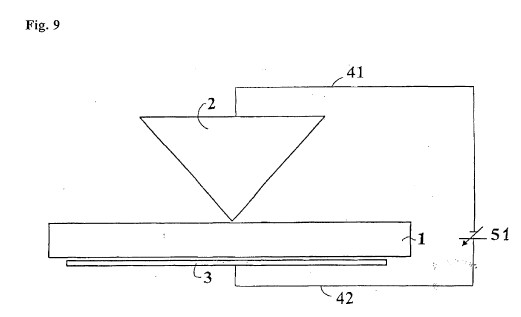
An electrochemical reactor placed in the exhaust stream contains a working electrode made of a conductive ceramic oxide (ABO_3 perovskite) that selectively reduces NOx to N_2 while minimizing oxygen reduction. The reactor also includes a counter electrode, an ion-selective electrolyte, and a NOx absorber that can be regenerated electrochemically. The system can be integrated as a single filter unit, lowering cost and potentially improving fuel efficiency.
Detailed Description
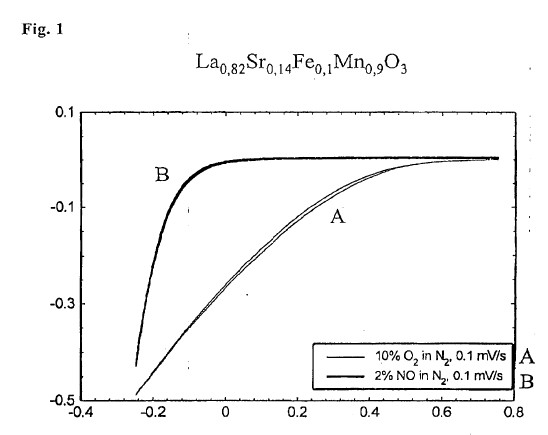
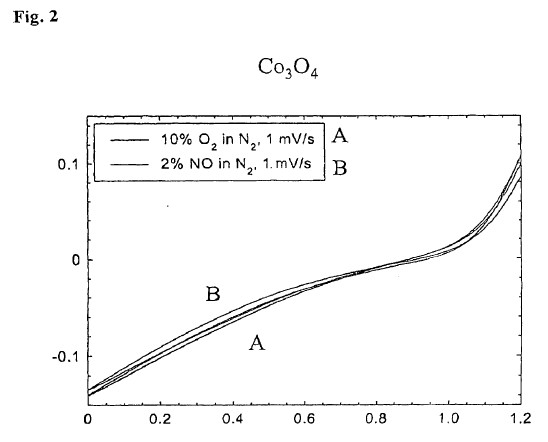
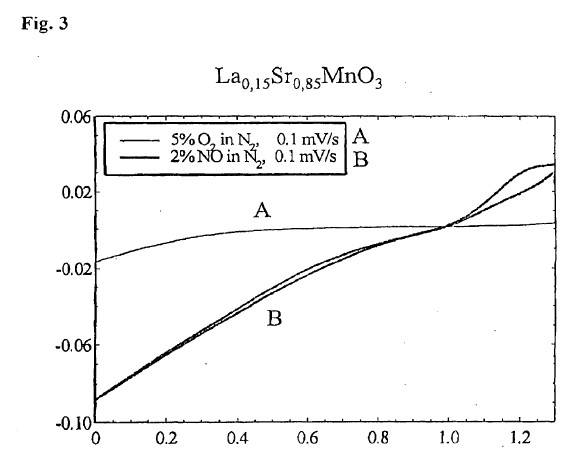
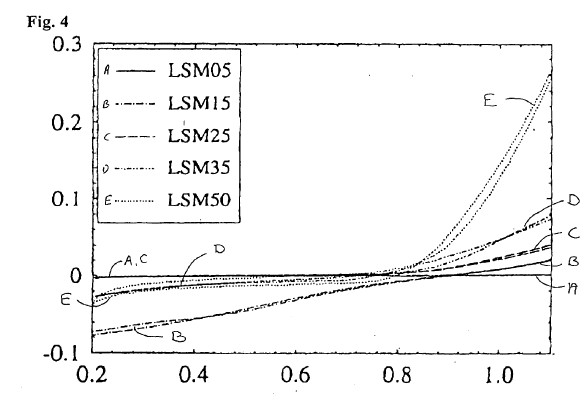
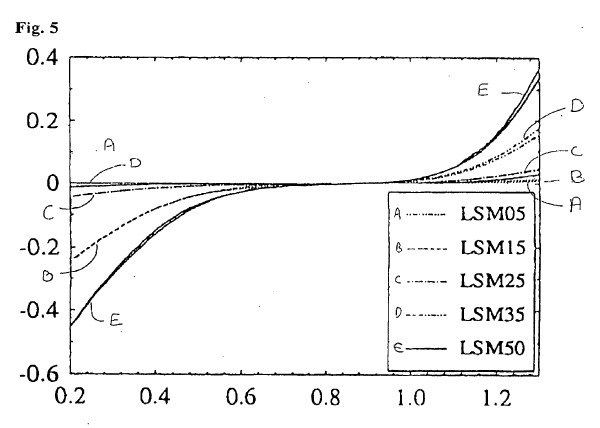
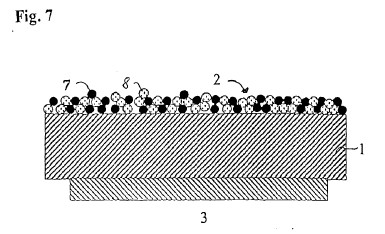
The invention describes a working electrode composed of an electric conductive ceramic oxide material with the general formula A_2A'(1-x)B_yB'(1-y)O_3_-Delta, where A/A' are large-size substitution metals (e.g., La, Gd, Y) and B/B' are smaller transition metals (e.g., Cr, Mn, Fe). A preferred composition is lanthanum manganite doped with strontium oxide (La_1_-_xSr_xMnO_3). The electrode is part of an electrochemical reactor that also contains a counter electrode and an ion-selective electrolyte. NOx is first adsorbed (e.g., on MgO or CaO) and then electrochemically reduced at the cathode, while O_2 reduction is suppressed by the tailored electrode composition. The reactor can be used in diesel exhaust, power-plant flue gas, or marine exhaust streams.
Principles
- Electrochemical reduction
- Selective catalytic reduction
- Ion-selective solid electrolyte conduction
- Perovskite-type ceramic electrode design
Scientific Domains
Materials
- Lanthanum manganite (LaMnO_3)
- Strontium oxide (SrO)
- Perovskite ABO_3 ceramic oxides
- MgO
- CaO
- Gadolinia-stabilized ceria
- Vanadium oxides
- Conductive perovskite (LSM)
- Transition metals (Cr, Mn, Fe, Co, Ni, etc.)
Mechanisms of Action
- Electrochemical reduction of NOx at the cathode producing N2
- Selective adsorption of NOx on alkaline earth metal oxides (e.g., MgO, CaO)
- Oxygen ion vacancy control in ceramic electrode to minimize O2 reduction
- Ion transport through a solid-state electrolyte
Energy Sources
Applications
- Diesel engine exhaust cleaning
- Power-plant flue gas purification
- Marine vessel emissions control
Limitations
- Requires continuous electrical power supply
- Long-term durability of ceramic electrode under high-temperature exhaust
- Scalability and cost of specialized perovskite materials not yet demonstrated