Goal
Generate and maintain a stable ball-lightning plasmoid that can be used to extract excess energy (zero-point/ free energy) for practical purposes.
Problem
Inability to reproducibly create ball-lightning and to harness its purported high energy output.
Concept Summary
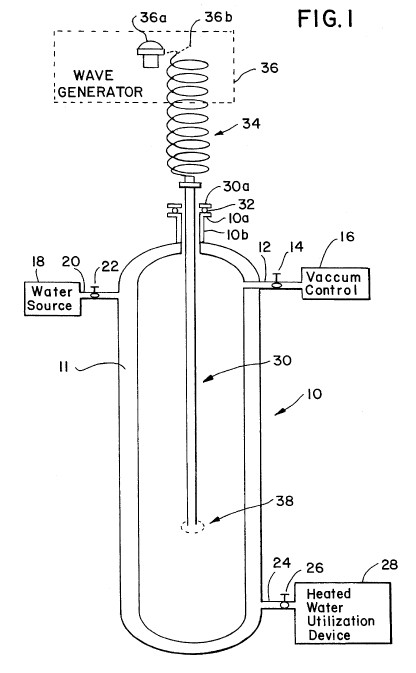
A low-pressure gas is subjected to RF energy (>1 MHz) to form a glow discharge. The gas pressure is then increased while continuing RF excitation, causing a transition to a new high-temperature plasma state that emits high-energy photons and heat. The excess energy is claimed to exceed the supplied RF power by several hundred percent and can be extracted as usable power.
Principles
- RF excitation of gas
- Glow discharge formation
- Pressure-induced plasma state transition
- Zero-point energy extraction hypothesis
Scientific Domains
Materials
- gas (unspecified, low-pressure)
- waveguide
- vacuum vessel
Mechanisms of Action
- Ionization of gas by RF fields
- Increase of internal temperature via pressure rise
- Emission of high-energy photons and heat
- Proposed coupling to vacuum zero-point fluctuations
Energy Sources
Applications
- Free-energy generation
- High-energy photon source
- Thermal power extraction
Claimed Performance
Energy output estimated at about 500 % of the RF energy supplied, with stable plasmoid lasting tens of seconds.
Experimental Evidence
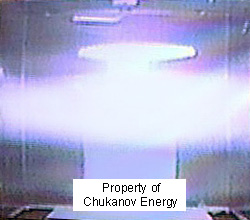
Video demonstration of the "Angelina IV" prototype producing a stable ball-lightning plasmoid for ~30 seconds; measurements of power consumption and emitted heat/photons reported by the inventor.
Replication Status
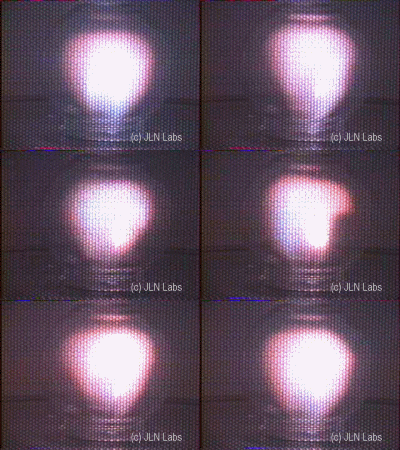
A replication attempt by JL Naudin Lab is referenced, but no independent verification is detailed.
Limitations
- Claims rely on inventor's own measurements; no peer-reviewed data
- Energy balance not independently verified
- Scalability and long-term stability not demonstrated
Red Flags
- Extraordinary free-energy claim without independent validation
- Reliance on anecdotal video evidence
- Potential for misinterpretation of measurement data