Goal
Vaporize municipal solid waste, reduce landfill volume, generate electricity and steam, and produce a vitrified slag for construction use.
Problem
Growing landfill capacity constraints, waste-related emissions, and the need for renewable energy from waste.
Concept Summary
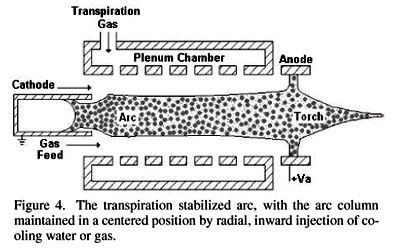
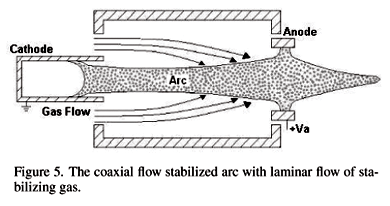
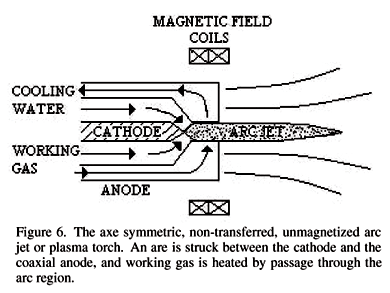
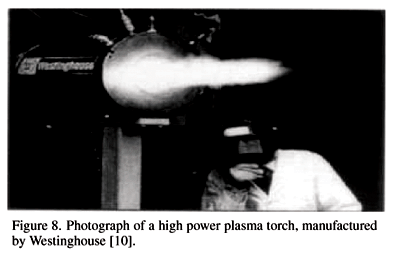
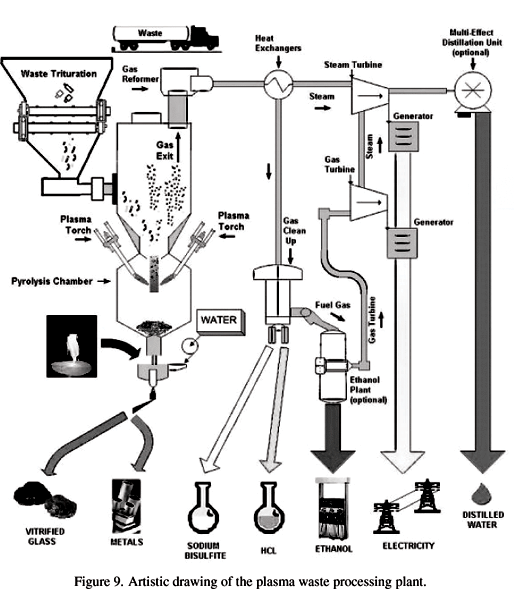
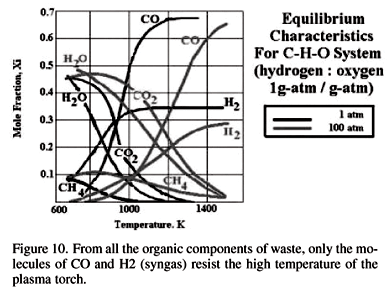
A high-temperature plasma-arc torch (up to 10,000 deg F) is used to gasify solid waste. The plasma decomposes organic material into syngas (H_2 + CO) that fuels turbines for electricity, while inorganic residues are vitrified into a glassy slag. The process operates in a closed loop, aiming for minimal emissions and a useful by-product.
Detailed Description
The system consists of several plasma-arc-equipped cupolas (or borehole-mounted torches) where waste is introduced on conveyor belts or drilled boreholes. An electric discharge creates a plasma arc that heats the waste to >10,000 deg F, instantly vaporizing organics and melting inorganics into a glassy rock. The resulting syngas is collected, cleaned, and burned in turbines to produce ~120 MW of electricity and ~80,000 lb of steam per day. The vitrified slag is sold as construction aggregate. The plant is designed to be self-sustaining, using roughly one-third of its own electricity for operation.
Principles
- High-temperature plasma heating
- Thermal gasification
- Vitrification of inorganic residues
- Syngas combustion for power generation
Scientific Domains
Materials
- Municipal solid waste
- Refractory linings (ceramic, metal)
- Electrode materials (copper, tungsten)
- Resulting glassy slag
Mechanisms of Action
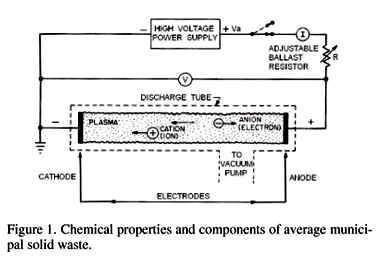
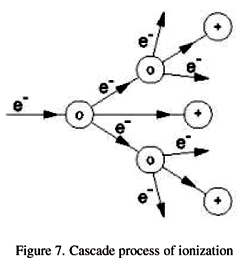
- Electrical discharge creates plasma arc
- Plasma transfers kinetic energy to waste, causing rapid heating
- Organic compounds thermally decompose into H_2/CO syngas
- Inorganic compounds melt and solidify as glassy slag
Energy Sources
Applications
- Municipal solid waste disposal
- Electricity generation from waste
- Construction material production (slag)
- Landfill volume reduction
Claimed Performance
Vaporize 3,000 tons of waste per day, generate ~120 MW electricity, produce 80,000 lb steam per day, and create slag at a rate of up to 600 tons per day. Estimated plant cost $425 M, recouped in ~20 years.
Experimental Evidence
The article cites two operational plasma-arc waste facilities in Japan, a French plant, and a planned 100,000-sq-ft plant in St. Lucie County, FL. Specific performance numbers (e.g., 120 MW) are projected, not yet measured.
Replication Status
Existing small-scale plants operate in Japan; a larger commercial plant is planned in Florida.
Limitations
- High capital cost ($425 M, $65/ton remediation)
- Significant electricity consumption for plasma arcs
- Need for robust emissions monitoring
- Scalability of plasma torch hardware
- Regulatory approvals for emissions
Red Flags
- Claims of self-sustaining electricity without external power
- Limited peer-reviewed performance data
- High per-ton remediation cost may limit economic viability