Goal
Increase combustion efficiency, reduce emissions, and precisely control flame shape and heat transfer in industrial combustion systems.
Problem
Inefficient fuel/air mixing, uneven temperature profiles, high pollutant emissions (PM, NOx, SOx, CO, hydrocarbons), and flame instability in boilers, kilns, furnaces, and turbines.
Concept Summary
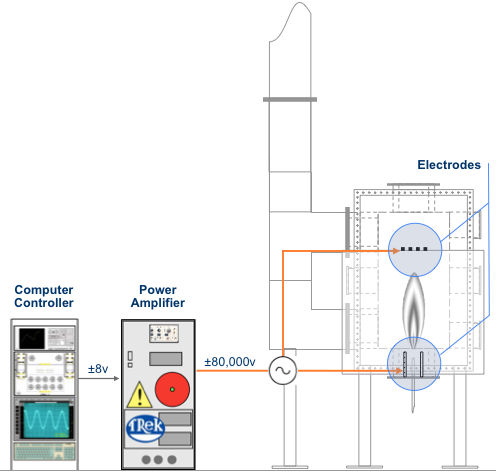
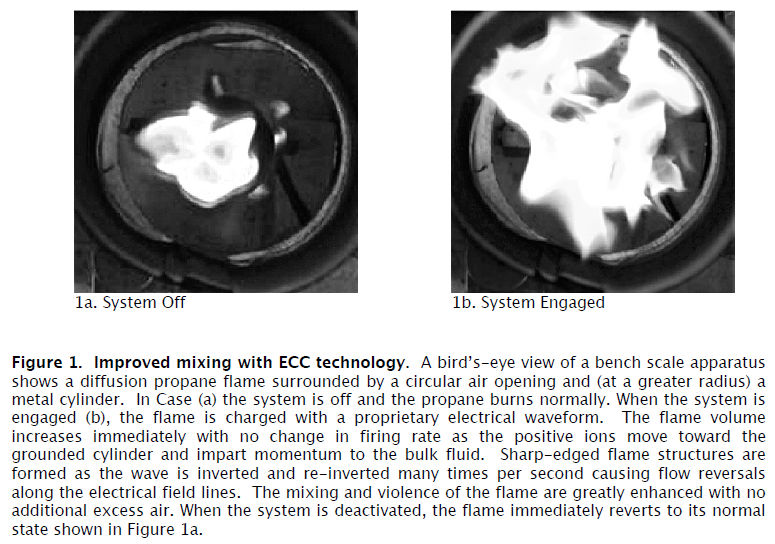
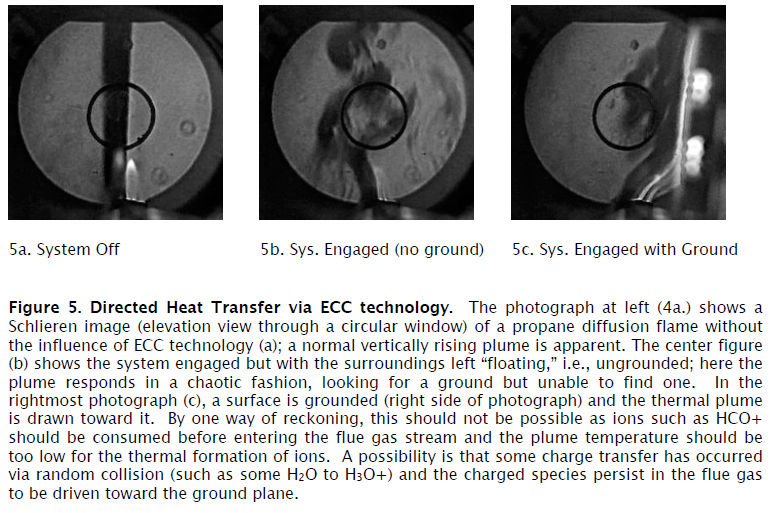
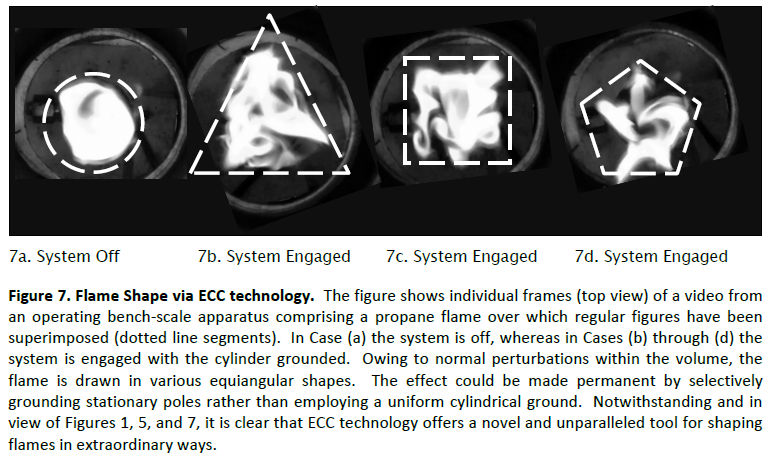
ClearSign's ECC technology applies computer-controlled pulsed electrostatic fields via electrodes placed inside the combustion chamber. The electric field manipulates naturally occurring ions in the flame, allowing precise control of flame shape, heat transfer, and reaction chemistry, which reduces pollutants and improves thermal efficiency.
Detailed Description
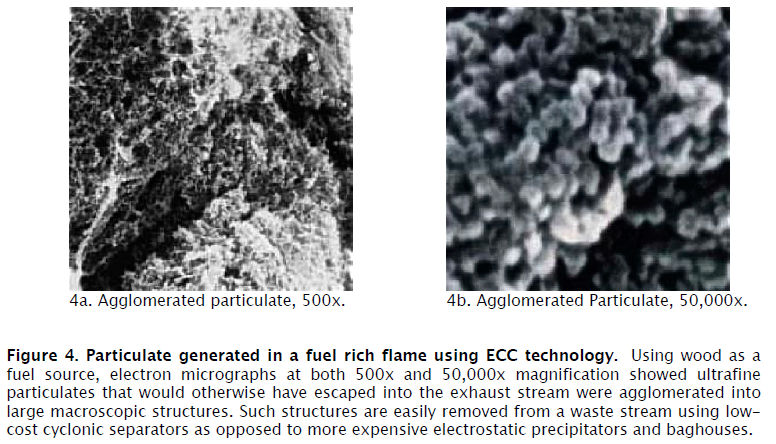
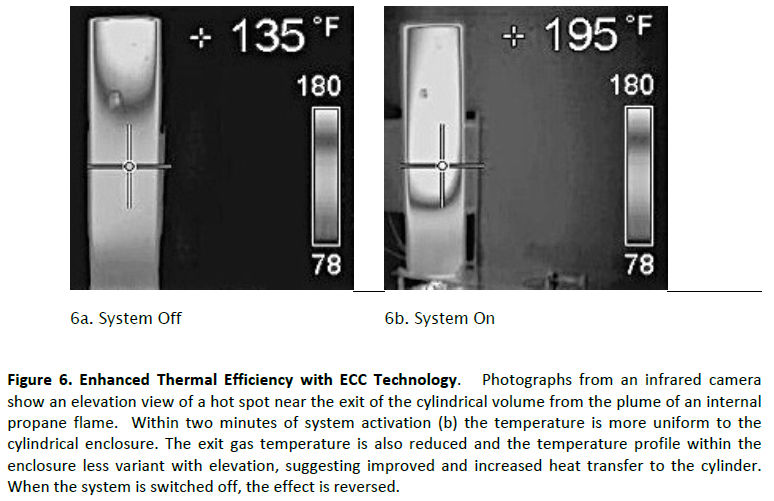
The system consists of a standard PC running proprietary control software, a power amplifier, and a set of electrodes positioned inside the combustion volume. By generating timed electric fields, the ions in the flame are directed to reshape the flame, promote uniform temperature distribution, agglomerate particulate matter for easier removal, and modulate chemical reaction rates. The technology claims to require only about 0.1 % of the total energy output of the combustion system while delivering improvements in fuel economy, process throughput, and emissions reductions.
Principles
- Electrostatic force on ions
- Pulsed electric field manipulation
- Computer-controlled feedback
- Ion-driven flame shape modulation
Scientific Domains
Materials
- Metal electrodes (e.g., stainless steel)
- Conductive wiring
- Insulating ceramics (optional for electrode cooling)
Mechanisms of Action
- Electrostatic attraction/repulsion of charged flame species
- Flame shape and stability control
- Heat transfer distribution
- Particulate agglomeration via ionization
- Selective acceleration or suppression of chemical reactions
Energy Sources
Applications
- Industrial boilers
- Kilns
- Furnaces
- Gas turbines
- Utility-scale combustion systems
Claimed Performance
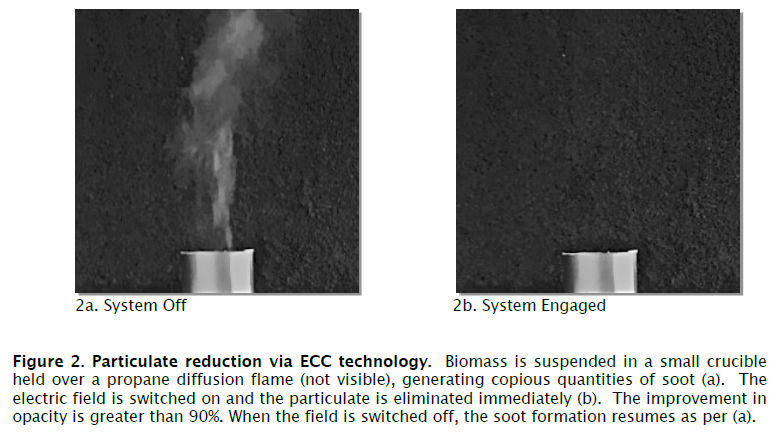
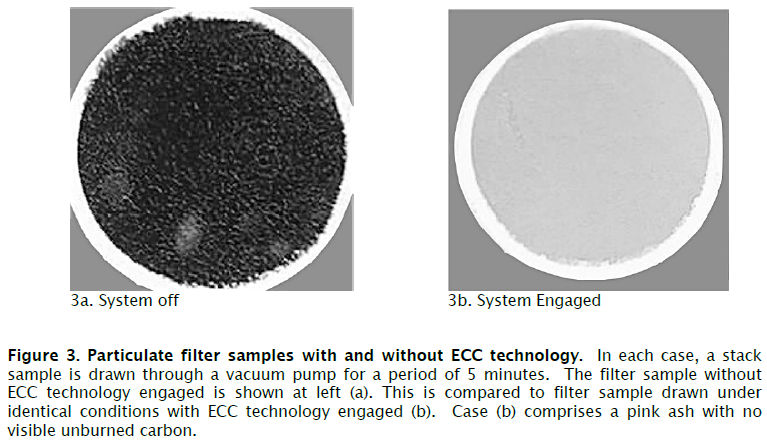
Visible particulate matter reductions of >90 % with simultaneous CO reductions and no increase in NOx; system uses ~0.1 % of total energy output.
Experimental Evidence
In testing with multiple fuel types, ECC technology showed reductions in visible particulate matter of over 90 % and simultaneous reductions in carbon monoxide without increased NOx emissions.
Limitations
- Requires integration of electrodes and power electronics into existing combustion chambers
- Effectiveness may vary with fuel type and operating conditions
- Limited publicly available quantitative performance data
Red Flags
- Marketing-heavy language with few peer-reviewed data
- Proprietary algorithms not disclosed
- No independent replication or third-party validation reported