Goal
Produce inexpensive protein and bio-active compounds from cockroaches for food, cosmetics, and traditional medicinal applications.
Problem
High cost and low profit margins of conventional livestock farming; growing demand for affordable protein and alternative medicinal ingredients.
Concept Summary
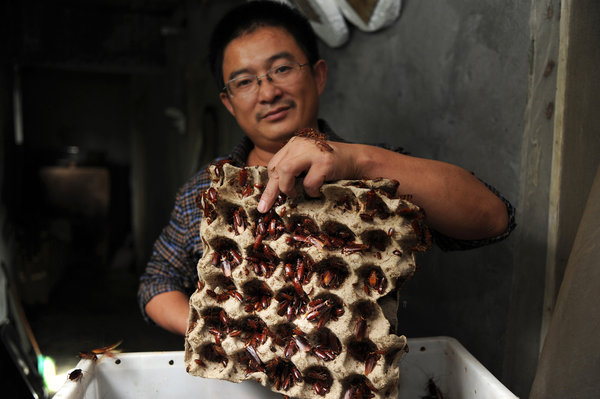
Large-scale indoor farms raise the American cockroach (Periplaneta americana) on cheap vegetable waste. The insects are harvested before they can fly, killed in boiling water, then dried or fried. Pulverized cockroach bodies are sold as protein powder, medicinal creams, syrups, and animal feed. The industry claims health benefits such as hair regrowth, burn treatment, anti-cancer activity, and nutritional supplementation.
Principles
- Traditional Chinese Medicine
- Entomophagy (insect farming)
- Protein and bio-active compound extraction
Scientific Domains
Materials
- Cockroach biomass (whole insects)
- Vegetable waste (potato, pumpkin peelings)
- Boiling water
- Cooking oil
Mechanisms of Action
- Topical application of cockroach powder for wound healing and skin regeneration
- Oral consumption of cockroach protein for nutritional supplementation
- Potential anti-carcinogenic compounds identified in cockroach extracts
Energy Sources
Applications
- Human protein supplement
- Medicinal creams for burns and skin care
- Cosmetic facial masks
- Animal feed
- Food (fried cockroaches)
Claimed Performance
Price per pound of dried cockroaches rose from $2 to $20; farms now produce >100 tons / year; profit margins reported as 20 yuan investment -> 150 yuan return; health claims include hair regrowth, burn treatment, anti-cancer effects.
Experimental Evidence
Li Shunan reported 1960s use of cockroach paste for bone tuberculosis; Dali University and Jeonnam Province Agricultural Research Institute published papers on anti-carcinogenic properties; anecdotal reports of hair regrowth and burn-healing creams.
Replication Status
Multiple independent farms in China and South Korea have adopted the same breeding and processing methods; no formal independent replication study is mentioned.
Limitations
- Regulatory oversight of insect-derived medicines is unclear
- Public aversion to insect consumption
- Health claims lack rigorous clinical validation
- Potential for contamination if waste feed is not controlled
Red Flags
- Health benefits are largely anecdotal and not supported by large-scale clinical trials
- High profit claims may attract opportunistic investors
- Limited peer-reviewed evidence for anti-cancer activity