Goal
Generate electrical energy without a chemical or mechanical source of power.
Problem
Need for a new, possibly perpetual, source of electrical power.
Concept Summary
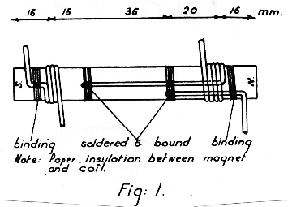
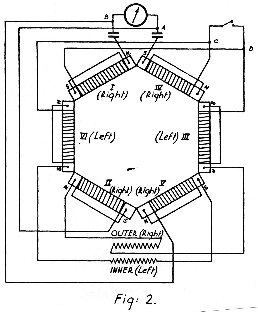
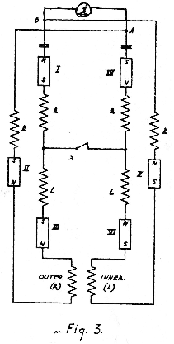
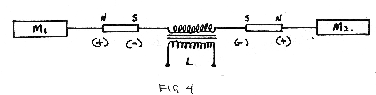
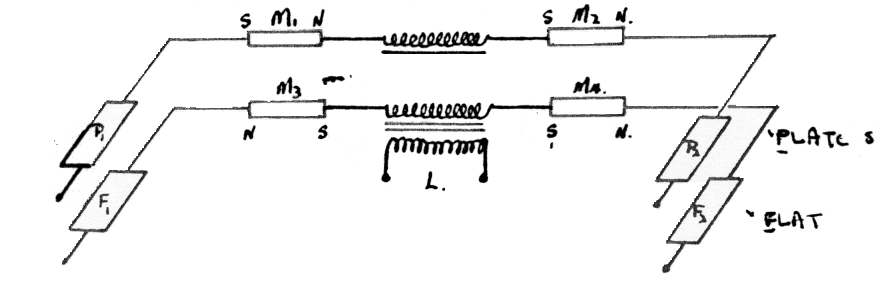
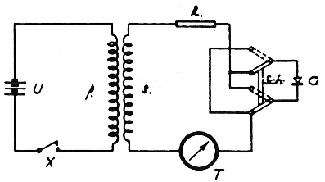
Coler's devices consist of permanent magnets wound with copper coils, condensers, and inductive circuits arranged statically. By mechanically adjusting magnet spacing and coil positions, a voltage builds up and can be maintained for extended periods. The claimed underlying principle is an oscillating ferro-magnetic phenomenon (~180 kHz) that transfers energy from a magnetic circuit to an electrical circuit, producing output power far exceeding the input.
Principles
- Oscillating ferro-magnetism
- Inductive coupling
- Magnet-coil resonance
- Mechanical adjustment of magnetic spacing
Scientific Domains
Materials
- Permanent magnets
- Copper wire
- Condensers (capacitors)
- Solenoidal coils
- Copper plates
Mechanisms of Action
- Magnetic circuit oscillation inducing electrical oscillations
- Energy transfer via inductive circuits
Energy Sources
Applications
- Electrical power generation
- Portable power devices
Claimed Performance
450 mV sustained for 3 h; 60 mV for 30 min; 12 V maximum; 70 W output observed; 6 kW output claimed from a few watts input.
Experimental Evidence
Measured 450 mV for three hours and 60 mV for half an hour on the Magnetstromapparat; observers reported a 70 W version of the Stromzeuger; a 6 kW version was built in 1937.
Replication Status
Device was built and observed by the British team and by several independent witnesses; no independent, peer-reviewed replication documented.
Limitations
- No theoretical explanation consistent with accepted physics
- Reliance on manual adjustment of magnetic spacing
- Lack of reproducible, peer-reviewed data
- Potential for fraud or misinterpretation
Red Flags
- Claims of perpetual motion and overunity
- Absence of peer-reviewed publications
- Historical context of secrecy and limited documentation