Goal
Provide a high-efficiency, reactionless propulsion system for space and airborne vehicles, overcoming the low efficiency of conventional rockets.
Problem
Conventional rockets have very low propulsive efficiency (~=2 % or less) and rely on reaction mass; a more efficient, reaction-less method is desired.
Concept Summary
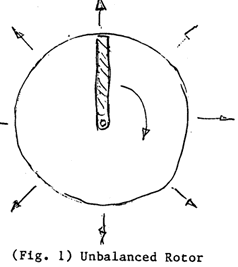
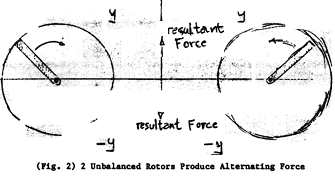
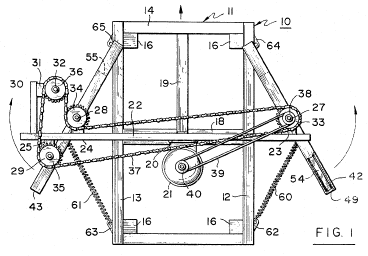
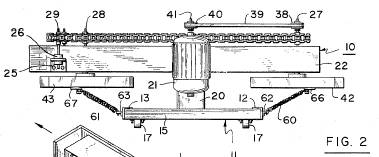
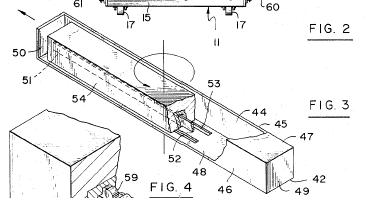
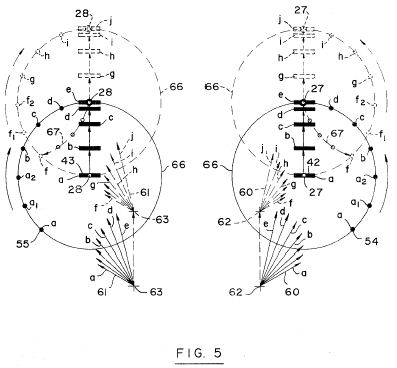
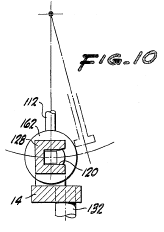
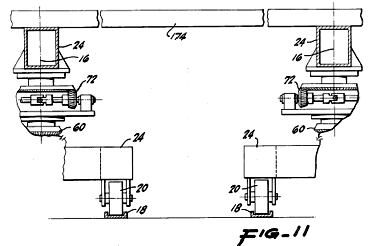
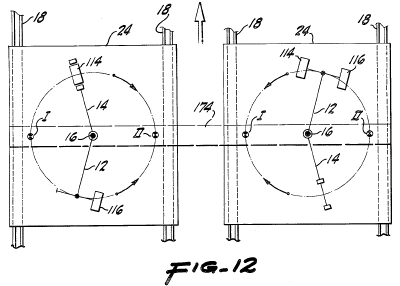
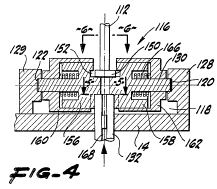
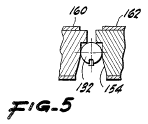
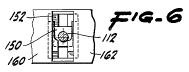
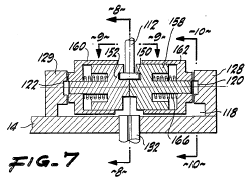
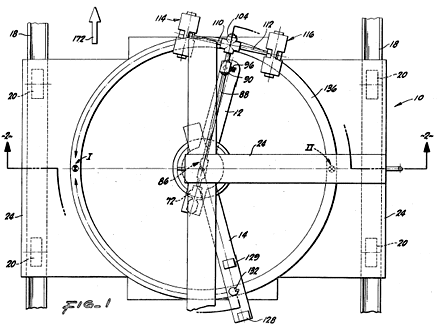
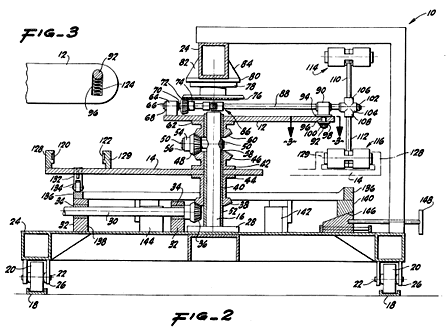
The Cook Inertial Propulsion (CIP) engine converts centrifugal and Coriolis forces into linear thrust by using counter-rotating, unbalanced rotors linked by flexible drive shafts. The alternating gyroscopic forces are rectified through a "multiple-spin" mechanism and a controlled mass-transfer process, producing a net unidirectional thrust without expelling reaction mass.
Principles
- Centrifugal force conversion
- Coriolis effect
- Counter-rotating unbalanced rotors
- Rectification of alternating force
- Inertia-based mass transfer
- Oscillation control via internal mass
Scientific Domains
Materials
- Metallic rotors (e.g., steel or aluminum)
- Flexible drive shafts
- Central balancing mass
Mechanisms of Action
- Unbalanced rotor creates a sinusoidal centrifugal force
- Two opposite rotors produce alternating forces that are synchronized
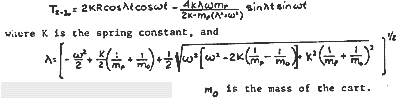
- Multiple-spin (orbiting) motion rectifies the alternating force into a net linear thrust
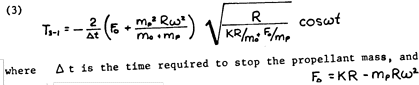
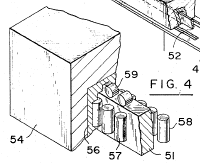
- Partial mass release from one rotor half changes its energy state, creating an internal reactionless force
- A built-in "nuclear mass" (central mass) provides centripetal force and stabilizes oscillations
Energy Sources
Applications
- Spacecraft propulsion
- Vertical lift vehicles
- High-efficiency aircraft propulsion
Claimed Performance
Projected propulsion efficiency of 80-85 % when fully perfected; one estimate of 98 % propulsion efficiency; thrust generated without expelling reaction mass.
Experimental Evidence
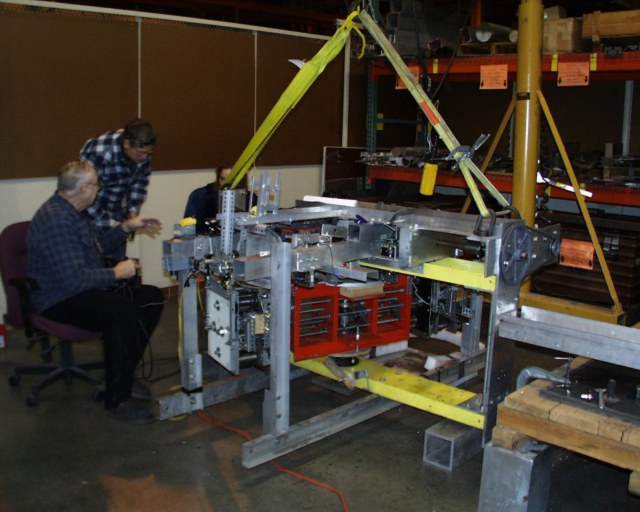
United Air Lines Test Center report D-71-77 (1971) recorded internal force generation despite low efficiency; later accelerometer tests (Dec 1972) confirmed force production; Cook reports numerous working models and a planned 12-rotor test unit.
Replication Status
Working prototypes demonstrated by the inventor; independent third-party replication not documented in the article.
Limitations
- Efficiency claims lack independent verification
- No peer-reviewed data or third-party replication
- Complex mechanical synchronization required
- Potential conflict with established Newtonian physics
Red Flags
- Claims of reactionless thrust contradict well-established physics
- Absence of detailed schematics or independent validation
- Potential for over-statement of performance (efficiency >80 %)
- Historical pattern of "free-energy" style claims