Confidence
0.90
Practicability
0.60
Evidence
0.20
Fringe Score
0.40
Risk
0.70
TRL
4
Goal
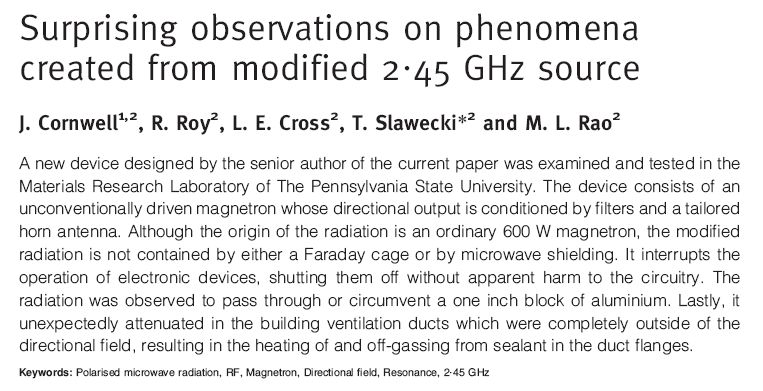
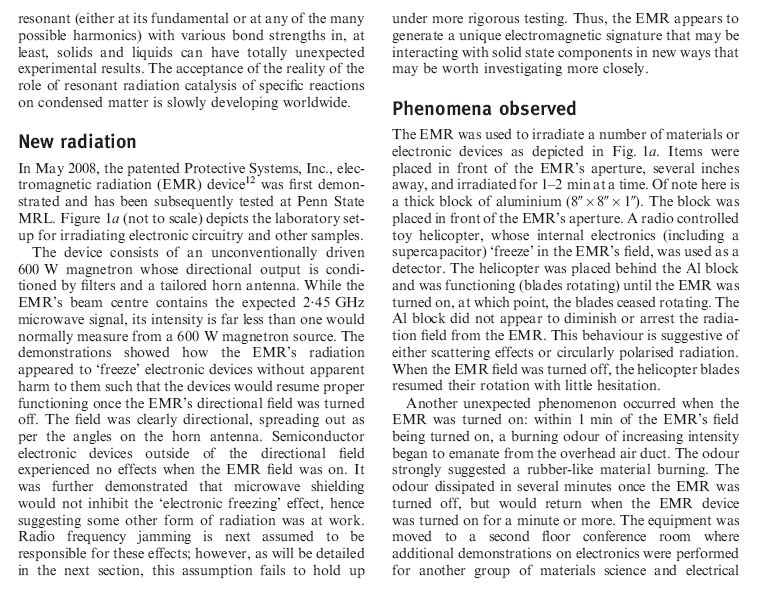
Disrupt or destroy electronic circuits, especially semiconductor devices, using a directed-energy pulse.
Problem
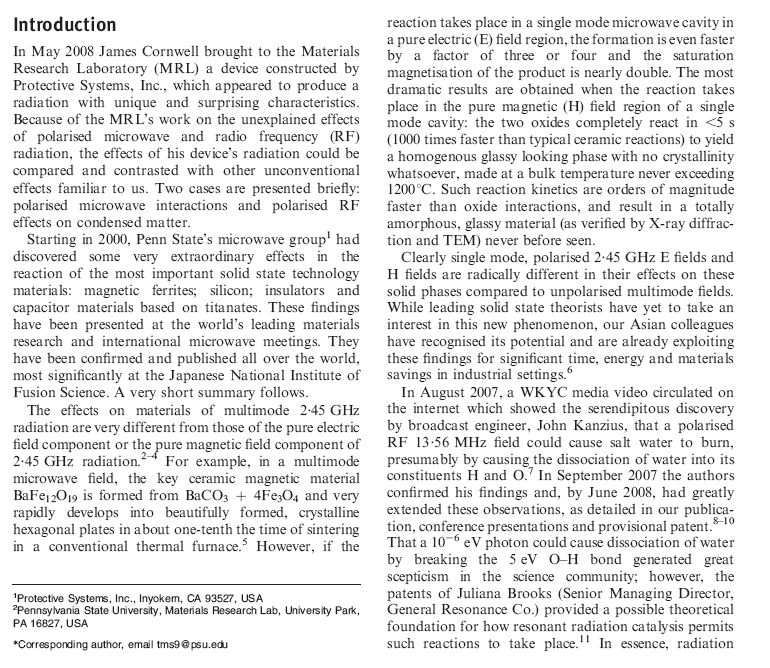
Electronic equipment is vulnerable to high-voltage transients (EMP) and can be damaged or disabled; existing protection (e.g., Faraday cages) is limited.
Concept Summary
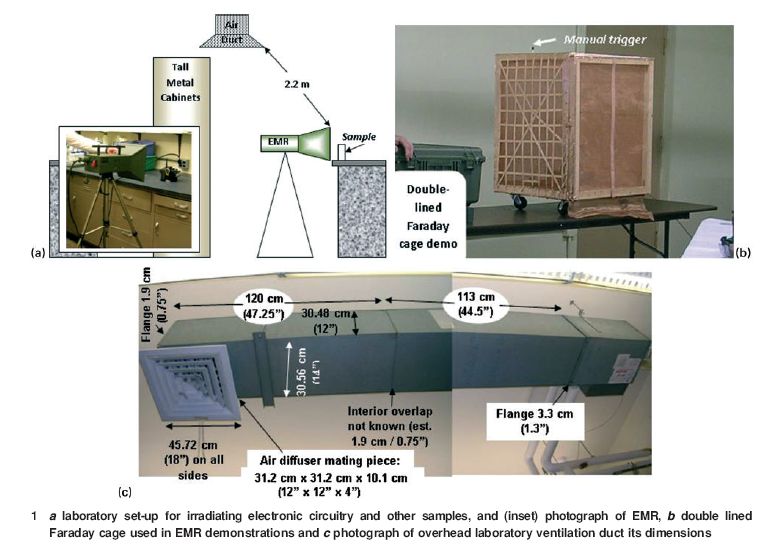
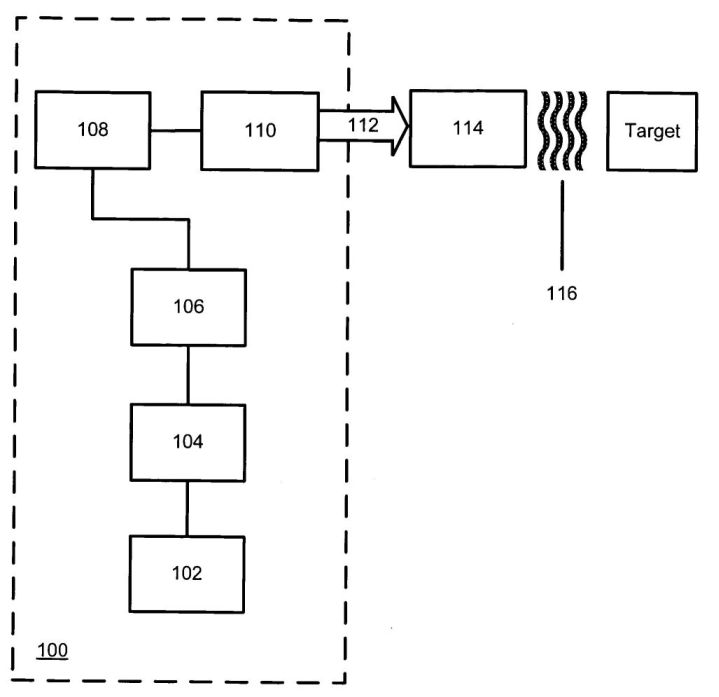
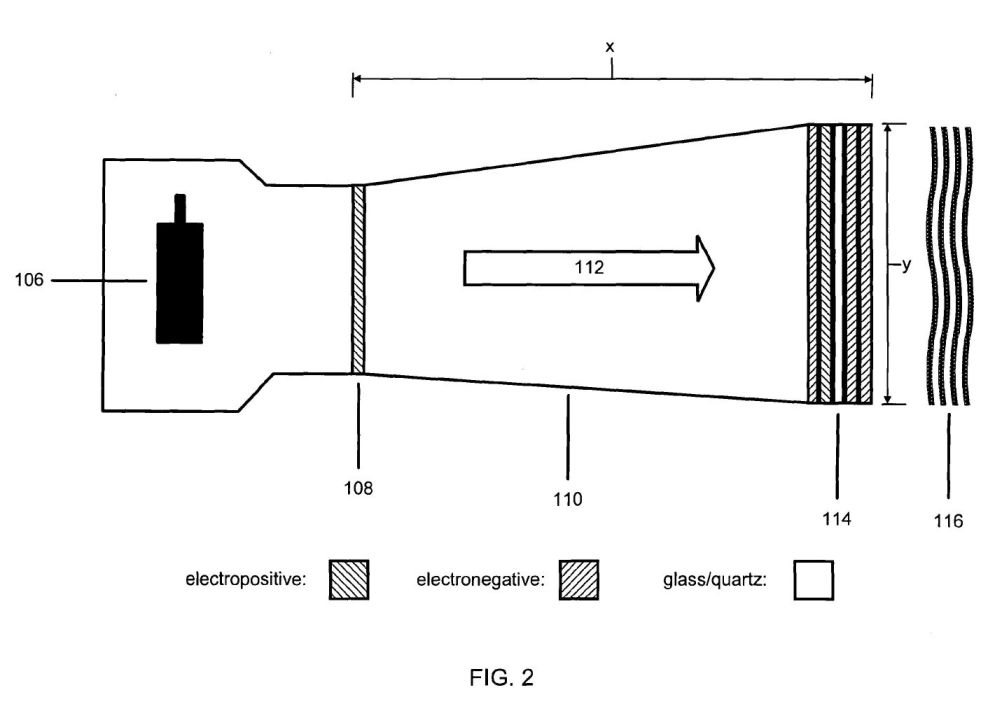
The invention uses a charged-particle generator (e.g., magnetron, gyrotron, free-electron laser) to produce a mixed photon-electron wave, passes it through a charge-transformer that neutralizes the charge, and then emits a high-energy electromagnetic wavefront that impinges on a target circuit, inducing destructive voltage transients.
Principles
- Directed-energy generation
- Charged-particle emission
- Charge neutralization (charge transformer)
- Electromagnetic pulse (EMP) effect
- Waveguide transmission
Scientific Domains
Materials
- Polycarbonate (DELRIN)
- Gold coating (14-carat)
- Other noble metals (ruthenium, rhodium, palladium, osmium, iridium, platinum)
- Conductive waveguide metal (e.g., copper or aluminum)
Mechanisms of Action
- Generation of plural energized particles (photons and electrons)
- Transformation of charged particles to near-zero charge
- Formation of an electromagnetic wavefront at the charge-transformer exit
- Induction of high-voltage transients in target electronic circuits
Energy Sources
Applications
- Electronic warfare
- Circuit disabling
- Military sabotage
- Anti-drone or anti-radar systems
Limitations
- Requires high power (~=1 kW-100 kW)
- Effectiveness diminishes with distance and shielding
- No published experimental data confirming performance
Red Flags
- Potential weaponization
- Lack of independent validation or peer-reviewed data