Goal
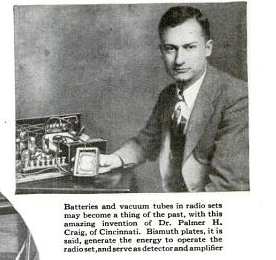
Replace vacuum tubes and batteries in radios by providing rectification and amplification using the Hall effect in bismuth plates.
Problem
Need for reliable, low-power rectifiers and amplifiers for radio sets; inefficiency and dependence on vacuum tubes and batteries.
Concept Summary
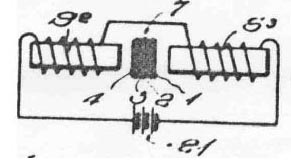
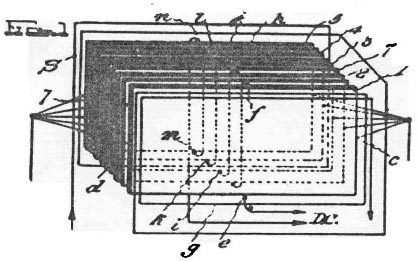
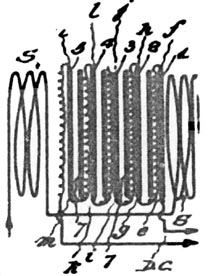
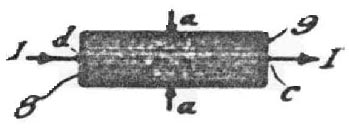
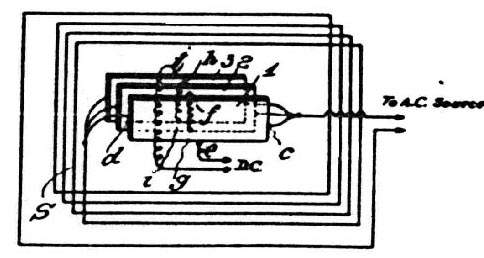
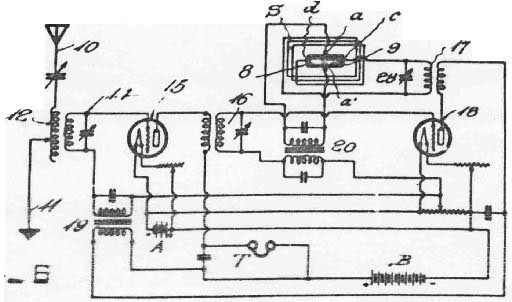
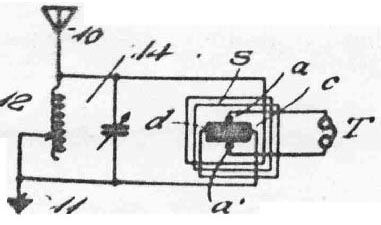
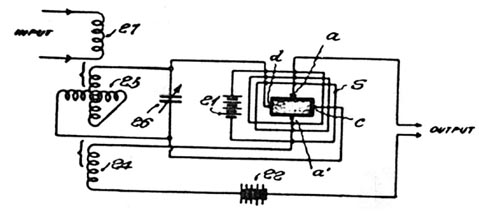
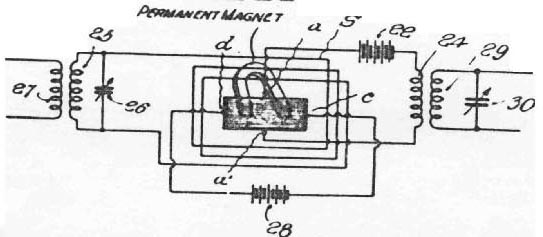
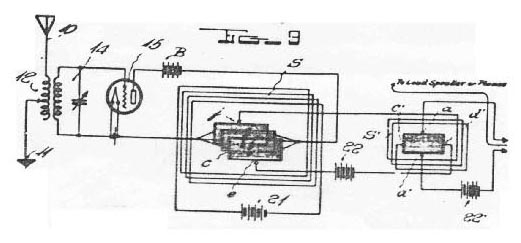
A stack of thin bismuth plates, interlaced with copper wires and coated with sulfur, generates a Hall voltage when a low magnetic field and a longitudinal current are applied. By connecting several plates in series the Hall emf can be increased to several volts, allowing AC rectification and signal amplification for radio applications.
Principles
- Hall effect
- Additive principle (series Hall potentials)
- Rectification of alternating current
- Low-field magnetic operation
Scientific Domains
Materials
- Bismuth
- Copper
- Sulfur
- Mica
- Bakélite
- Sodium silicate
- Phosphor-bronze
- Brass
- Hydrofluoric acid
- Hydrochloric acid
Mechanisms of Action
- Generation of transverse Hall voltage in thin bismuth films
- Series connection of Hall potentials to increase output voltage
- Detection and amplification of radio signals via Hall emf
Energy Sources
Applications
- Radio receivers
- Power supplies for low-power electronics
- Battery replacement in portable devices
Claimed Performance
Hall potential of several volts in low magnetic fields; series of thin bismuth films produces a practical rectifier for radio applications.
Experimental Evidence
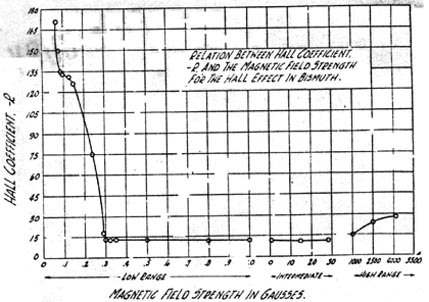
Physical Review (1926) measurements of Hall coefficients in bismuth films down to 0.07 gauss, showing large Hall voltages; authors report series-connected films yielding higher emf suitable for AC rectification.
Limitations
- Brittle nature of bismuth plates
- Need for protective sulfur coating
- Limited availability of suitable high-purity bismuth
- Low efficiency compared with conventional rectifiers
- Manufacturing difficulty of ultra-thin, homogeneous films
Red Flags
- Claims of generating sufficient energy to replace batteries without external power source
- Lack of independent replication or commercial deployment
- Skepticism expressed by contemporary engineers (e.g., R. N. Goldsmith)