Goal
Assist the body's natural healing by flushing toxins and re-charging cellular energy.
Problem
Various health conditions such as arthritis, Alzheimer's disease, cancer, and other chronic ailments.
Concept Summary
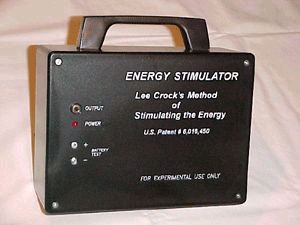
A low-voltage DC device that alternately applies clockwise (CW) and counter-clockwise (CCW) electric fields to a conductive mesh screen placed near the patient's body. The alternating polarity is claimed to discharge cellular "static" charge (CCW) and then recharge cells (CW), thereby moving ions in and out of cells, generating heat, and prompting the body to excrete toxins via urination.
Detailed Description
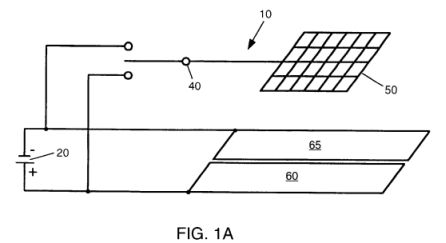
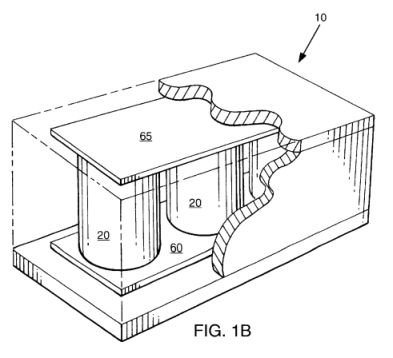
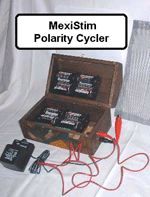
The system consists of a wire-mesh electrode (screen) embedded in a pillow or placed on a conductive plate, a pair of low-voltage DC sources (~=1.5-3 V from D-cell batteries) of opposite polarity, and a polarity-switching timer that alternates the connection every ~15 minutes. The subject lies on a conductive surface while the mesh electrode is positioned 2-12 inches from the treatment area. The alternating polarity is said to create a capacitive circuit with the body acting as the dielectric, causing ions to migrate out of cells (CCW) and later be re-absorbed (CW). Heat felt in the practitioner's palms and increased urination are presented as observable effects. The device can be operated by a single operator or by a relay of several people holding the pillow, and a larger screen is claimed to affect a larger area.
Principles
- Capacitive coupling between body and electrode
- Polarity reversal (alternating CW/CCW) of low-voltage DC
- Ion migration driven by electric field
- Thermal effect (heat generation) in hands
Scientific Domains
Materials
- D-cell batteries
- Conductive wire-mesh screen
- Conductive plates or mat
- Pillow or fabric support
Mechanisms of Action
- Alternating discharge and charging of cellular static charge
- Ion migration to remove toxins from cells
- Heat generation as a subjective indicator
Energy Sources
Applications
- Alternative therapeutic treatment for chronic illnesses
- Potential adjunct to conventional medicine
Claimed Performance
Treatments last 3-5 days with sessions of 15 minutes alternating polarity; reported improvements in arthritis, Alzheimer's, cancer, and other ailments; excess urination noted as a side-effect.
Experimental Evidence
Anecdotal reports of ~10,000 treated individuals over three years; a patent application describing the circuitry; no peer-reviewed data or controlled studies.
Limitations
- Lack of controlled, peer-reviewed studies
- Reliance on subjective sensations (heat, urination)
- Risk of dehydration from excessive urination
- Unclear dosing and treatment parameters
Red Flags
- Extraordinary medical claims without scientific validation
- Potential for misuse or over-use leading to dehydration
- Reliance on anecdotal success stories