Goal
Provide therapeutic treatment for inflammatory diseases, ulcers, arthritis, and related conditions using a copper-based metallo-organic complex.
Problem
Inflammatory diseases (e.g., rheumatoid arthritis), gastric ulcers, infections, seizures, cancers, radiation-induced tissue damage, cardiovascular disease.
Concept Summary
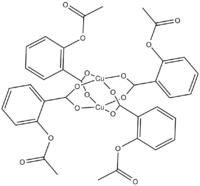
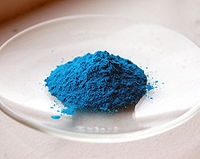
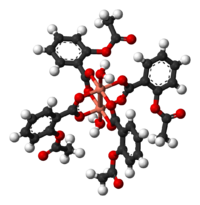
Copper aspirinate is a metallo-organic complex of copper and aspirin (acetylsalicylic acid). The copper ion chelates the aspirin molecule, enhancing anti-inflammatory activity while reducing gastrointestinal side effects. Historical and modern studies suggest the complex accelerates wound healing, exhibits anticonvulsant, anticancer, and radiation-protective properties, and may support cardiovascular health.
Detailed Description
The compound is prepared by reacting copper salts (e.g., copper acetate) with aspirin under controlled conditions to form a stable copper-aspirinate complex. The resulting solid can be administered orally or topically. Pre-clinical animal studies have shown faster ulcer healing and improved anti-inflammatory efficacy compared with aspirin alone. Clinical anecdotes from early 20th-century medicine and limited modern trials indicate potential benefits across a range of disease states, but large-scale randomized studies are lacking.
Principles
- Metallo-organic chelation
- Enhanced anti-inflammatory activity
- Antioxidant (free-radical scavenging) effect
- Improved bioavailability of copper
Scientific Domains
Materials
- Copper (Cu)
- Aspirin (acetylsalicylic acid)
- Copper acetate
- Copper oxide
Mechanisms of Action
- Inhibition of cyclooxygenase via aspirin moiety
- Copper-mediated antioxidant activity
- Modulation of immune response
- Stabilization of tissue repair processes
Applications
- Rheumatoid arthritis treatment
- Gastric ulcer healing
- Anticonvulsant therapy
- Adjunct cancer therapy
- Radiation injury mitigation
- Cardiovascular disease prevention
Claimed Performance
More effective than aspirin alone for rheumatoid arthritis; heals gastric ulcers up to five days faster; reduces ulceration associated with NSAID therapy; exhibits anticonvulsant, anticancer, and radiation-protective effects in animal models.
Experimental Evidence
Animal studies demonstrating accelerated ulcer healing and anti-inflammatory efficacy; historical clinical use for arthritis, tuberculosis, and other ailments; early 20th-century reports of copper compounds inducing vomiting; modern pre-clinical data on radiation protection and tumor growth inhibition.
Replication Status
Limited to animal research and historical clinical anecdotes; no large-scale modern clinical trials documented in the article.
Limitations
- Lack of large-scale modern clinical trials
- Potential copper toxicity at high doses
- Variability in formulation purity
Red Flags
- Reliance on historical anecdotal evidence
- Absence of peer-reviewed randomized controlled trials
- Possible overstating of efficacy without quantitative data