Goal
Provide refrigeration without electricity for food and medical supplies in low-resource settings.
Problem
Lack of reliable electricity and affordable refrigeration in developing regions, leading to food spoilage and difficulty transporting temperature-sensitive medicines.
Concept Summary
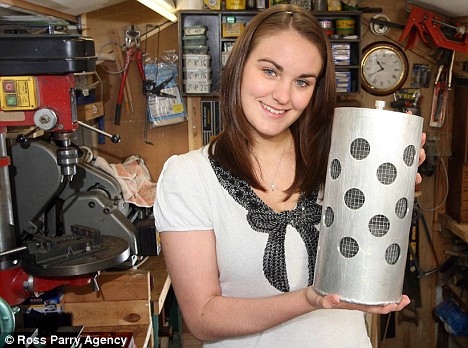
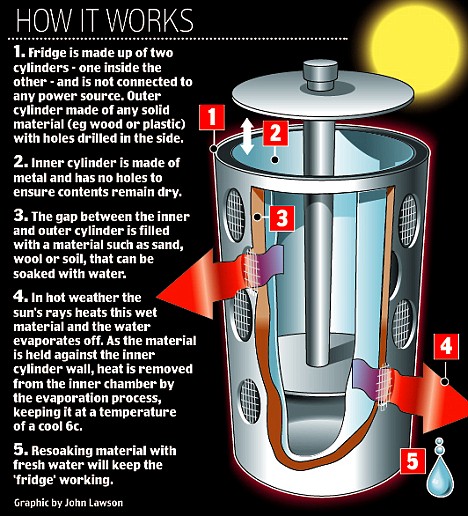
A double-cylinder container where the gap between an inner metal cylinder and an outer shell is packed with a water-holding medium (sand, wool, soil). Sunlight heats the wet medium, causing water to evaporate and remove heat, thereby cooling the inner chamber to around 6 deg C without any external power.
Detailed Description
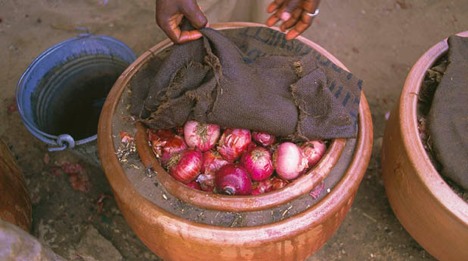
The inner cylinder (metal) holds the items to be cooled. The outer cylinder can be made from wood, plastic, or any readily available material. The annular space between the cylinders is filled with a porous medium (sand, wool, soil) that is soaked with water. When placed in sunlight, the water in the medium evaporates, using the latent heat of vaporisation to draw heat away from the inner cylinder. The resulting temperature drop keeps perishables cool for days. The device is portable, inexpensive, and can be built from household or locally sourced materials. Field trials were conducted in Namibia for about five months, where the fridge maintained temperatures near 6 deg C and kept food and medicine fresh.
Principles
- Evaporative cooling
- Latent heat of vaporisation
- Passive heat transfer
- Solar thermal heating
Scientific Domains
Materials
- Metal (inner cylinder)
- Wood or plastic (outer cylinder)
- Sand
- Sheep wool
- Soil
- Water
Mechanisms of Action
- Evaporation of water from a moist medium
- Heat removal from inner chamber via latent heat
- Solar heating of wet medium to drive evaporation
Energy Sources
Applications
- Food preservation in off-grid villages
- Transport and storage of temperature-sensitive medicines
- Emergency relief cooling
Claimed Performance
Keeps perishable goods cool for days at a temperature of around 6 deg C without any electricity.
Experimental Evidence
Field testing in Namibia for nearly five months demonstrated that the fridge maintained low temperatures and kept food/medicine fresh for several days.
Replication Status
Demonstrated in Namibia; used by local communities; no large-scale commercial production reported.
Limitations
- Performance drops in high humidity environments
- Requires regular water replenishment
- Limited temperature reduction (~=6 deg C)
- Durability of outer shell depends on material choice