Goal
Reduce overall heating and cooling energy consumption and utility costs for residential buildings.
Problem
High energy usage and cost of conventional furnace heating and air-conditioning systems.
Concept Summary
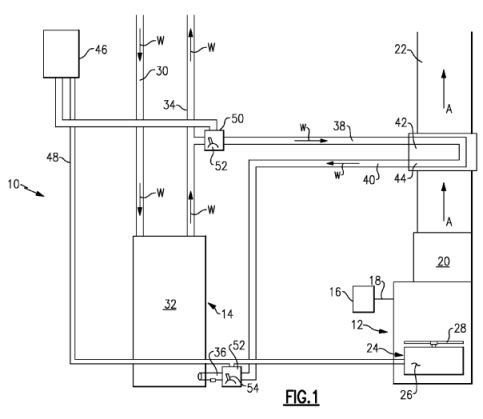
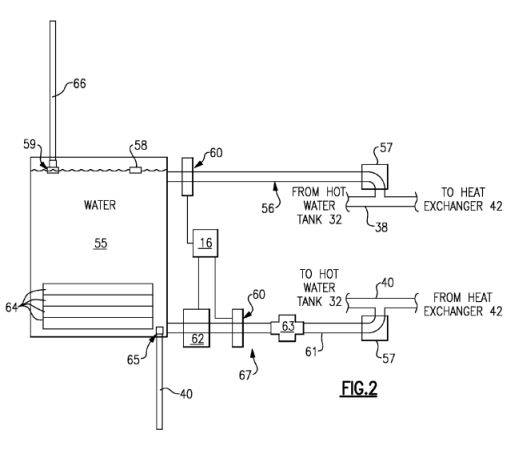
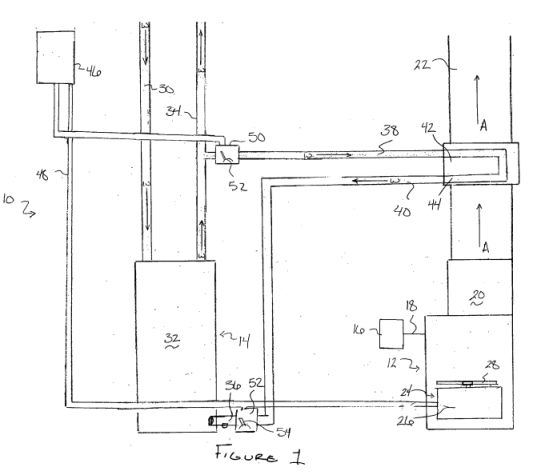
A supplemental HVAC system that circulates hot (or cold) water from a domestic water heater (or cool water storage) through a heat exchanger placed in the furnace air passage. A dedicated thermostat controls a low-speed fan to circulate air, allowing the furnace to remain off or run at reduced capacity while maintaining indoor temperature. Soapstone in the water tank provides thermal storage for up to 48 hours.
Principles
- Heat exchange between water and air
- Thermostat-controlled supplemental heating
- Gravity-fed convection
- Thermal storage with phase-change material (soapstone)
Scientific Domains
Materials
- Copper
- Aluminum
- Soapstone
- Water
Mechanisms of Action
- Water heated by domestic water heater passes through a coil heat exchanger in the furnace air stream
- Supplemental thermostat activates a low-speed fan to move air over the heated coil
- Cold water from a storage tank circulates through a cooling coil for supplemental cooling
- Soapstone retains heat (or coolness) for prolonged periods
Energy Sources
Applications
- Residential heating
- Residential cooling
- Energy-saving HVAC retrofits
Claimed Performance
Reduces heating costs by 67 % or more; utility bill comparison $192 vs $631 for similar homes.
Experimental Evidence
The inventor reported bill comparisons between his 5,875-sq-ft home ($192) and a similar home ($631) while maintaining higher indoor temperature; additional charts were kept but not published.
Replication Status
Prototype installed in inventor's residence and a comparable home; no independent replication reported.
Limitations
- Relies on existing water heater capacity and plumbing
- Performance may vary with climate and house insulation
- Requires additional plumbing and control components
Red Flags
- Self-reported performance data without third-party verification
- No peer-reviewed studies or independent testing cited