Goal
Convert end-of-life plastic waste into high-quality diesel/aviation fuel with high efficiency and low sulfur content.
Problem
Large volumes of plastic waste ending in landfills and the need for sustainable alternative fuels for transportation and power generation.
Concept Summary
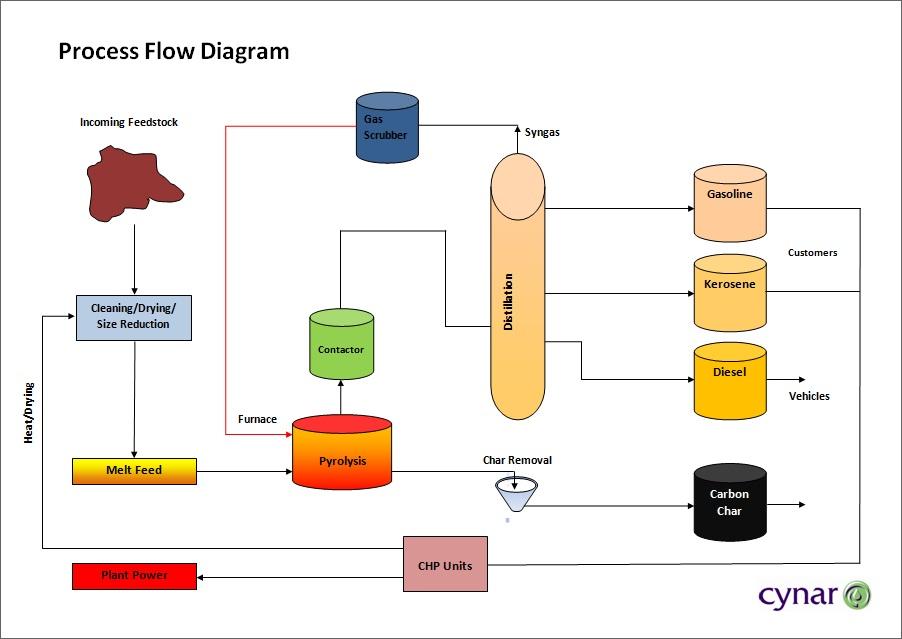
The CYNAR process melts waste plastic and subjects it to oxygen-free pyrolysis, producing a mixture of hydrocarbon gases. Long-chain gases condense on plates in a contactor and are returned for further cracking, while short-chain gases proceed to fractional distillation, yielding diesel-grade fuel. Residual gases are recycled to heat the pyrolysis chamber, and the only solid by-product is a small amount of char.
Detailed Description
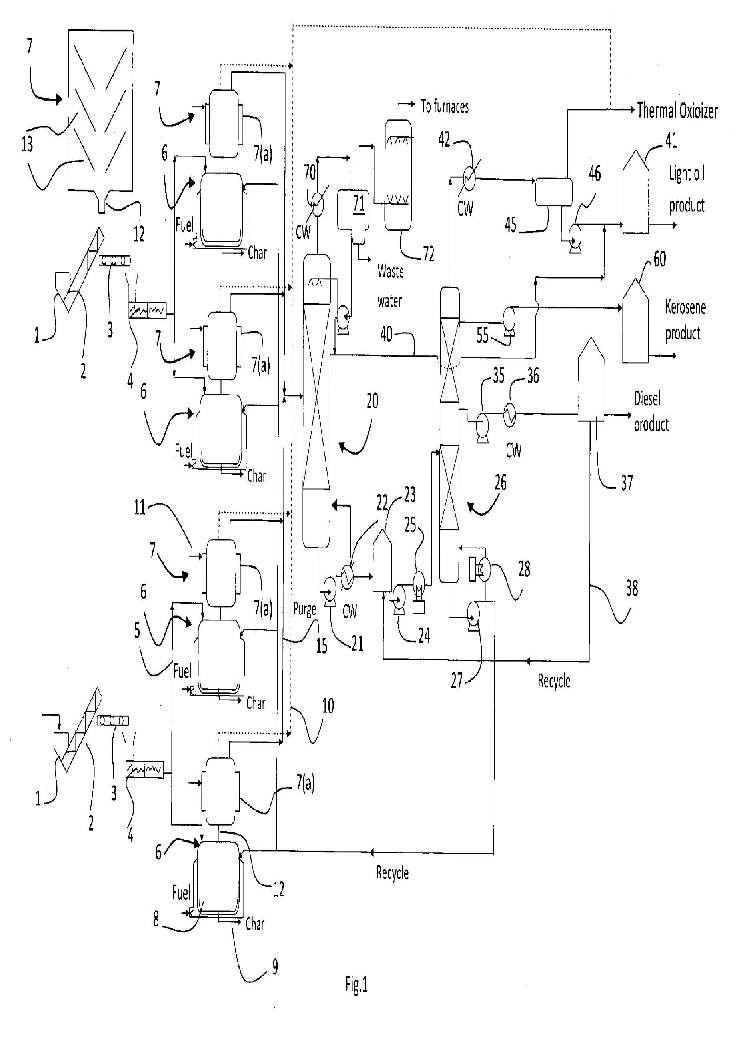
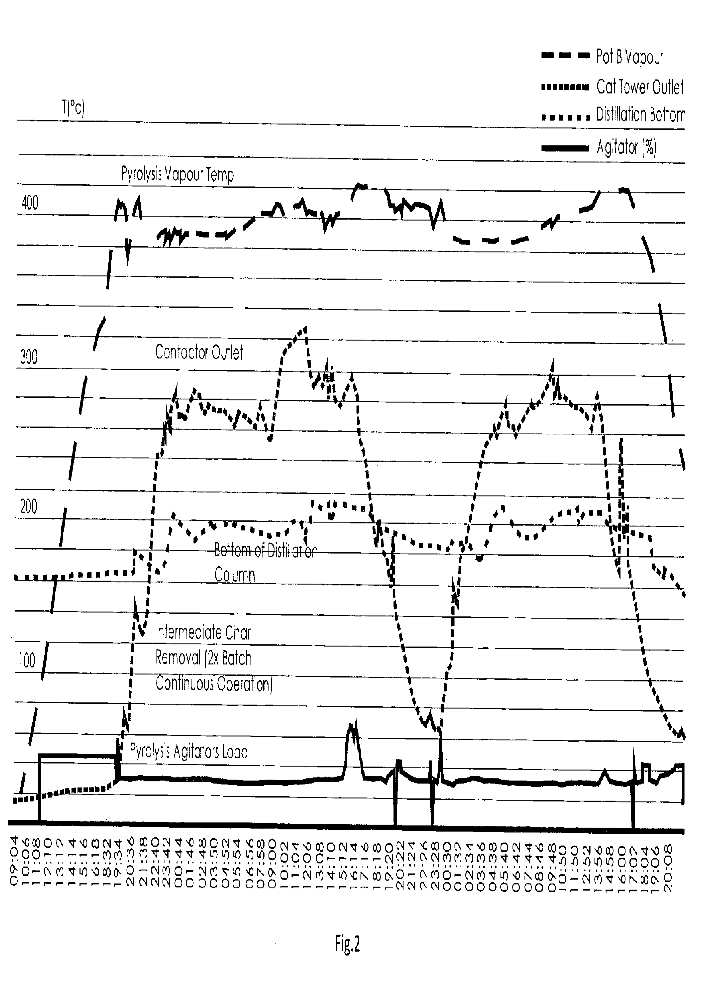
Waste plastic is fed via a hot-melt in-feed system into a cylindrical pyrolysis chamber heated to 370-420 deg C in an oxygen-free atmosphere. The molten plastic vaporizes; pyrolysis gases travel upward into a contactor vessel containing sloped stainless-steel plates that act as condensers. Long-chain hydrocarbons condense on the plates and drip back into the chamber for additional thermal degradation, while short-chain gases exit the contactor and enter a fractional distillation column, producing a hydrocarbon distillate equivalent to petroleum diesel. The distillate is further refined in a vacuum distillation tower to meet fuel specifications. Syngas generated in the pyrolysis is scrubbed and fed back to the furnace to supply heat, improving overall energy efficiency. Char produced (~5 % of feedstock) can be used in construction materials. Each plant can process ~20 t of plastic per day, yielding up to 19 000 L of diesel.
Principles
- Thermal pyrolysis
- Condensation of long-chain hydrocarbons
- Fractional distillation
- Heat recycling via syngas combustion
Scientific Domains
Materials
- End-of-life plastic (mixed polymer waste)
- Stainless steel (condensor plates)
- Char (carbonaceous solid by-product)
Mechanisms of Action
- Thermal cracking of polymer chains
- Phase separation by condensation
- Fractional distillation of hydrocarbon vapors
Energy Sources
Applications
- Aviation fuel
- Diesel fuel for vehicles and generators
- Construction material (char)
Claimed Performance
Up to 19 000 L of diesel per 20 t of plastic per day; ~5 % char by-product; fuel claimed to have higher efficiency and lower sulfur than conventional diesel.
Experimental Evidence
Pilot plant operating capacity demonstrated; a single-engine aircraft flight powered solely by CYNAR-produced diesel was planned for July 2013; multiple waste-recycling firms have adopted the technology.
Replication Status
Technology incorporated into several worldwide waste-recycling firms and under joint research with Loughborough University.
Limitations
- Requires high-temperature pyrolysis equipment
- Energy balance depends on efficient syngas recycling
- Feedstock composition variability may affect fuel quality