Goal
Create an aircraft that is extremely stable, short-take-off/landing, easy to fly and virtually impossible to crash by using full-span flaps that also serve as elevators and ailerons, and end-plate rudders instead of a conventional tail.
Problem
Conventional aircraft suffer from drag, weight, complex tail assemblies, poor low-speed control, and long runway requirements.
Concept Summary
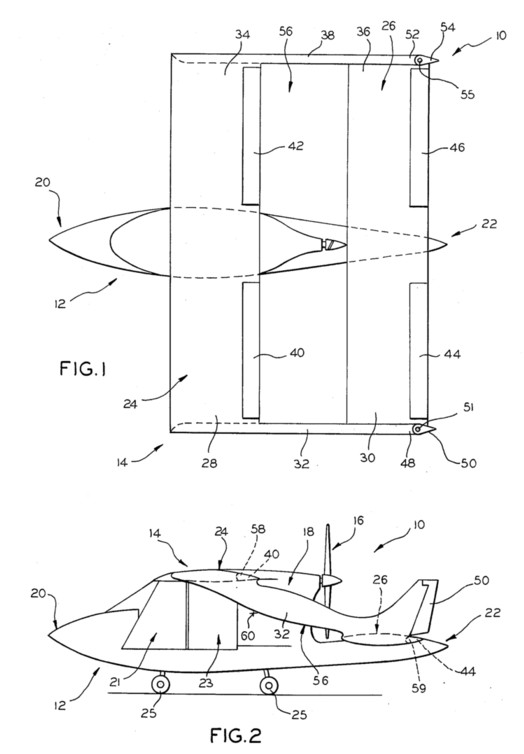
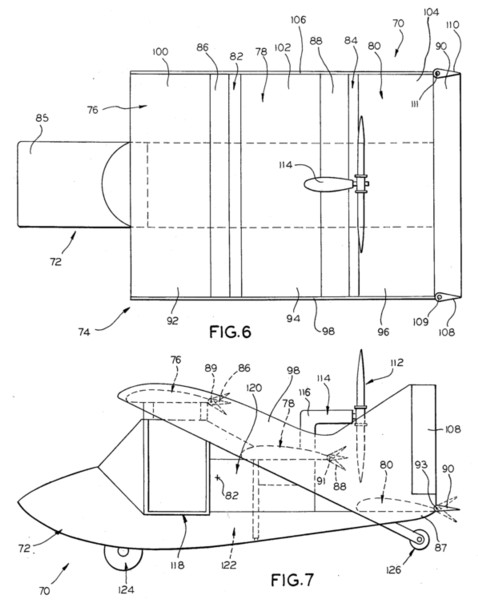
The design uses two short-span wings spaced longitudinally with full-span, vertically swingable "eleflaps" that act as flaps, elevators and ailerons. End-plate vertical airfoils carry rudders, eliminating the need for a large tail. The aircraft is a pusher-propeller configuration with the propulsion aligned with the centre of gravity, providing short-field performance and inherent stability.
Detailed Description
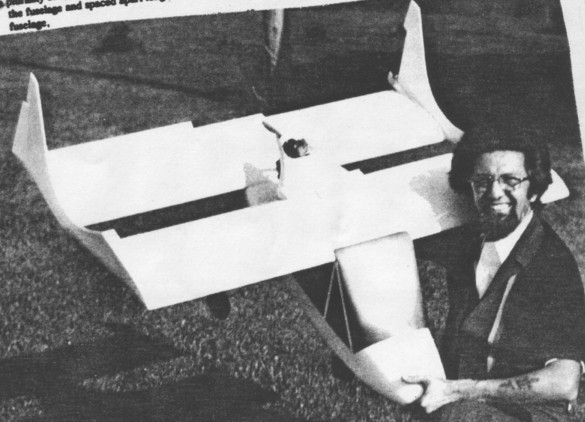
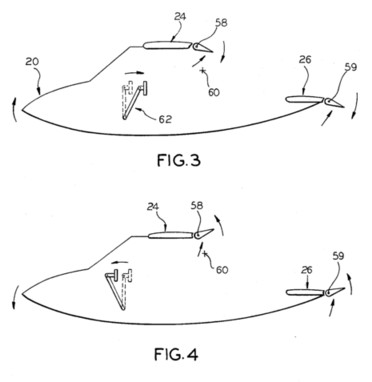
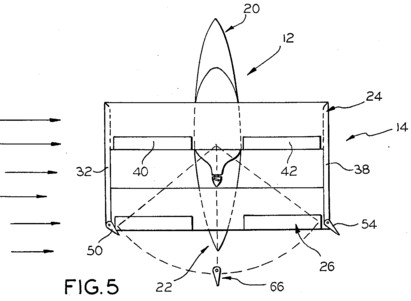
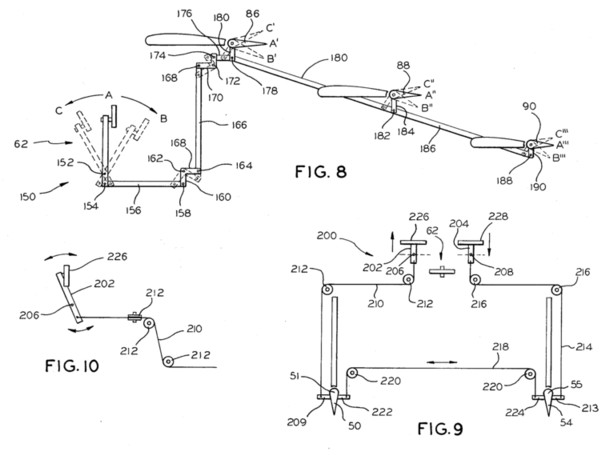
The forward wing is placed ahead of and above the centre of gravity; the rear wing is aft and below it. Both wings carry eleflaps that move together: lowering both increases lift, raising both decreases lift. Differential movement of the forward and rear eleflaps controls pitch. End-plate vertical airfoils with rudders provide yaw control and act as vertical stabilisers. The pendulum-like mass distribution gives a natural tendency to level flight. A radio-controlled gasoline-driven model has demonstrated the claimed stability and control characteristics.
Principles
- Full-span flaps acting as combined control surfaces (flaps/elevators/ailerons)
- End-plate vertical stabilisers with rudders
- Short-coupled wing arrangement for pendulum stability
- Pusher propeller configuration
- Differential eleflap movement for pitch control
Scientific Domains
Mechanisms of Action
- Lift modulation via vertically swingable eleflaps
- Yaw control via rudders on end-plate vertical airfoils
- Pitch control through differential eleflap deflection
- Stability from centre-of-gravity placement and short-coupled layout
Energy Sources
Applications
- commuter airplane
- cargo transport
- crop-dusting
- low-level military reconnaissance
- amphibious glider
- hang-glider
Claimed Performance
Almost impossible to crash, stable in all attitudes, short take-off and landing distances, high lift, easy to learn to fly, capable of multiple mission profiles (passenger, cargo, crop-dusting, reconnaissance, amphibious glider).
Experimental Evidence
A radio-controlled gasoline-driven model was built and demonstrated the claimed stability, control, and short-field performance in flight tests.
Replication Status
Radio-controlled model built and tested; no full-scale prototype reported.
Limitations
- No full-scale prototype built
- Design based on anecdotal psychic vision rather than engineering analysis
- Lack of quantitative performance data
- No independent peer-reviewed testing
Red Flags
- Reliance on psychic vision as the source of the design
- Absence of rigorous engineering calculations or test data
- No independent verification or replication beyond a small RC model