Goal
Produce water and oxygen from lunar ilmenite using solar energy to support astronauts on the Moon.
Problem
Need for in-situ generation of life-support consumables (water, O_2) on the Moon, reducing the mass of supplies that must be launched from Earth.
Concept Summary
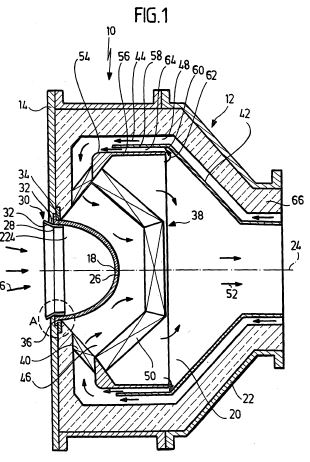
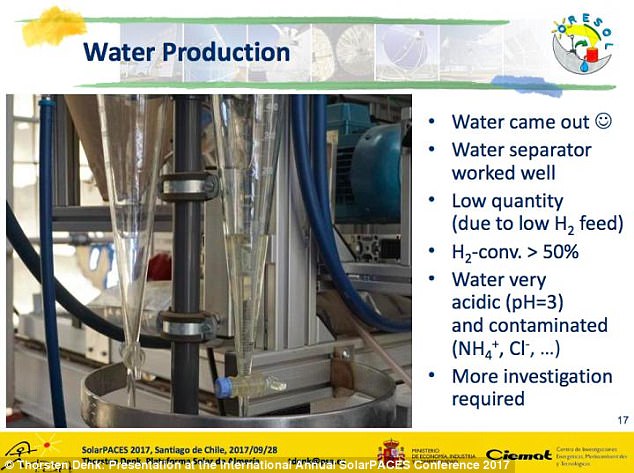
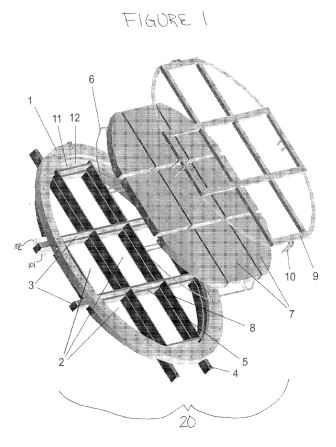
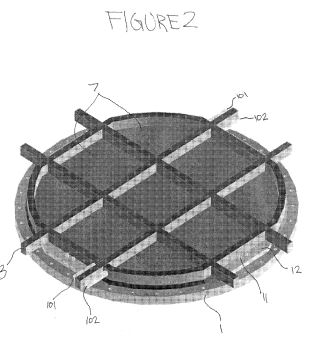
A concentrated-solar, fluidized-bed reactor that heats ilmenite (FeTiO_3) to ~970 deg C, releasing water vapor which is then electrolyzed to give oxygen and recycle hydrogen. The system is powered by solar electricity (<10 kW) and can process 25 kg of lunar regolith per hour, yielding ~700 kg of water per hour and 2.5 kg of O_2 in four hours.
Principles
- Concentrated solar thermal heating
- Fluidized-bed chemical reduction
- Thermochemical water release from ilmenite
- Electrolysis of water
Scientific Domains
Materials
- Ilmenite (FeTiO_3)
- Quartz glass (window material)
- Water
- Hydrogen
Mechanisms of Action
- Solar concentrator focuses sunlight onto a reactor cavity
- Heat raises ilmenite temperature to ~970 deg C, causing reduction and water vapor release
- Water vapor is condensed and electrolyzed using solar-generated electricity
- Hydrogen produced is recycled for subsequent reduction cycles
Energy Sources
Applications
- Lunar habitat life-support
- Space mission fuel production (oxygen + hydrogen)
- Terrestrial solar-thermal water-splitting
Claimed Performance
700 kg of water per hour and 2.5 kg of oxygen in four hours, using <10 kW of electricity; processes 25 kg of regolith in under one hour.
Experimental Evidence
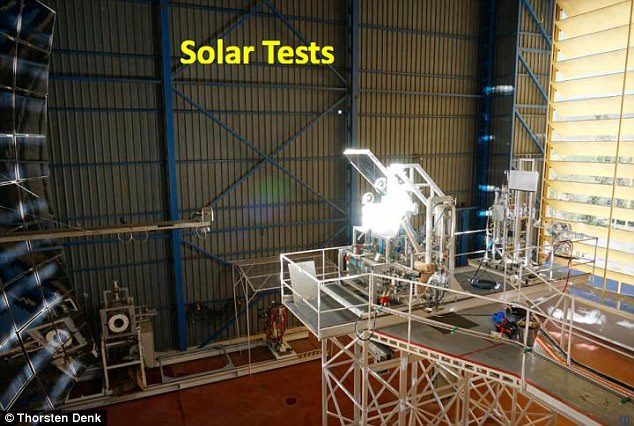
Six-month test run on Earth; demonstrated 25 kg particle load processed in <1 h; temperature control between 970 deg C and 1000 deg C without sintering; power consumption <10 kW.
Replication Status
Tested by the inventor's team; no independent replication reported.
Limitations
- Requires an initial hydrogen supply
- Maximum operating temperature limited to ~1000 deg C to avoid sintering
- Large solar concentrator needed for continuous operation
- Performance demonstrated only in Earth-based tests