Goal
Generate lift and thrust for aircraft using ion-wind propulsion, enabling vertical take-off, hover, and high-altitude flight without moving mechanical parts.
Problem
Need for a propulsion system that can provide lift without rotors or jets, allowing VTOL operation, high-altitude flight, and reduced mechanical failure risk.
Concept Summary
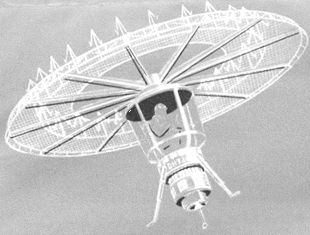
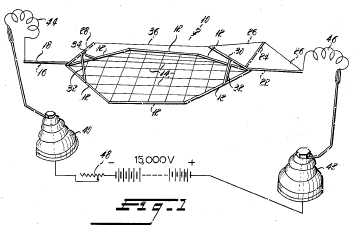
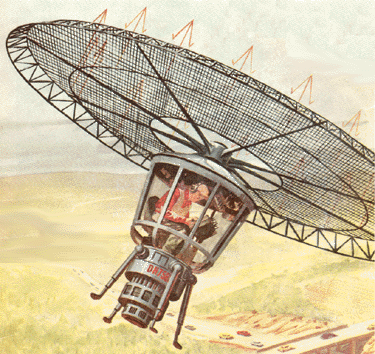
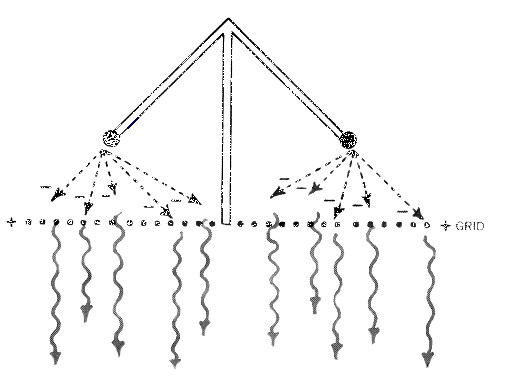
The Ionocraft uses high-voltage spikes to ionize air; the resulting ions are accelerated toward a positively charged wire-mesh grid, colliding with neutral air molecules and creating a downward airflow (ionic wind) that provides lift and thrust, analogous to a helicopter's downdraft but with no moving parts.
Detailed Description
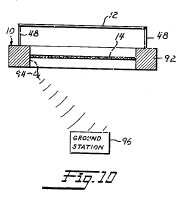
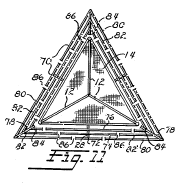
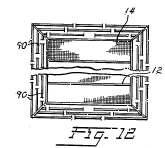
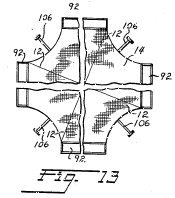
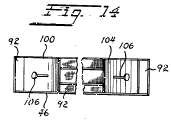
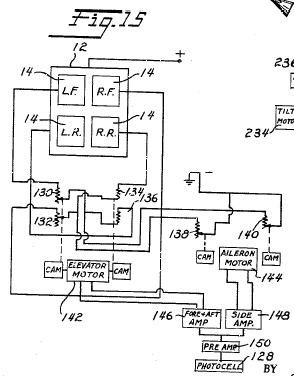
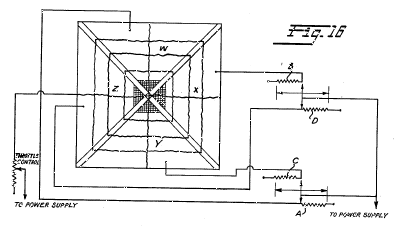
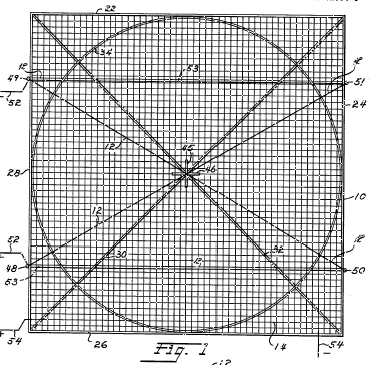
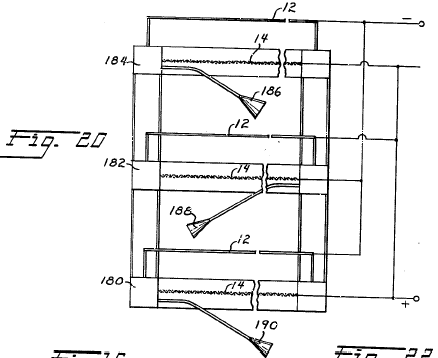
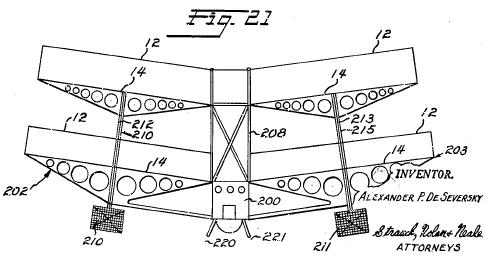
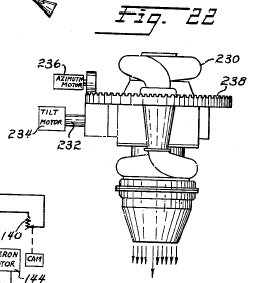
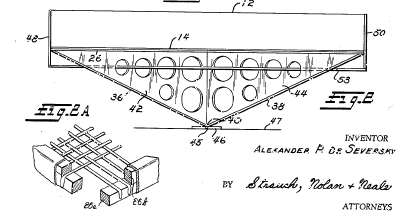
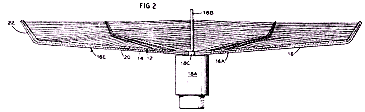
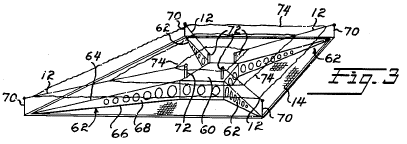
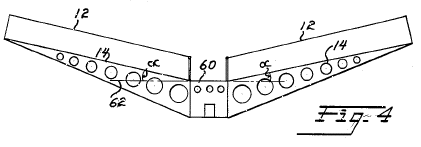
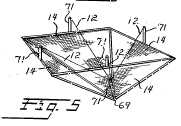
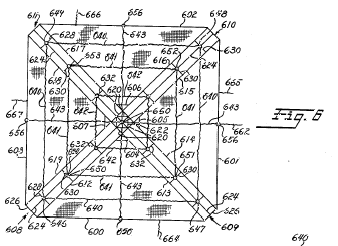
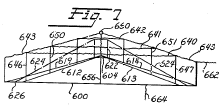
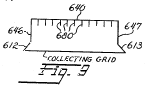
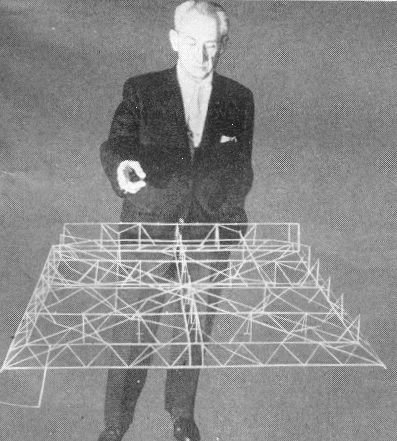
A rectangular frame holds an array of tall metal spikes (negative electrode) above an open wire-mesh grid (positive electrode). When a high negative voltage (~=30 kV) is applied, electrons are emitted from the spikes, ionizing surrounding air molecules. The ions accelerate toward the grid, transferring momentum to neutral air through collisions, producing a directed downdraft that lifts the craft. Steering is achieved by varying voltages to different sections of the grid, creating differential lift and allowing pitch, roll, and yaw control. The prototype measured 1296 in^2, cost about $5 in balsa wood and aluminum wire, and required ~90 W (3 mA at 30 kV) to hover a two-ounce model.
Principles
- Electrohydrodynamics
- Ionic wind generation
- Momentum transfer from ions to neutral air
Scientific Domains
Materials
- Aluminum wire
- Balsa wood
- Metal spikes (conductive)
- Wire-mesh grid
Mechanisms of Action
- Air ionization
- Ion acceleration by electric field
- Collision-induced air movement
Energy Sources
Applications
- VTOL aircraft
- Commuter transport
- Military reconnaissance
- Weather observation platforms
- Skyborne antenna
Claimed Performance
90 W (30 kV at 3 mA) to fly a two-ounce model; approximately 0.96 hp per pound, far exceeding typical helicopter power-to-weight ratios.
Experimental Evidence
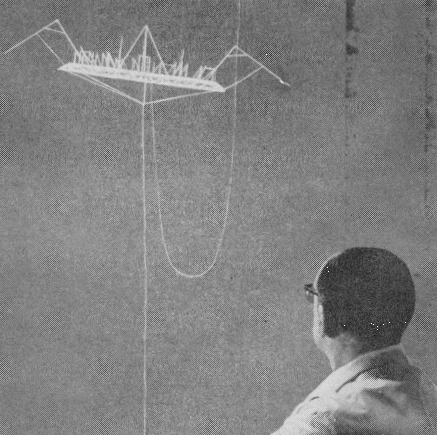
A scale model demonstrated lift, hover, and controlled turns when powered by an external 30 kV/3 mA supply via a feeder cable.
Limitations
- Low overall efficiency; high power required for modest lift
- Current prototypes cannot carry their own power source
- Requires high-voltage equipment, posing safety concerns
Red Flags
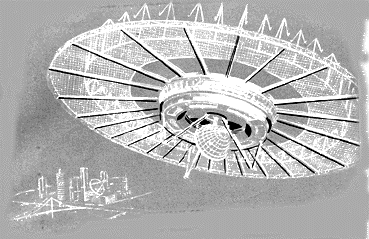
- Claims of 300,000 ft altitude and city-block-size craft are speculative and not demonstrated