Goal
Harvest atmospheric moisture as a source of clean drinking water.
Problem
Water scarcity in arid and semi-arid regions, especially where conventional water supplies are limited.
Concept Summary
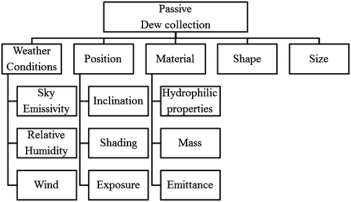
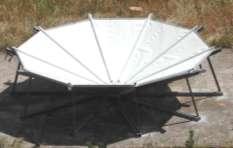
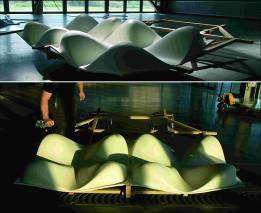
Passive dew collectors use radiative cooling and optimized geometrical shapes to lower the surface temperature below the ambient dew point, causing water vapor to condense. The collected droplets run off by gravity or are harvested from the surface. Materials with high infrared emissivity and solar reflectivity (e.g., TiO_2/BaSO_4-filled LDPE) enhance cooling, while shape (conical, inverted pyramid, egg-box, origami) influences airflow and yield.
Detailed Description
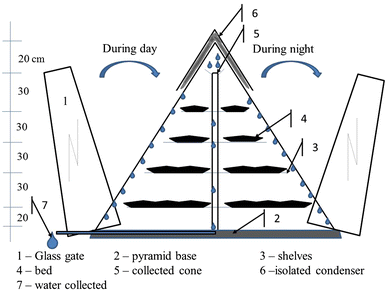
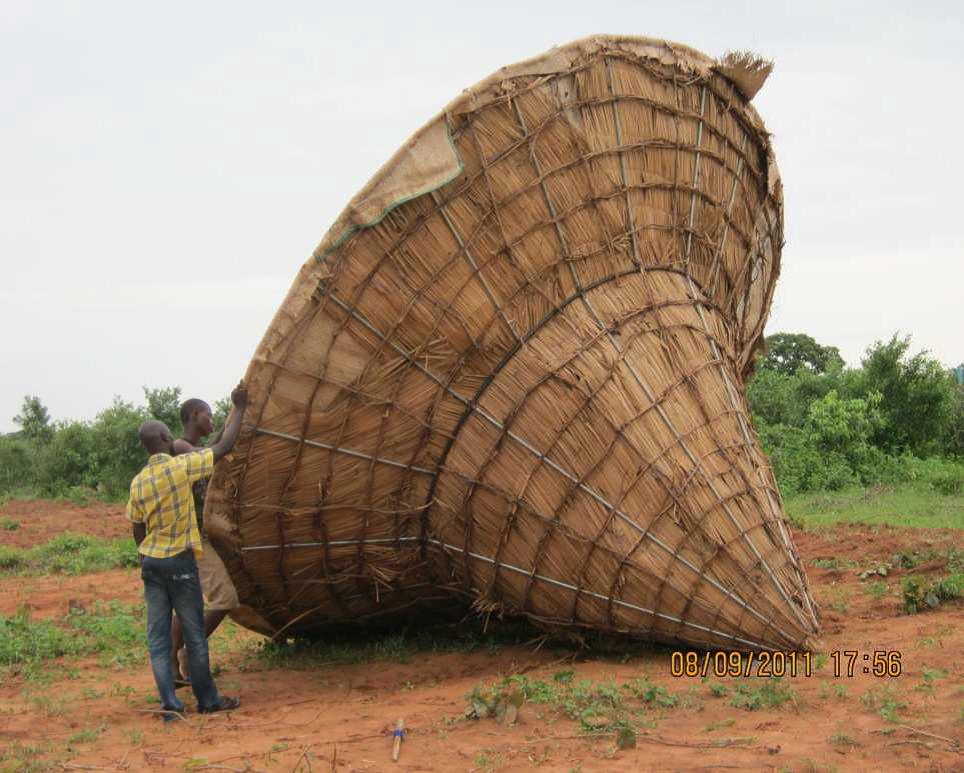
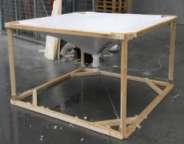
The prototype built by Gabin Koto NaGobi uses locally sourced materials (plastic, metal framing) and a simple roof-mounted condenser. Experiments in Pessac, France (2009) compared four geometries: a 30 deg conical shape gave 22 % higher yield than a flat reference, an inverted pyramid 20 %, an egg-box 10 %, and an origami pattern up to 120 % (400 % at low yields). The OPUR condensing foil (0.39 mm thick) consists of 5 % vol. TiO_2 microspheres (0.19 um), 2 % vol. BaSO_4 (0.8 um) in a low-density polyethylene matrix with 1 % surfactant, providing strong mid-IR emission and solar reflectance for passive radiative cooling. No external energy input is required; the system relies on ambient air, humidity, and solar radiation for cooling.
Principles
- Radiative cooling
- Condensation of water vapor
- Gravity-driven runoff
- Geometrical optimization of airflow
- Hygroscopic absorption (biological example)
Scientific Domains
Materials
- Low-density polyethylene (LDPE)
- TiO_2 microspheres (0.19 um)
- BaSO_4 particles (0.8 um)
- Surfactant additive (non-soluble)
- Local construction materials (plastic sheets, metal frames)
Mechanisms of Action
- Surface emits infrared radiation to space, lowering temperature below dew point
- Water vapor condenses on cooled surface
- Droplets coalesce and flow down by gravity
- Solar reflectivity reduces heating, maintaining cooling
Applications
- Drinking water supply for remote or arid communities
- Irrigation of crops and young trees
- Supplemental water source on islands and rooftops
Claimed Performance
Prototype harvests up to 4 L of water per night; conical shape yields 22 % more than planar reference, origami up to 120 % (400 % at low yields); DEW project reported dew contributed 26 % of total water collected on a 15.1 m^2 roof.
Experimental Evidence
2009 experiments in Pessac, France measured yield increases for four geometries; DEW project (2005-2005) measured 26 % contribution of dew to total water on a 15.1 m^2 roof; OPUR foil properties documented in footnote.
Replication Status
Preliminary measurements reported; multiple independent studies cited (e.g., Beysens et al., Nikolayev, Khalil et al.).
Limitations
- Yield depends heavily on ambient humidity and temperature
- Low wind speeds reduce benefit of certain geometries
- Material durability under UV exposure not fully studied
- Limited scalability without structural support