Goal
Collect water from atmospheric moisture (dew, fog) to supply livestock and remote settlements
Problem
Lack of reliable water sources in dry soils and remote areas without springs or rainfall
Concept Summary
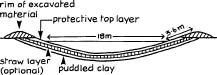
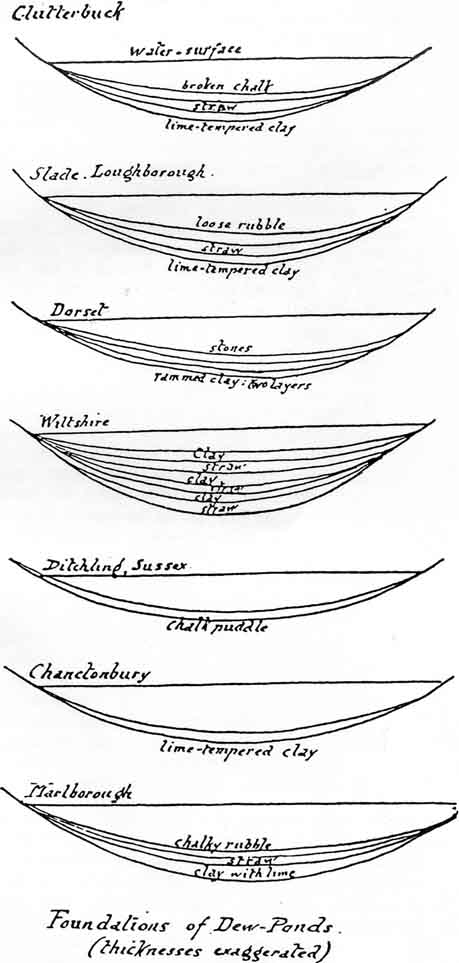
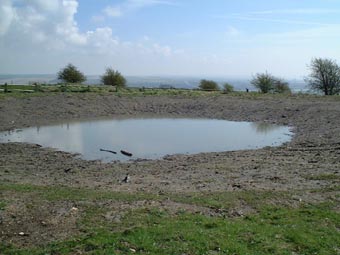
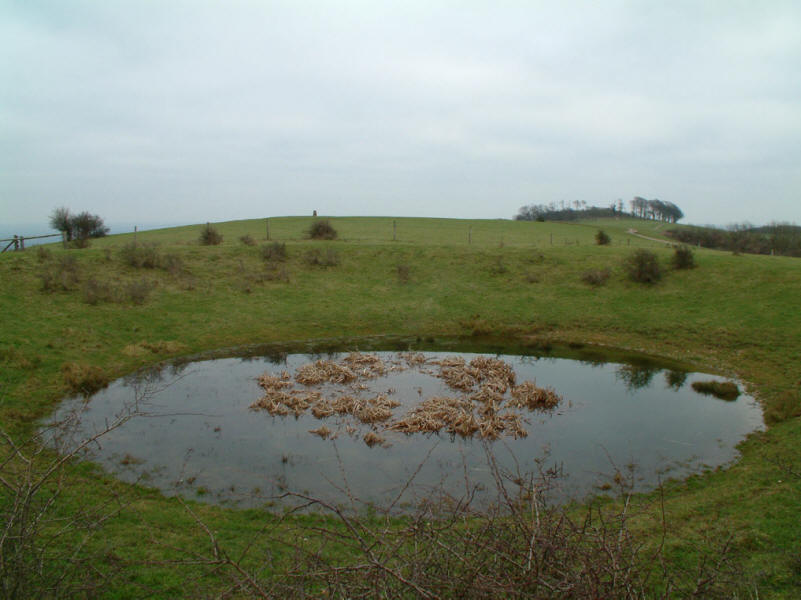
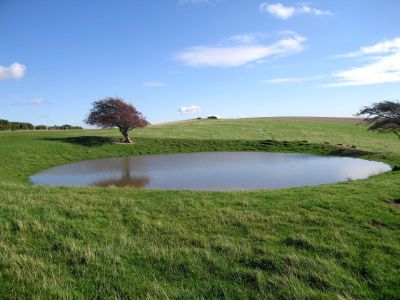
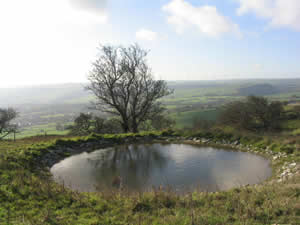
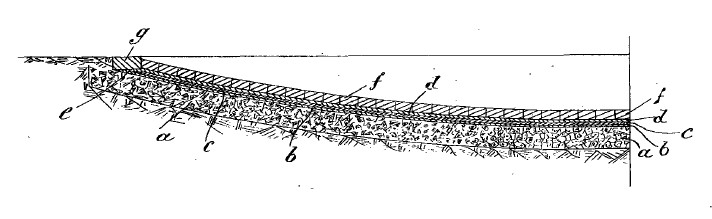
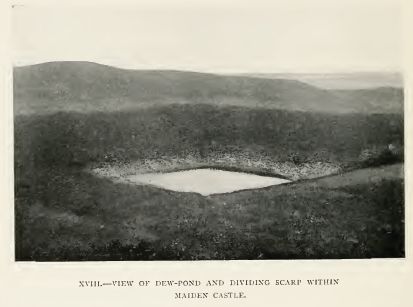
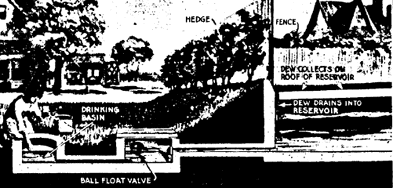
A dew pond is a shallow basin constructed with an impervious, low-thermal-conductivity lining (e.g., straw, clay, chalk, asphalt, asbestos) that keeps the water surface cooler than the surrounding air at night. The temperature difference causes atmospheric water vapour to condense on the cool surface, gradually filling the pond with water that can be used for drinking livestock or humans.
Principles
- Radiative cooling of water surface
- Thermal insulation using low-conductivity layers (straw, asbestos)
- Condensation of water vapour when air temperature drops below dew point
- Impermeable lining to retain collected water
Scientific Domains
Materials
- straw
- clay
- chalk
- sand
- asbestos
- asphalt
- concrete
- stone
- brick
- grass
- soil
Mechanisms of Action
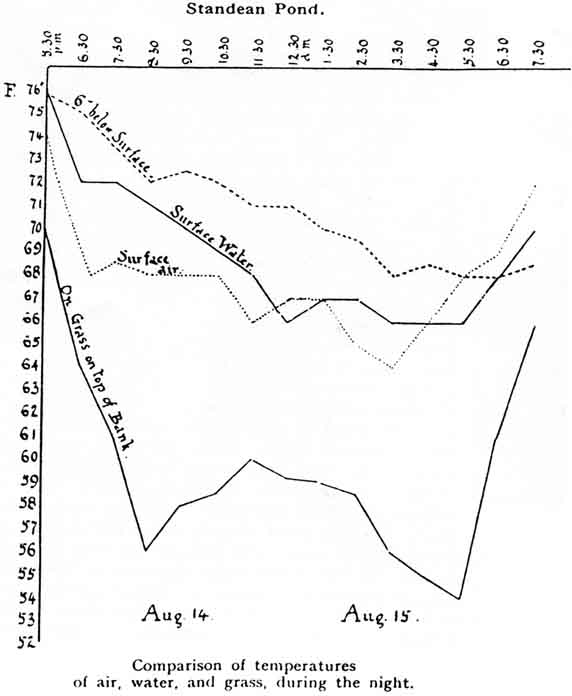
- Cool water surface radiates heat to night sky
- Non-conductive straw layer prevents heat equalization with earth
- Air in contact with cooled surface reaches dew point -> condensation
- Collected water is retained by impermeable clay/chalk layer
Energy Sources
Applications
- Livestock water supply in arid upland farms
- Remote homestead water provision
- Low-cost water harvesting for small communities
Claimed Performance
Russell's 30-ft-square reservoir claimed to collect 24 000 gallons per year (~=120 gal/day in summer, 50 gal/day otherwise); historic pond at Selbourne held 15 000 gallons supplying 300 sheep and cattle daily.
Experimental Evidence
Historical observations by Gilbert White (1775) and later investigations by UNEP (1982) and Pacey & Cullis (1986) note that dew ponds retain water and can supply livestock, though the exact source (rainfall vs. condensation) was debated.
Replication Status
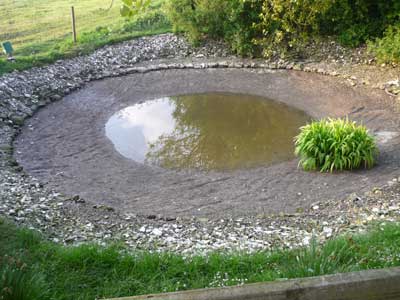
Functional dew ponds still exist on England's Sussex Downs and other ridges; patents (e.g., British Patent 13,039, 1905) describe the construction method.
Limitations
- Dependence on local climate (requires cool nights and sufficient humidity)
- Straw layer degrades quickly and must be replaced
- Performance drops if lining becomes wet or damaged
- Limited capacity compared with conventional reservoirs
Red Flags
- Historical claims are largely anecdotal and lack modern experimental data
- Potential confusion between rainwater and dew/fog contributions
- Use of asbestos in historic patents raises health concerns