Goal
Achieve high specific power, continuous firing without a spark ignition system, reduced wear and cooler operating temperature.
Problem
Conventional piston engines have lower specific power, require continuous spark ignition, generate high wear and operate at higher temperatures.
Concept Summary
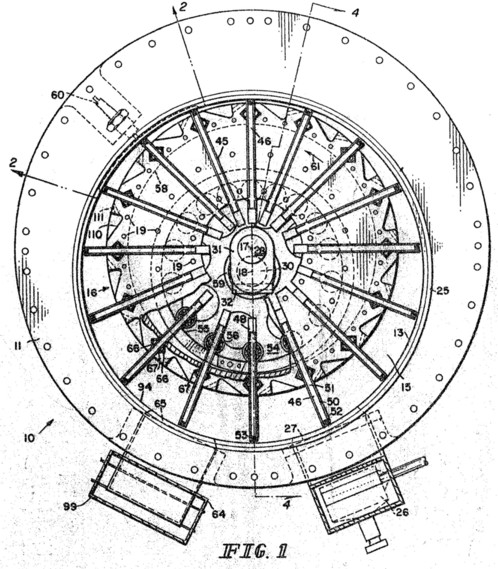
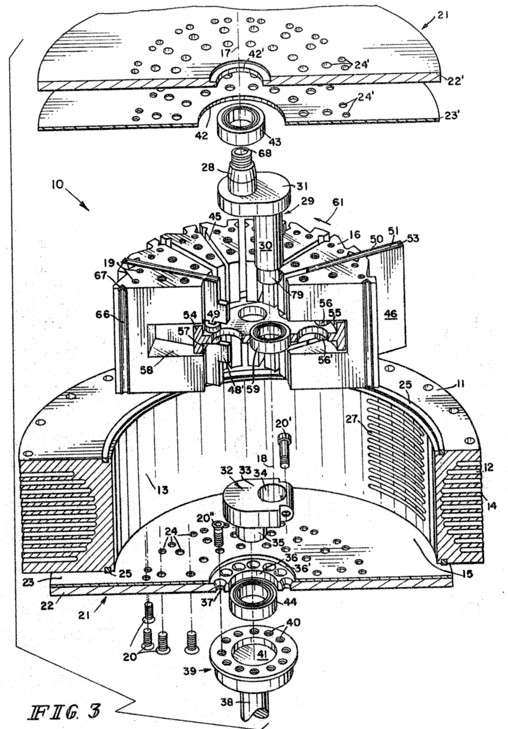
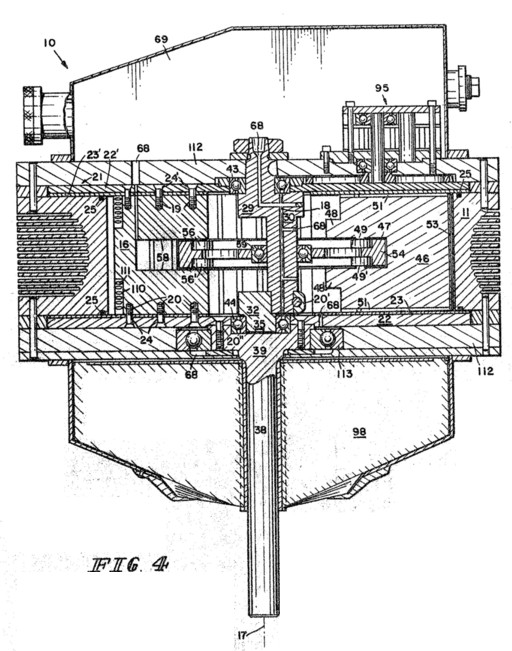
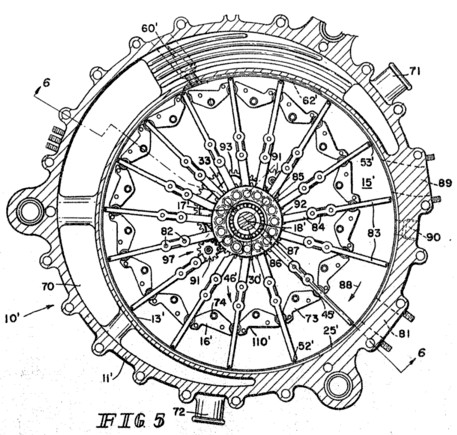
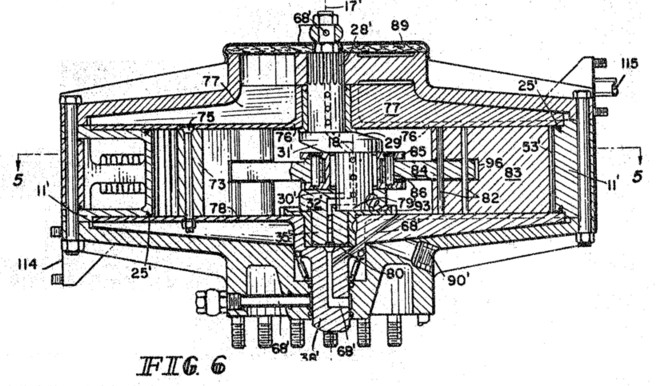
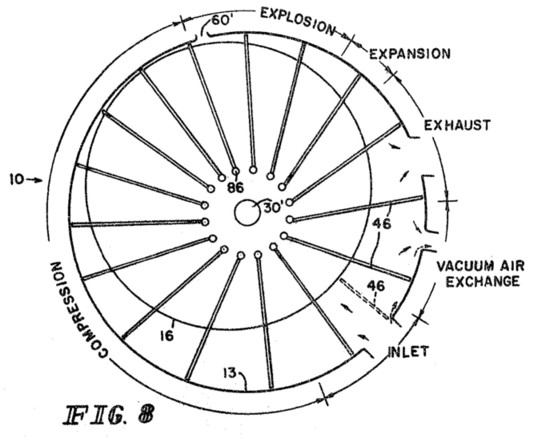
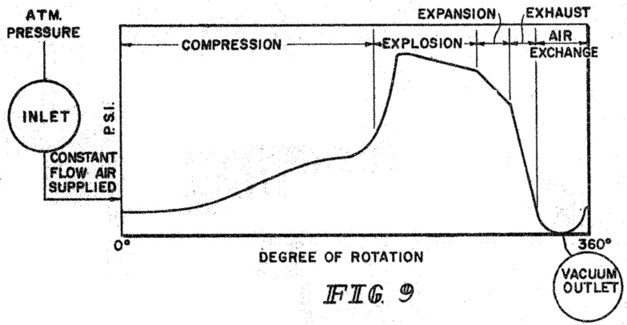
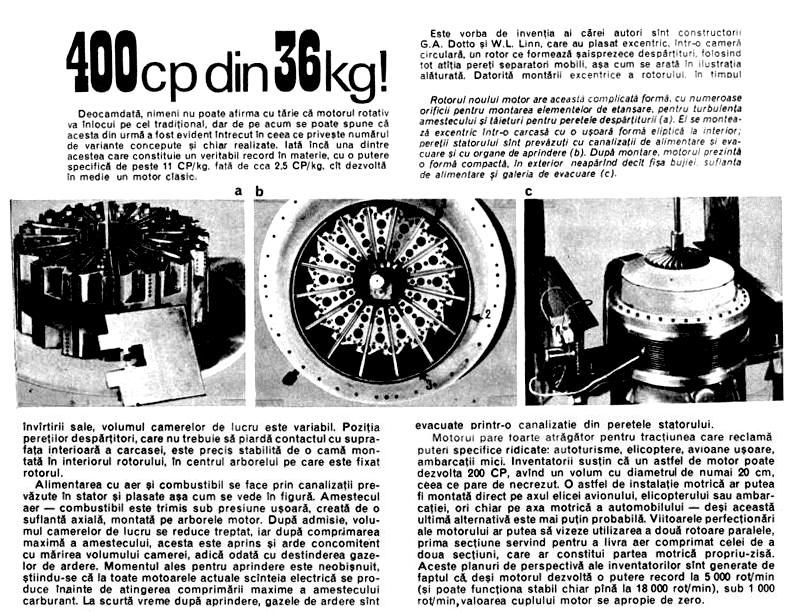
The invention uses an eccentric rotor mounted in an elliptical chamber that creates 16 variable-volume chambers separated by 16 mobile walls. A cam inside the rotor stabilizes the walls against the inner surface. Air-fuel (air-oil) mixture is supplied at low pressure by an axial blower, compressed, ignited during the decompression stroke, and expanded to drive the shaft. Continuous firing eliminates the need for a spark system, and the design claims higher power-to-weight and cooler operation.
Principles
- Eccentric rotor geometry
- Variable chamber volume
- Cam-stabilized mobile walls
- Continuous combustion (no spark)
- Ignition during decompression
- Air-oil mixture lubrication
Scientific Domains
Materials
- steel
- aluminum
- oil
- air
Mechanisms of Action
- Rotational motion of eccentric rotor varies chamber volume
- Air-fuel mixture is compressed and ignited at maximum pressure
- Combustion gases expand, pushing the rotor and producing shaft torque
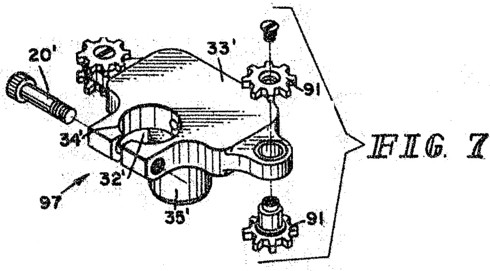
- Cam mechanism keeps dividing walls in contact with cylinder wall to reduce wear
Energy Sources
Applications
- automobiles
- helicopters
- ships
- aircraft
Claimed Performance
400 HP from a 36 kg engine (~=11 HP/kg), 200 HP from a 20 cm diameter engine, continuous firing at 5 000 rpm and up to 18 000 rpm.
Limitations
- Requires precise cam and wall alignment
- No independent performance data
- Potential wear of mobile walls if lubrication fails
Red Flags
- Claims are based solely on patent description without experimental validation
- High specific power figures lack supporting data