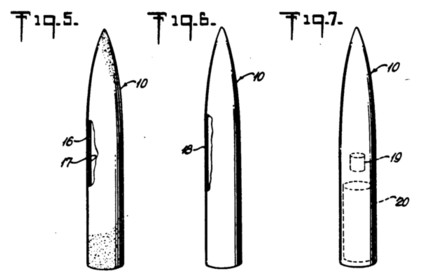
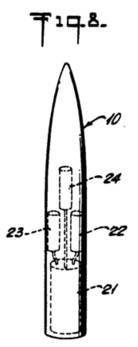
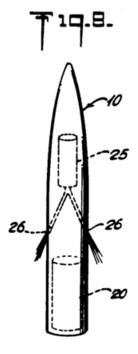
Goal
Increase rocket altitude by exploiting electrostatic repulsion between a positively charged rocket and the Earth's electric field.
Problem
Conventional rockets are limited by gravity and chemical thrust; the invention seeks to augment lift using atmospheric electric fields.
Concept Summary
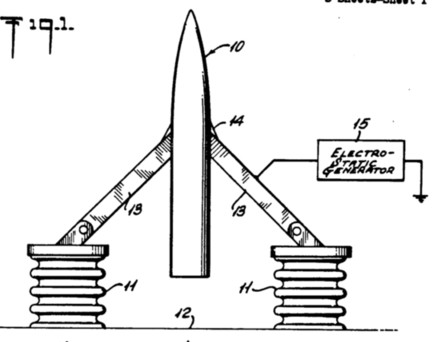
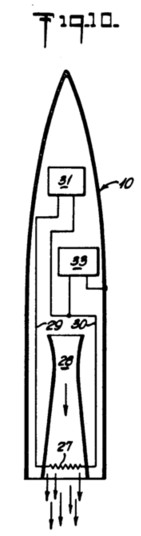
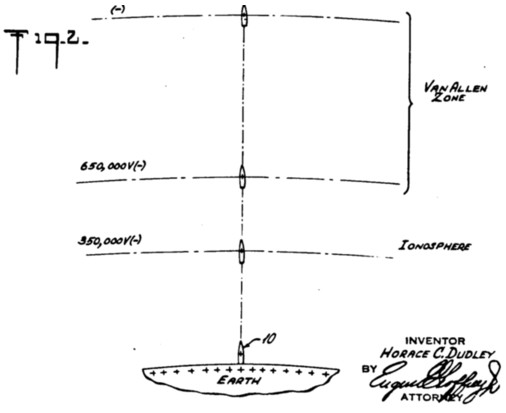
The rocket is charged positively (by a Van de Graaff generator or by conductive coatings) so that it is repelled by the Earth's positively charged surface and attracted to the negatively charged region aloft. By controlling surface conductivity, humidity, temperature, and time of day, the rocket retains charge during ascent, achieving greater altitude than an uncharged rocket.
Principles
- Electrostatic repulsion between like charges
- Charge accumulation on conductive surfaces
- Interaction with Earth's atmospheric electric field
- Dielectric dependence on humidity, temperature, pressure
- Magnetic coupling between moving charge and Earth's magnetic flux
Scientific Domains
Materials
- Glass spheres
- Plastic (die-cast high dielectric plastic)
- Aluminum
- Lacquer containing aluminum powder
- Clear acrylic lacquer
- Aluminum paint
- Rubber washers
- Metal launch rod
Mechanisms of Action
- Charging the rocket body to a high positive potential
- Electrostatic force overcoming gravity
- Retention of charge during ascent
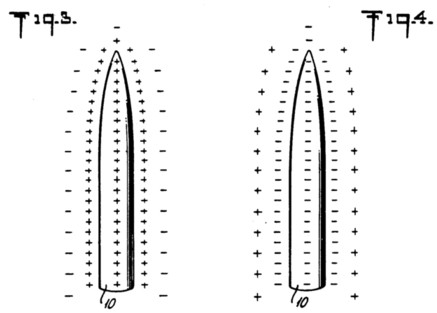
- Magnetic stabilization via concentric magnetic field lines
Energy Sources
Applications
- High-altitude research
- Atmospheric studies
- Low-cost experimental propulsion
Claimed Performance
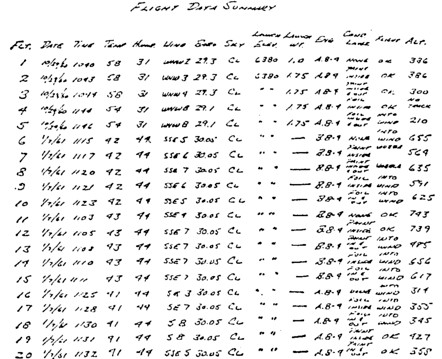
Conducting rockets attain altitudes about 400 % greater than non-conducting rockets under optimal low-humidity, low-temperature conditions.
Experimental Evidence
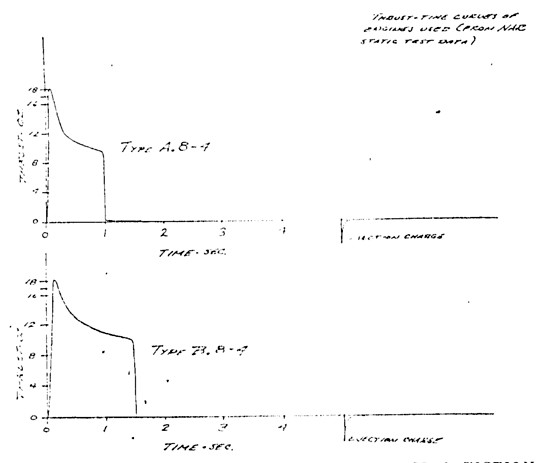
The author reports 200 firings of small rockets with systematic variations in surface conductivity and environmental conditions, noting consistent altitude increases for conducting rockets and dependence on humidity and temperature.
Limitations
- Strong dependence on humidity, temperature, and atmospheric pressure
- Requires high-voltage equipment for charging
- Limited thrust; cannot replace primary rocket propulsion
- Potential charge leakage over time
Red Flags
- No peer-reviewed publication
- Evidence based on author's own tests only
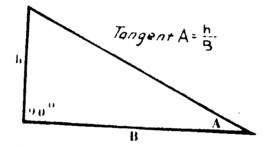
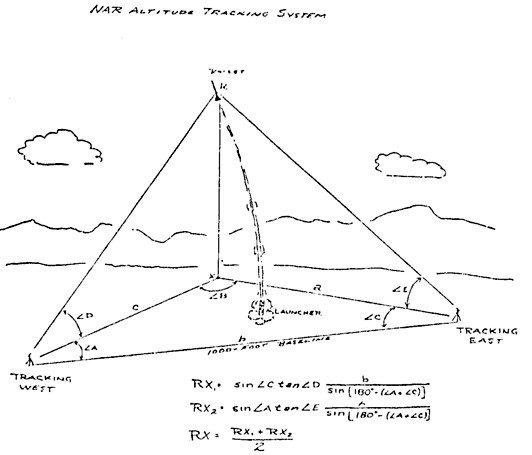
- Potential measurement errors in height estimation