Goal
Increase combustion efficiency, reduce hazardous emissions, and lower ignition energy costs in internal combustion engines.
Problem
Incomplete fuel combustion, high emission of pollutants, and high energy consumption for ignition in conventional spark-plug systems.
Concept Summary
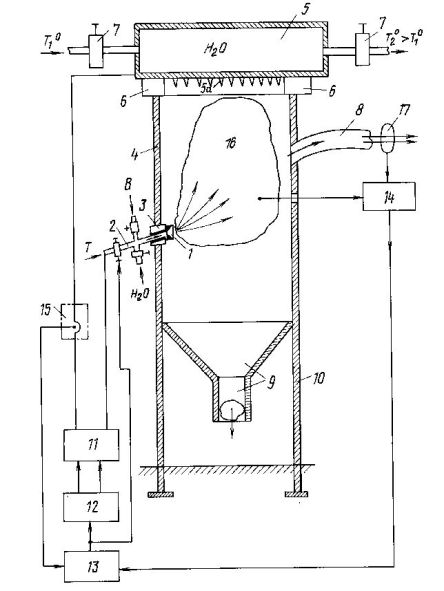
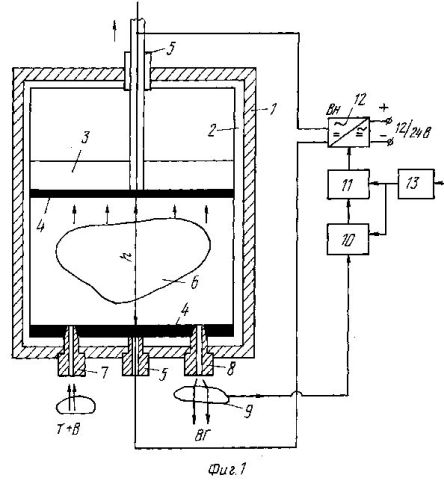
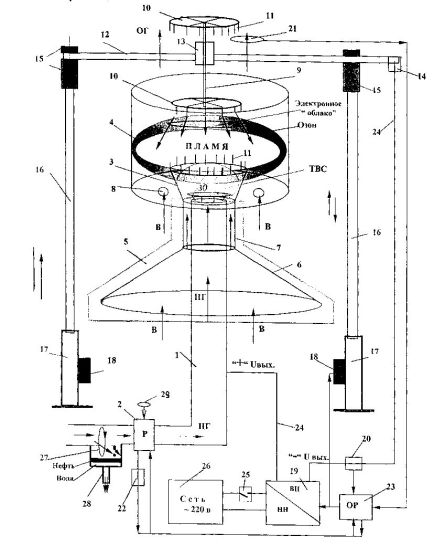
A static-electricity-based ignition system that supplies a high-voltage radio-frequency (RF) field to an ignition plug. The system uses a static electricity source and an RF generator to create a strong electrostatic field around the plug, producing plasma that ignites the fuel-air mixture more completely and with lower energy input.
Detailed Description
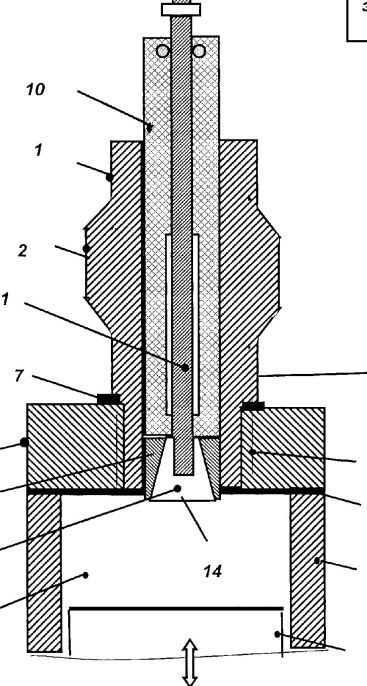
The invention comprises a metal-housed ignition plug installed inside an insulator. An inner electrode runs along the plug axis, while an outer concentric electrode forms a ring with an inner cavity. The outer electrode is electrically connected to the metal casing and to a static electricity source via low-voltage wires. The inner electrode is linked through an electronic switch to a radio-frequency generator, which in turn is powered by the static electricity source. When the engine cycle reaches the appropriate piston lift, the RF generator creates a high-frequency electric field that ionizes the fuel-air mixture at the plug tip, forming a plasma kernel that ignites the mixture. The intensity and frequency of the field can be adjusted according to combustion temperature, piston position, and exhaust gas toxicity, allowing optimized combustion and reduced emissions.
Principles
- Electrostatic ignition
- Radio-frequency plasma generation
- High-voltage discharge
- Ionization of fuel-air mixture
Scientific Domains
Materials
- Metal housing
- Insulating ceramic or polymer
- Metal electrodes (inner and outer)
- Static electricity source (e.g., triboelectric generator)
- Radio-frequency generator components
Mechanisms of Action
- Ionization of fuel-air mixture by strong electric field
- Plasma kernel formation at ignition plug
- Enhanced flame propagation through pre-ionized mixture
Energy Sources
Applications
- Automotive internal combustion engines
- Industrial gas burners
- Power generation turbines
Claimed Performance
Higher combustion efficiency, reduced emission of hazardous substances, and reduced energy costs for ignition.
Limitations
- Requires high-voltage equipment and insulation
- Potential electrode wear and degradation
- Complexity of RF control circuitry