Goal
Generate continuous heat for domestic heating with far less electrical input than conventional systems.
Problem
High cost and carbon emissions of gas/oil heating and the need for large storage for renewable electricity.
Concept Summary
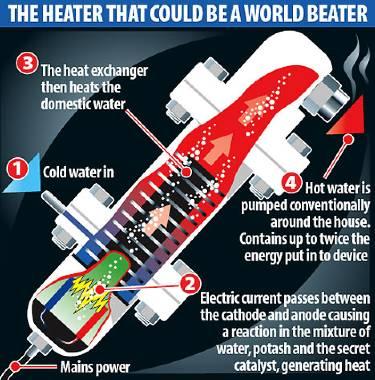
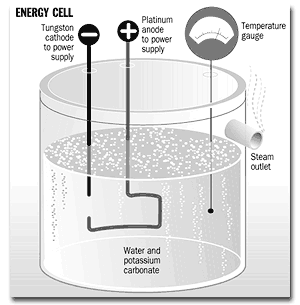
A sealed tube containing water, potassium carbonate (potash) and a secret chrome-based catalyst is passed an electric current. The mixture allegedly taps a metastable hydrogen state, releasing heat that exceeds the electrical energy supplied.
Detailed Description
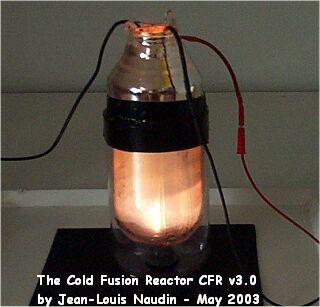
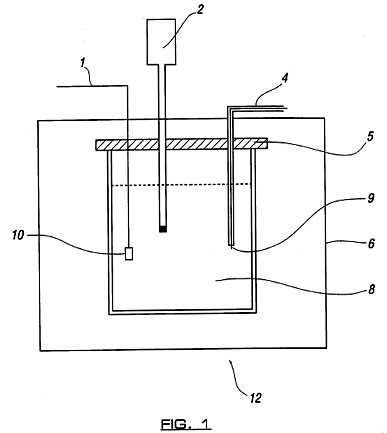
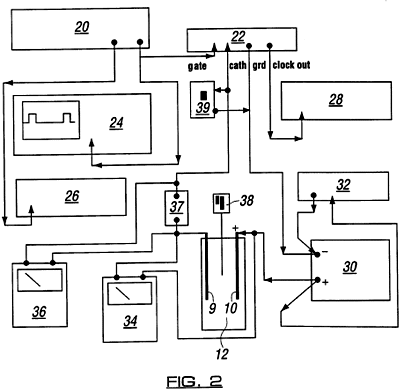
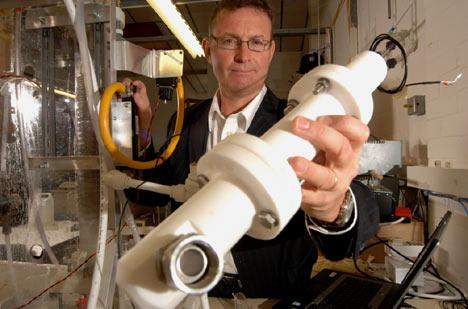
The device is a 12-inch tube with two electrodes immersed in a liquid mixture of water, potassium carbonate and a proprietary catalyst. When a low-power electrical current (~=1 kW) is applied, the system heats the surrounding water to near-boiling, producing up to 10 kW of thermal power. The inventors claim the effect is due to a quantum-theoretic metastable hydrogen state, but the exact mechanism is not understood. Independent tests have reported energy gains ranging from 3x to 26x the electrical input, though critics point to possible measurement errors in the electrical input.
Principles
- Metastable hydrogen state
- Electrochemical reaction in aqueous electrolyte
- Quantum theory of sub-atomic energy
Scientific Domains
Materials
- Water
- Potassium carbonate
- Chrome-based catalyst
Mechanisms of Action
- Electric current through water-potassium carbonate-catalyst mixture
- Exothermic reaction releasing heat
- Possible nuclear-like energy release from hydrogen atoms
Energy Sources
Applications
- Domestic space heating
- Hot water production
- Supplementary heating for renewable energy systems
Claimed Performance
Energy gain of 3-26 times the electrical input (~=150-200 % more heat in some tests); prototype aims to convert <1 kW electricity into 10 kW heat.
Experimental Evidence
Independent evaluation by Dr Jason Riley (Bristol University) reported 3-26x energy gain; Jim Lyons (University of York) reported 150-200 % more heat than electricity supplied.
Replication Status
Independent laboratory tests have reported gains, but no commercial or large-scale replication has been demonstrated.
Limitations
- Unexplained physical mechanism
- Potential errors in measuring electrical input
- No peer-reviewed publications
- Scalability and long-term durability not demonstrated
Red Flags
- Claims appear to violate conservation of energy
- Lack of independent, peer-reviewed replication
- Possible use of faulty measurement equipment
- Company has a history of disputed "free energy" claims