Goal
Increase crop yield and reduce weed growth by using a paper mulch that retains heat and moisture.
Problem
Low crop yields due to weed competition, soil moisture loss, and temperature fluctuations.
Concept Summary
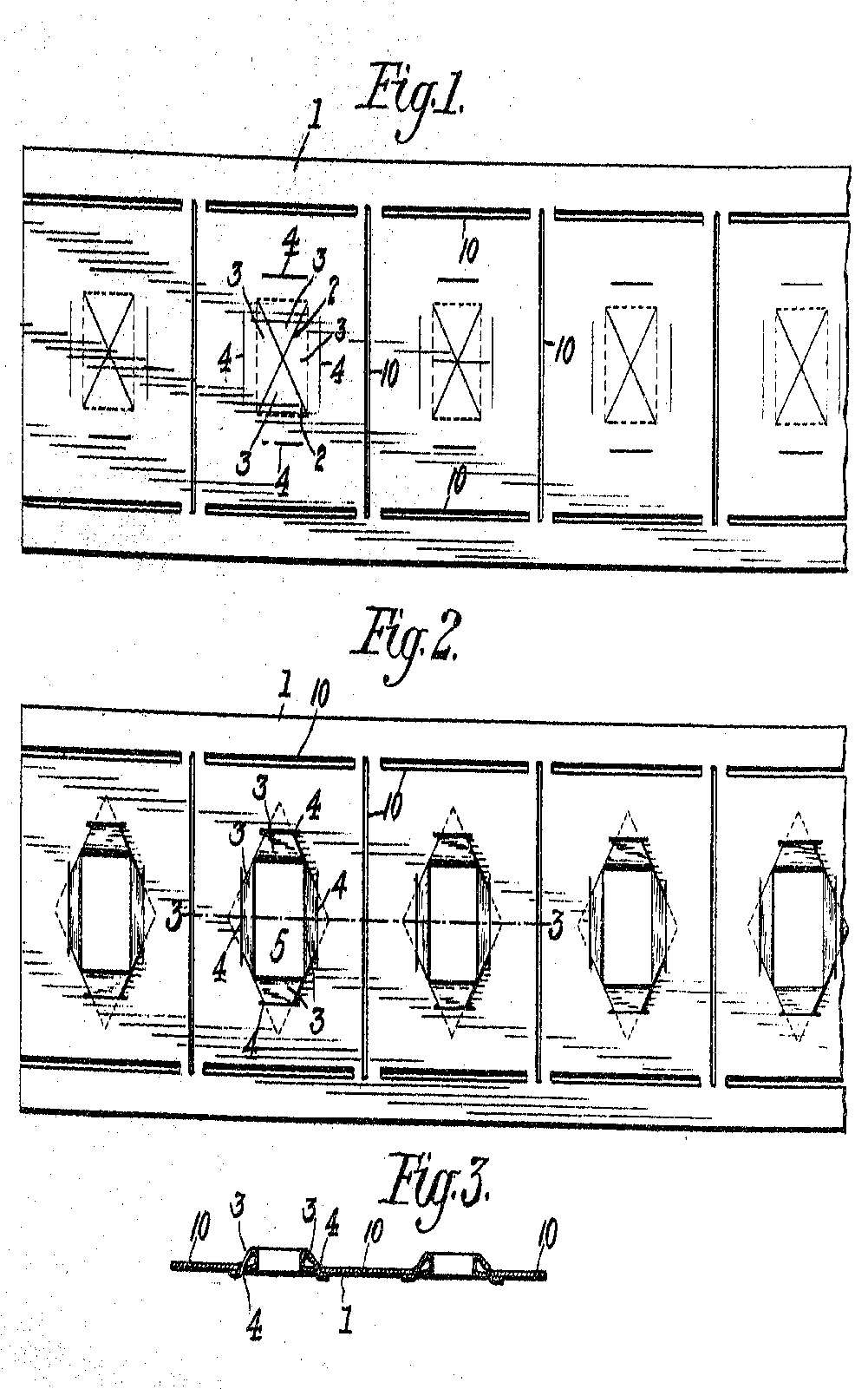
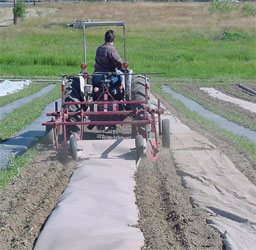
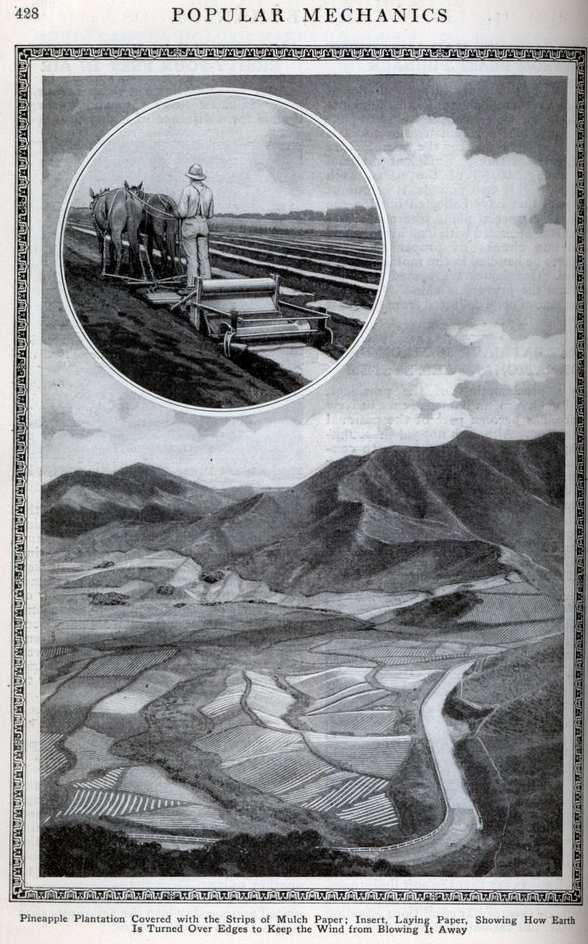
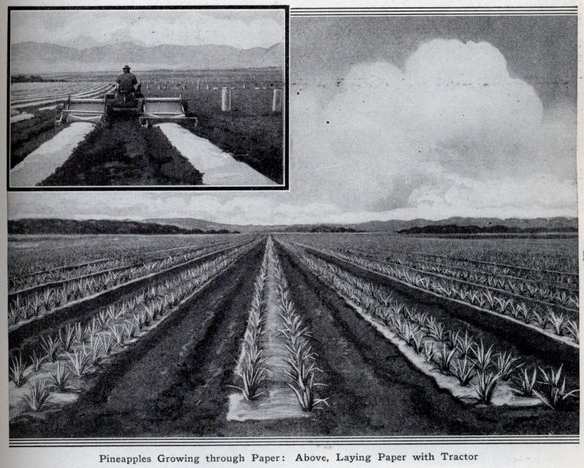
A mulching system that lays strips of asphalt-treated felt or coated paper over agricultural fields. The mulch creates a physical barrier that conserves soil moisture, retains heat, suppresses weeds, and protects roots, thereby enhancing plant growth and yield.
Principles
- Moisture retention
- Thermal insulation
- Weed suppression
- Soil temperature regulation
Scientific Domains
Materials
- Paper
- Asphalt-treated felt
- Vegetable oil (soybean, linseed, epoxidized soybean oil)
- Cross-linked drying oil
- Kraft paper
Mechanisms of Action
- Physical barrier preventing weed emergence
- Insulation reducing heat loss
- Reduced surface evaporation
- Controlled moisture seepage through perforations
Applications
- Commercial agriculture
- Home gardening
- Weed control
- Soil moisture management
Claimed Performance
Yield increases up to 168 % for tomatoes, 70 % for tobacco, and an average of 40 % for pineapples; weed control eliminates weeding costs (~$45/acre).
Experimental Evidence
Field trials in Hawaii, Florida, and California reported consistent yield gains; 4,250 mi of mulch laid on Hawaiian pineapple plantations costing ~$250 k; ARS trials showed oil-coated kraft paper lasted 13 weeks versus 2.5 weeks for untreated paper.
Replication Status
Multiple independent field trials reported; patents issued (CA215027, US6312826); ongoing research at USDA ARS and WSU.
Limitations
- Labor-intensive installation (hand-laying or horse-drawn machines)
- Limited durability of uncoated paper in wet conditions
- Potential degradation before full crop cycle if not properly coated