Goal
Demonstrate the existence of a magnetic current (flow of magnetic monopole-like particles) and magnetic-induced water decomposition, proposing a new form of energy transmission parallel to electric current.
Problem
Absence of experimentally verified magnetic monopoles and a lack of alternative current carriers beyond electric charge.
Concept Summary
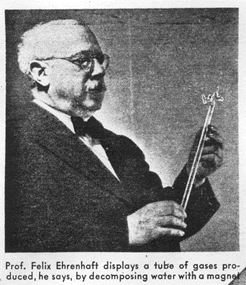
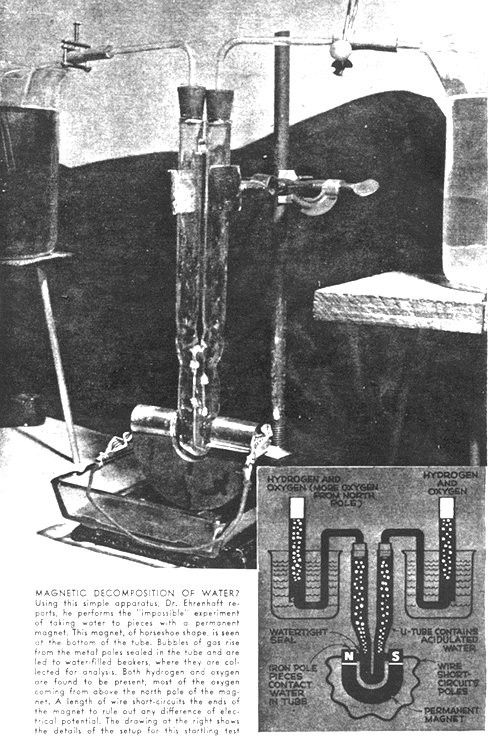
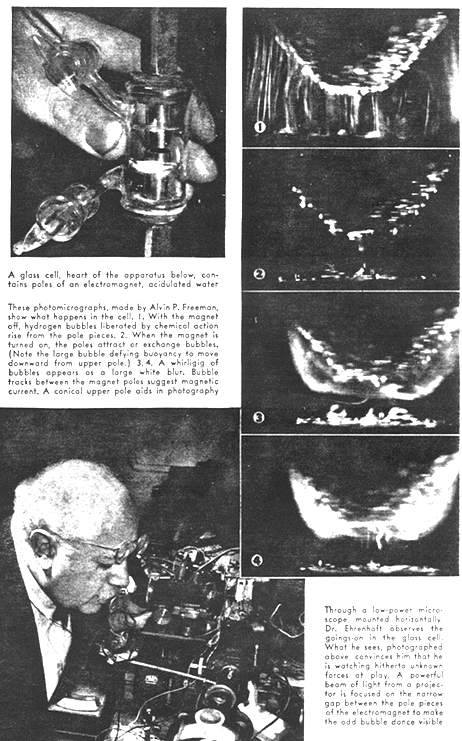
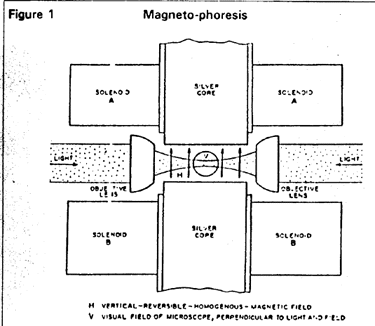
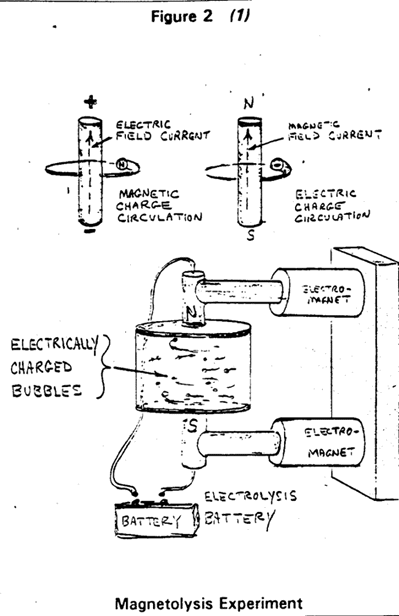
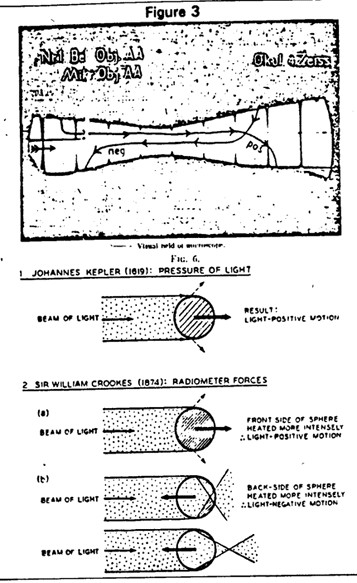
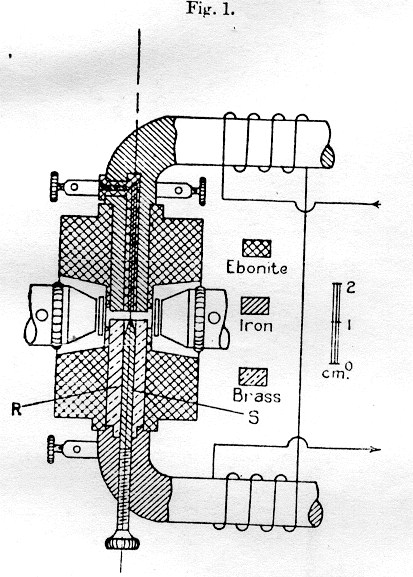
Ehrenhaft reported that a strong magnetic field, applied to a U-shaped tube containing acidulated water and iron pole pieces, produces measurable oxygen alongside hydrogen, suggesting water decomposition driven by magnetism. He further observed bubbles and metal particles moving in characteristic patterns (cling, reverse buoyancy, whirligig rotation) when the magnetic field is switched on, interpreting these as evidence of magnetic ions (monopoles) and a magnetic current analogous to electric current.
Principles
- Magnetic monopole hypothesis
- Magnetic current (flow of magnetic charge)
- Magnetically induced water electrolysis
- Magnetic field-driven particle motion
Scientific Domains
Materials
- Pure Swedish iron rods
- Sulfuric acid (~=1 % solution)
- Copper sulfate solution
- Glass cell
- Alnico permanent magnet
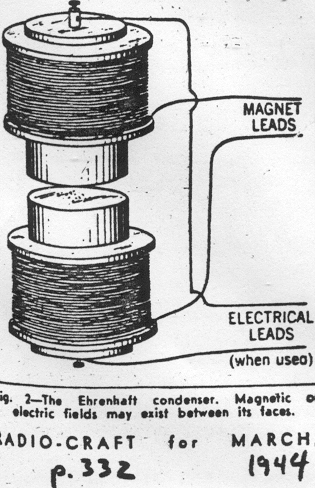
- Electromagnet
Mechanisms of Action
- Magnetic field induces decomposition of water producing O_2 and H_2
- Magnetic ions (single-pole particles) migrate between pole pieces
- Rotational motion of bubbles and metal particles caused by magnetic forces
Energy Sources
Applications
- New types of motors and generators
- Power transmission via magnetic current
- Transformers operating on direct current
- Potential Earth-magnetism energy harvesting
Claimed Performance
Oxygen observed in proportions ranging from 2 % to 12 % of the total gas volume; Alnico magnet strength loss of ~10 % after 24 h of use.
Experimental Evidence
Ehrenhaft reported oxygen evolution (2-12 % vol.) above the north pole of a magnet; bubbles stopped or reversed direction when the field was on; copper particles rotated opposite to hydrogen bubbles; later confirmed by Gabriel Kane and Charles B. Reynolds (1945). Subsequent attempts were reported as unrepeatable.
Replication Status
Partial replication reported (Kane & Reynolds, 1945); later attempts failed to reproduce the magnetic water decomposition.
Limitations
- Results not independently reproducible
- No theoretical framework accepted by mainstream physics
- Permanent magnet degradation during experiments
Red Flags
- Contradicts established electromagnetic theory
- Lack of peer-reviewed, reproducible data
- Claims of magnetic monopoles without independent verification