Goal
Provide a portable, electricity-free water purification system that removes bacteria and viruses from raw water.
Problem
Lack of clean drinking water in emergency or infrastructure-poor settings and need for non-toxic antibacterial filtration.
Concept Summary
A filter made from wood-derived cellulose fibres coated with a positively-charged polymer (polyvinylamine) that electrostatically attracts and binds negatively-charged bacteria and viruses. Water passes by gravity; bacteria are trapped on the filter surface and the used filter can be safely burned, leaving no toxic residues.
Principles
- Electrostatic attraction between positively-charged polymer and negatively-charged microorganisms
- Contact-active antibacterial killing
- Gravity-driven filtration
Scientific Domains
Materials
- Cellulose (wood fibres, nanofibrils)
- Polyvinylamine (PVAm)
- Polyacrylic acid (PAA) - optional multilayer component
Mechanisms of Action
- Surface charge reversal to bind bacteria
- Adsorption of microorganisms onto polymer-coated cellulose
- Contact-based cell membrane disruption
Energy Sources
Applications
- Emergency water treatment
- Portable water purification kits
- Antibacterial bandages and medical textiles
- Food packaging
Claimed Performance
Traps >99.9% of bacteria; no toxic leaching; filter can be safely burned after use.
Experimental Evidence
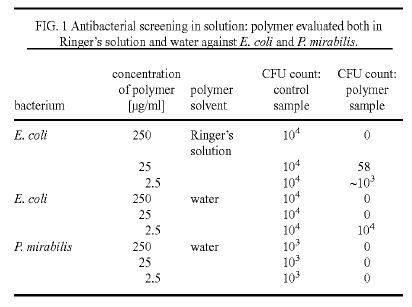
Laboratory tests showed >99.9% bacterial adhesion to the polymer-coated cellulose surface; the material was demonstrated in a gravity-driven prototype filter.
Replication Status
Prototype tested in laboratory; no commercial scaling reported.
Limitations
- Filter must be replaced or burned after a limited usage period
- Effectiveness against viruses not fully quantified
- Scaling to large-volume water treatment not demonstrated