Goal
Provide a non-toxic, inexpensive disinfectant and cleaning solution that kills bacteria, viruses and fungi while being safe for humans and the environment.
Problem
Reliance on hazardous chemical cleaners (bleach, ammonia) and the need for effective sanitation in food processing, healthcare, hospitality and water treatment.
Concept Summary
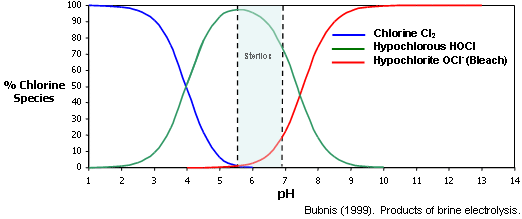
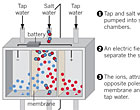
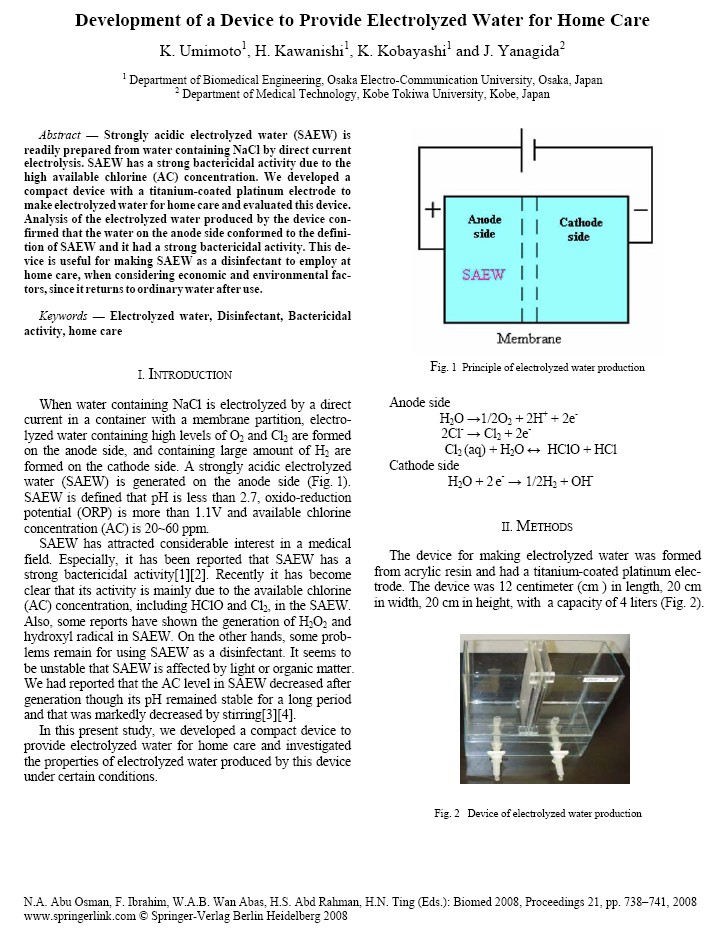
Tap water containing dissolved sodium chloride is passed through an electrolysis reactor that separates the cathodic and anodic streams. The cathode produces an alkaline solution rich in sodium hydroxide; the anode produces acidic hypochlorous acid (or sodium hypochlorite when neutralised). Both solutions act as powerful oxidising agents for disinfection and cleaning.
Principles
- Electrolysis
- Redox oxidation-reduction reactions
- Acid-base neutralisation
- Generation of oxidising agents (hypochlorous acid, sodium hypochlorite)
- Alkaline saponification (sodium hydroxide cleaning)
Scientific Domains
Materials
- Sodium chloride (table salt)
- Tap water
- Sodium hydroxide
- Hypochlorous acid
- Sodium hypochlorite
Mechanisms of Action
- Oxidative damage to microbial cell membranes and proteins
- Alkaline saponification of organic soils
- Disruption of viral envelopes
Energy Sources
Applications
- Surface disinfection (kitchens, hospitals, hotels)
- Food-processing sanitation
- Wound cleaning and healing
- Drinking-water purification
- Oil-well microbial control
- Air purification in taxis
Claimed Performance
Reported to be up to 10 times more effective than bleach at killing bacteria; capable of inactivating anthrax spores, salmonella, E. coli, Listeria and norovirus; shelf-life of 2 years for wound-healing formulation; cost less than a penny per gallon for industrial-scale production.
Experimental Evidence
Multiple peer-reviewed studies and industry trials (e.g., International Journal of Food Science & Technology 2005) demonstrate rapid reduction of microbial load on vegetables, food-processing equipment and clinical surfaces. U.S. FDA, USDA and EPA have approved the technology for various sanitation uses.
Replication Status
Commercially deployed in hotels, food-processing plants, hospitals, prisons and oil-well sanitation; several companies sell turnkey electrolysis units.
Limitations
- Electrolyzed water loses oxidising potency quickly; short shelf-life
- Initial capital cost of electrolysis units
- Requires regular monitoring of pH and chlorine concentration
- Health-benefit claims for drinking water lack scientific support
Red Flags
- Marketing of "miracle water" and health-boosting claims unsupported by data
- Use of the term "ionized water" as a sales gimmick