Goal
Achieve extremely high fuel efficiency and power output (~=300 miles per gallon) while simplifying engine construction.
Problem
Low fuel economy and complexity of conventional internal combustion engines.
Concept Summary
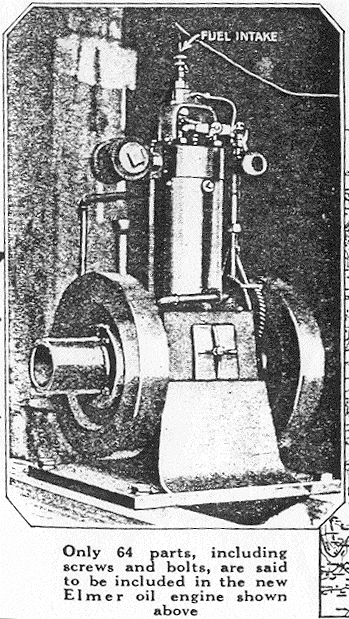
A four-cycle internal combustion engine that compresses liquid fuel (crude, mineral, animal or vegetable oil) in a confined chamber, causing thermal cracking of the oil into combustible gases. The cracked gases expand during the power stroke, providing thrust without a spark plug, carburetor, or conventional ignition system. The engine claims 200 % more power than comparable engines and 300 MPG fuel consumption.
Detailed Description
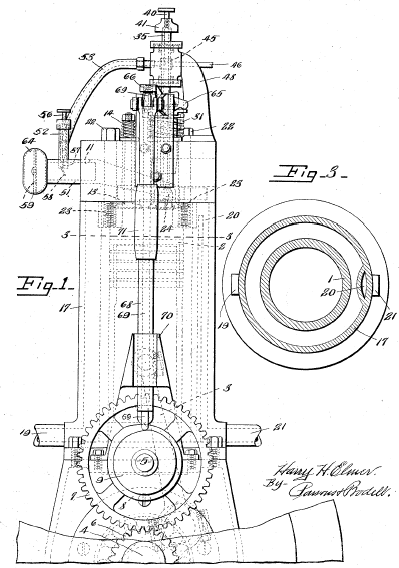
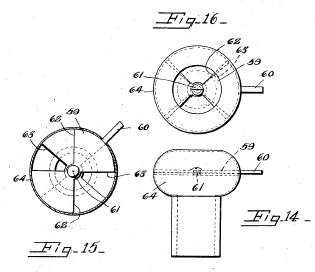
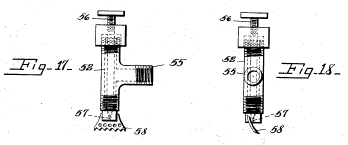
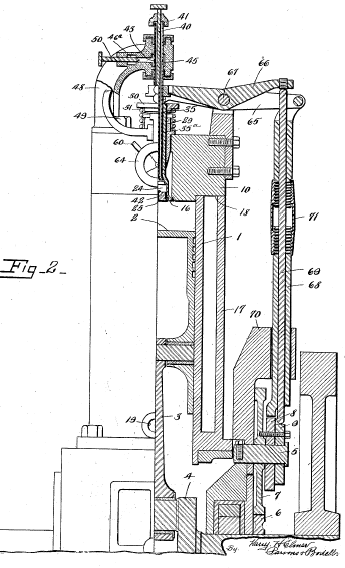
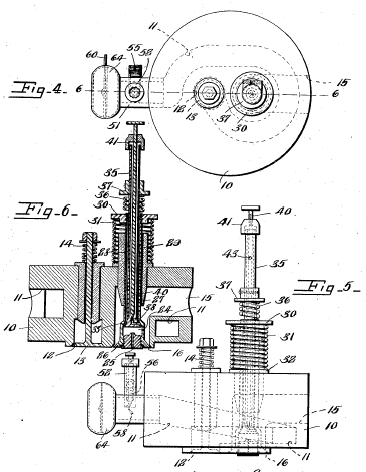
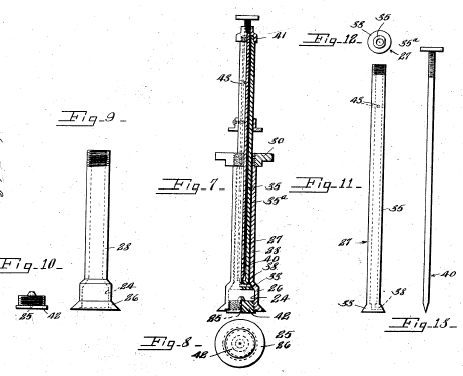
The engine uses a conventional piston-crank arrangement with a 4-stroke cycle (suction, combustion, expansion, exhaust). Liquid fuel is fed through needle valves into a generator chamber located in the exhaust valve. During the compression stroke, the fuel is heated by cylinder wall heat, vaporizes and cracks into hydrocarbon gases. The high-pressure gas jets through a small opening into the compressed air (combustion-supporting atmosphere) in the cylinder, where it ignites and expands, driving the piston down. An atomizing nozzle injects additional fuel into the intake air. The engine lacks a spark plug, carburetor, and traditional cooling system; a water jacket cools the cylinder head. Experiments reported powering 18 incandescent lamps with 1-1/4 pints of oil, and the engine was claimed to run on various oil types.
Principles
- Compression ignition
- Thermal cracking of liquid fuel
- Four-stroke cycle
- Atomization of fuel
- Jet injection
Scientific Domains
Materials
- Crude oil
- Mineral oil
- Animal oil
- Vegetable oil
- Water
Mechanisms of Action
- Compression of liquid fuel in a confined chamber
- Heat-induced cracking of oil into combustible gases
- Jet injection of cracked gases into compressed air
- Combustion of gases during power stroke
- Atomization of additional fuel in intake
Energy Sources
Applications
- Automobiles
- Airplanes
- Ships
- Lighting systems
Claimed Performance
300 miles per gallon fuel consumption; 200 % more power than same-size conventional engines; ability to run 18 incandescent lamps on 1-1/4 pints of oil costing less than a cent.
Experimental Evidence
The engine was reported to have generated sufficient power to run a battery of 18 incandescent lamps on 1-1/4 pints of oil, and to achieve 300 MPG in test runs.
Limitations
- No independent verification of performance claims
- Reliance on precise fuel cracking under engine conditions
- Potential wear from high-temperature cracking gases
- Absence of conventional cooling may limit durability
Red Flags
- Extraordinary efficiency claims without quantitative data
- Lack of peer-reviewed testing or replication
- No clear explanation of how power is generated without conventional combustion