Goal
Extract thermal energy, electrical power, and other work from high-density charge clusters (HDCC) and use the phenomenon for applications such as nuclear waste remediation.
Problem
Inefficient conversion of electrical energy in conventional discharge devices and the lack of a practical method to harness the energy of high-density electron clusters.
Concept Summary
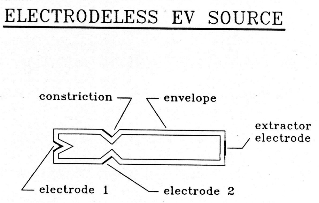
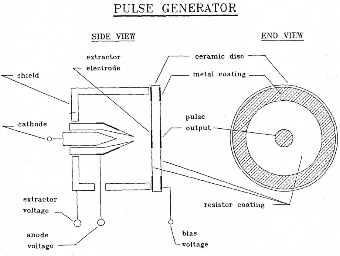
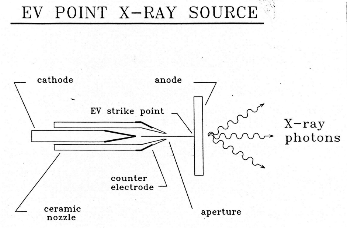
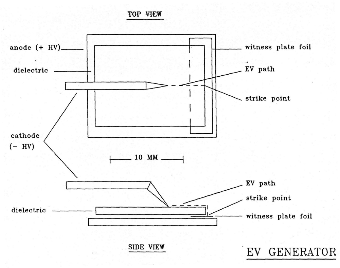
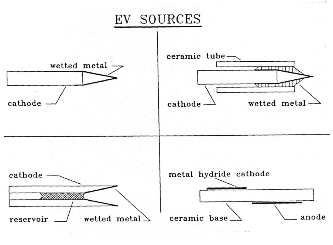
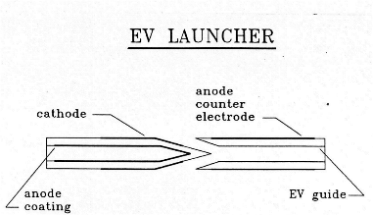
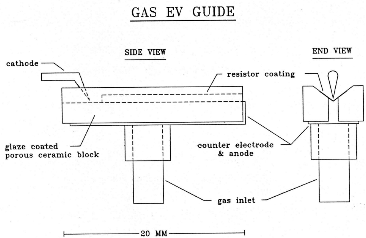
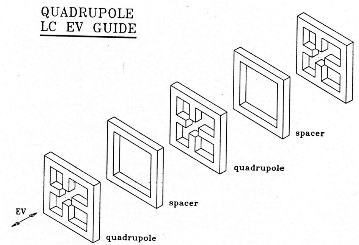
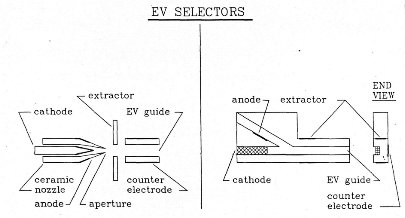
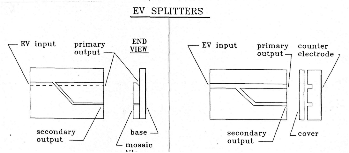
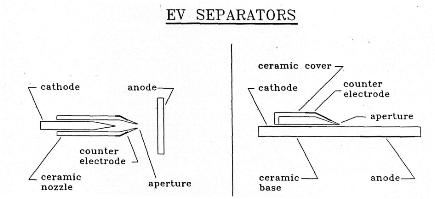
Electrum Validum (EV) is a high-density, negatively charged electron bundle (HDCC) formed by field emission under a strong electric field (2-10 kV) between a sharp cathode and an anode. The EV behaves like a soliton-like plasma plasmoid, can be guided by dielectric structures, and carries a large amount of binding energy. Devices described manipulate, isolate, and extract energy from EVs using electromagnetic containment, dielectric guides, and RF-excited electrodeless chambers.
Principles
- Field emission under high electric field
- Plasma/charge-cluster formation
- Soliton-like behavior of electron bundles
- Electromagnetic confinement in potential wells
- Dielectric guiding and RC/LC steering
- Radio-frequency excitation of gas plasma
Scientific Domains
Materials
- copper
- silver
- aluminum
- nickel
- molybdenum
- alumina (ceramic)
- fused quartz
- mercury
- glycerin
- potassium iodide
- nitroglycerin
- nitric acid
- diamond carbon
- graphite
- chromium
- tungsten
Mechanisms of Action
- High-voltage pulse creates runaway field emission
- Electrons bundle into a high-density charge cluster (EV)
- Ion cloud from cathode vapor provides mass and stabilization
- Dielectric surfaces and counter-electrodes guide EV motion
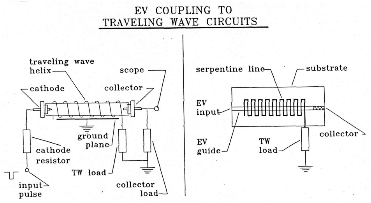
- Induced currents in external circuitry harvest electrical/thermal energy
Energy Sources
Applications
- electric power generation
- thermal power extraction
- nuclear waste remediation
- high-speed imaging/display devices
- RF plasma sources
Claimed Performance
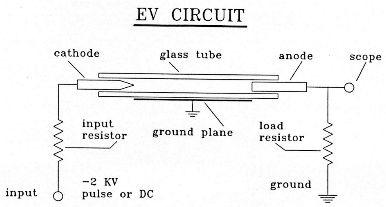
Anode current 1-6 A from a chain of 3-5 EV beads; EV velocity ~=0.1 c; EV size 0.1 um (up to 1 um); generation voltage as low as 100 V in low-pressure gas; pulse width down to 0.1 us; output voltages up to -2 kV on a 200 Omega delay line.
Experimental Evidence
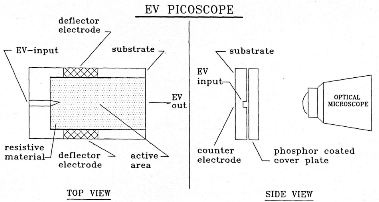
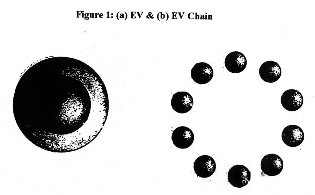
Observations of EV chains (up to 20 um diameter), measurement of anode current spikes with a wide-band oscilloscope, picoscope recordings of 10-13 s events, and demonstrated propagation of EVs in both vacuum and low-pressure gas environments.
Limitations
- Requires high-voltage pulses and precise electrode geometry
- Electrode tip erosion necessitates liquid conductor regeneration
- Operation limited to vacuum or low-pressure gas environments
- No independent peer-reviewed validation reported
Red Flags
- Claims of binding energy exceeding atomic values
- Potential overunity or free-energy implications
- Lack of independent replication or peer-reviewed data