Goal
Generate affordable, clean electricity from ocean wave energy.
Problem
High capital and maintenance costs of existing wave-energy converters and the need for low-cost renewable power.
Concept Summary
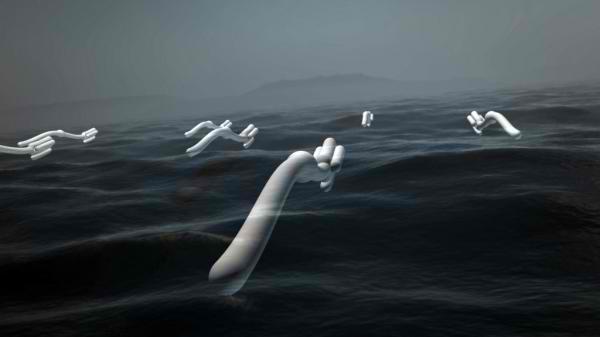
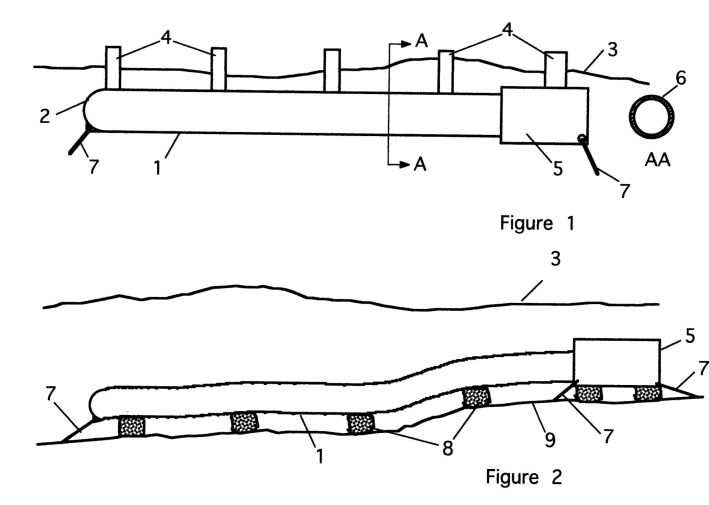
A long, rubber-elast tube tube distensible filled placed the is anchored sea closed oriented beneath the sea surface. Incoming waves compress the tube, creating a pressure 'bulge wave' that travels along the tube at the same speed as the external wave. The bulge wave drives a turbine (or piston-driven generator) at the far end, producing electricity that is transmitted to shore via a cable.
Detailed Description
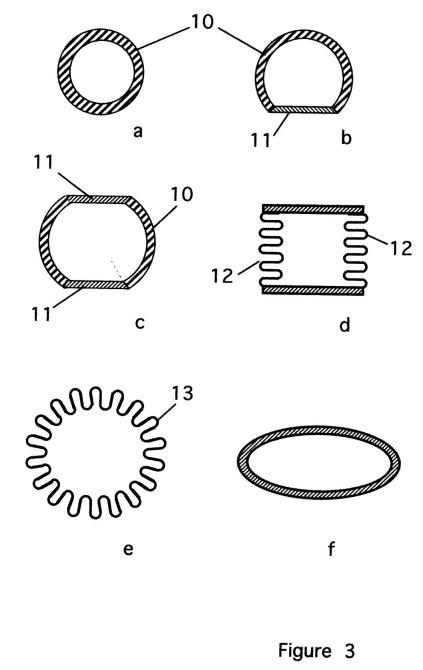
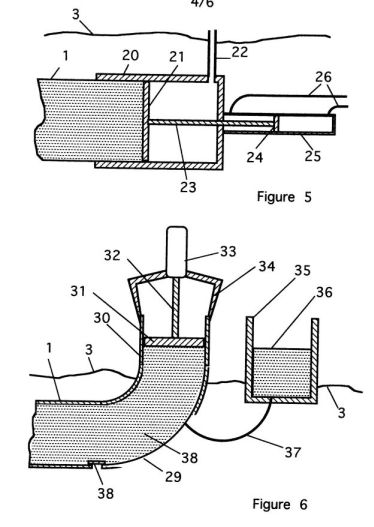
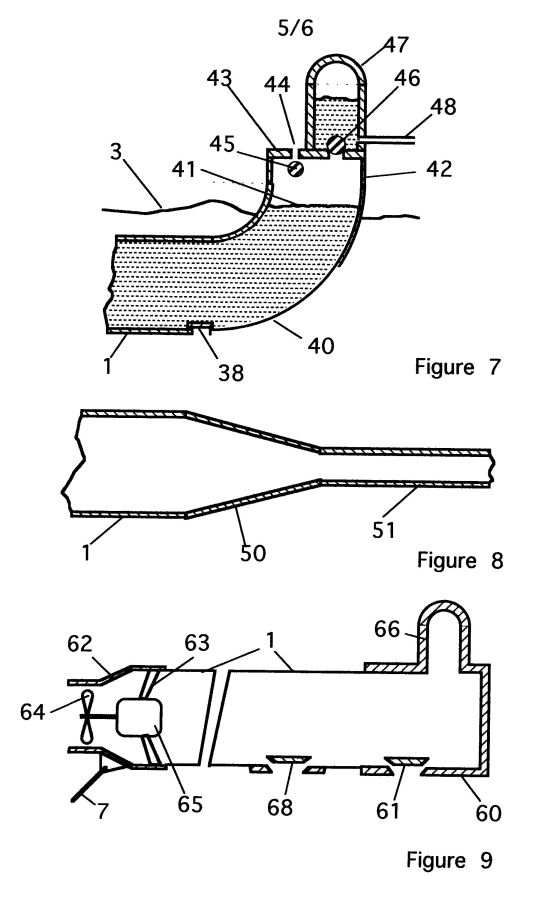
The Anaconda is a horizontal, distensible tube (typically rubber or a highly elastic composite) filled with water. One end (the bow) faces incoming waves; as a wave hits, the tube is squeezed, generating a longitudinal pressure wave (bulge wave) that propagates inside the tube. Because the tube's elasticity is chosen so that the bulge-wave speed matches the external wave speed, the wave energy is stored and amplified along the tube length. At the opposite end (the stem) the pressure oscillations drive a turbine, piston, or hydraulic pump that converts the mechanical energy into electricity. The device can be buoyantly suspended or ballasted on the sea-bed, with moorings to hold it in place. Laboratory tests have been performed with 0.25 m and 0.5 m diameter tubes; full-scale designs are envisaged at 200 m length and 7 m diameter, potentially delivering ~1 MW of power at an estimated cost of ~6 p/kWh.
Principles
- Distensible (elastic) tube dynamics
- Bulge-wave pressure propagation
- Velocity matching between internal bulge wave and external sea wave
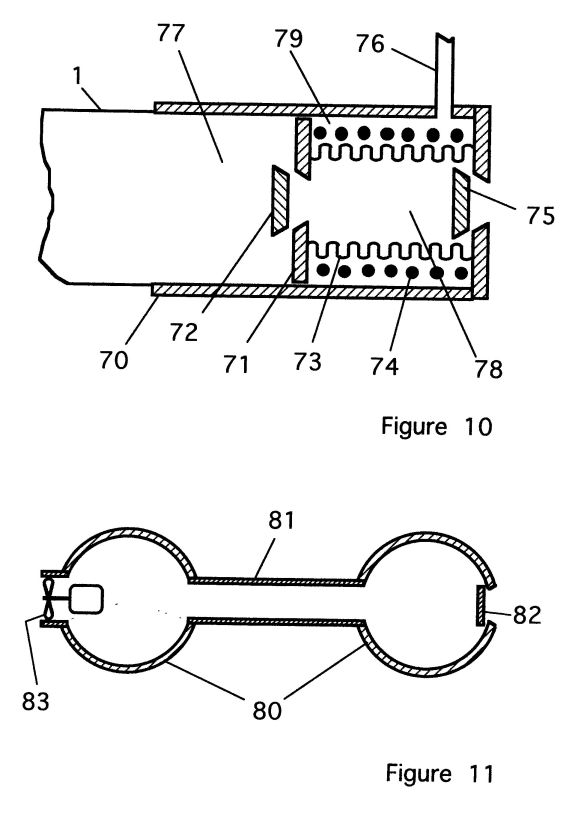
- Energy extraction via turbine or piston driven by internal pressure oscillations
Scientific Domains
Materials
- Natural or synthetic rubber
- Water (or other dense liquid)
- Fiber reinforcement (optional)
- Helical springs, corrugated metal, reticulated membranes (optional variants)
Mechanisms of Action
- Wave-induced tube compression
- Generation of longitudinal pressure (bulge) wave
- Propagation of bulge wave along tube
- Conversion of pressure oscillation to mechanical rotation (turbine) or linear motion (piston)
- Electrical generation by coupled generator
Energy Sources
Applications
- Grid-scale renewable electricity generation
- Supplementary power for coastal communities
- Integration with tidal and other marine energy systems
Claimed Performance
Rated power output ~1 MW (~=2000 houses); estimated generation cost <=6 p/kWh.
Experimental Evidence
Concept proven at very small laboratory scale using 0.25 m and 0.5 m diameter tubes; measurements of internal pressure, tube deformation, and mooring forces were taken.
Replication Status
Laboratory-scale proof of concept demonstrated; larger-scale laboratory experiments planned but no full-scale deployment yet.
Limitations
- Only small-scale laboratory tests completed
- Uncertainty of long-term durability of rubber in marine environment
- Scalability of manufacturing and mooring for 200 m devices