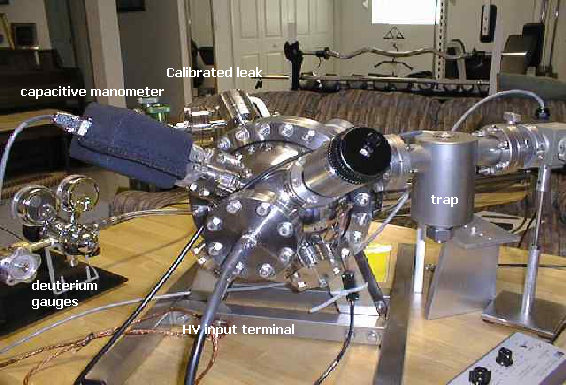
Goal
Produce nuclear fusion reactions and generate neutrons for research and practical applications.
Problem
Provide a simpler, less complex method for achieving nuclear fusion compared with magnetically confined plasma devices.
Concept Summary
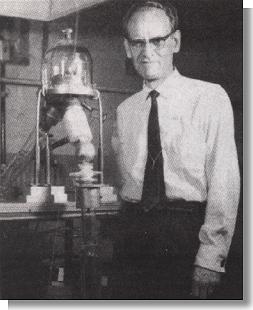
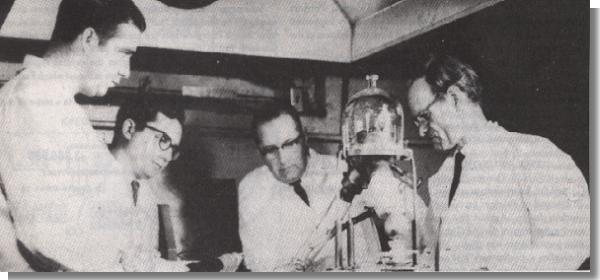
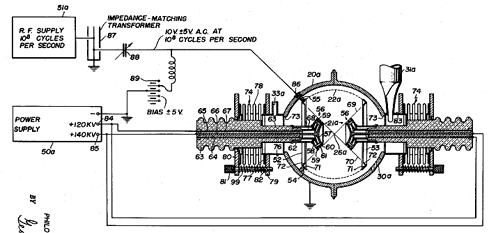
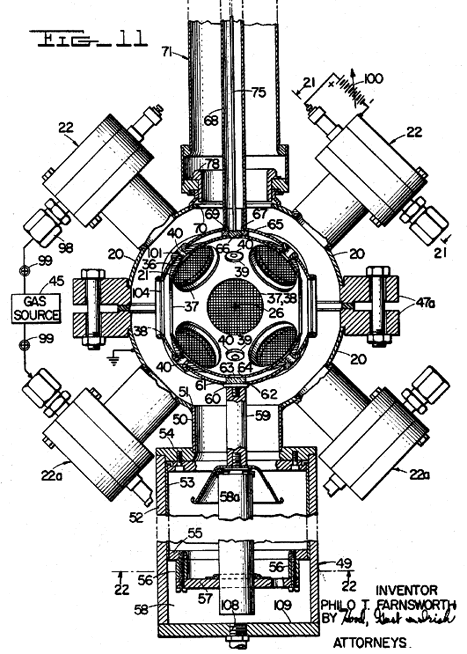
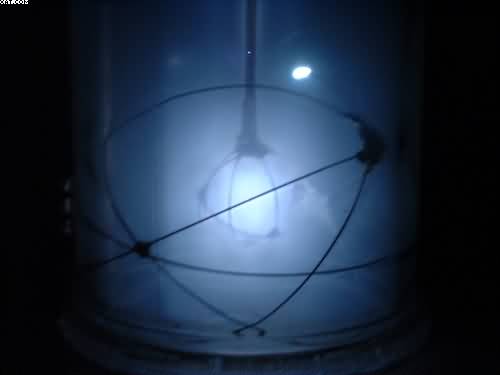
The fusor is an inertial electrostatic confinement device that uses high-voltage electric fields between concentric spherical electrodes inside a vacuum chamber to accelerate ionized fuel (e.g., deuterium) toward a central region where collisions can induce nuclear fusion. The original design used ion guns; later Hirsch-Meeks versions rely on a corona discharge to supply ions.
Detailed Description
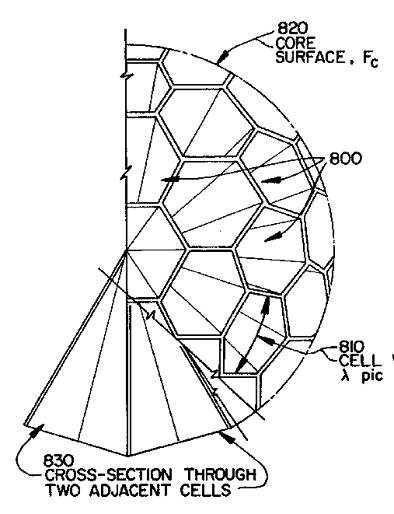
In the Hirsch-Meeks fusor two spherical grid electrodes are placed inside a vacuum chamber filled with a dilute fusion fuel gas. The outer electrode is grounded or positively biased while the inner electrode is negatively biased (typically ~80 kV). The electric field accelerates ions toward the center, where they converge and may undergo fusion reactions, emitting neutrons (for D-T or D-D fuels) or other reaction products. The device is simple, can be built on a benchtop, and is commercially sold as a neutron source. Limitations include electrode sputtering, bremsstrahlung radiation losses, and inability to achieve net-energy break-even.
Principles
- Inertial electrostatic confinement
- Electrostatic acceleration of ions
- Vacuum chamber operation
- Ion injection via corona discharge
Scientific Domains
Materials
- Stainless steel (electrode wire)
- Deuterium gas
- Tritium gas (optional)
- Boron-11 (potential aneutronic fuel)
- Metal vacuum chamber
Mechanisms of Action
- High-voltage electric field accelerates ions toward a central virtual electrode
- Spherical grid electrodes create a potential well that confines ions
- Ion-ion collisions at ~4 keV produce fusion reactions
Energy Sources
Applications
- Neutron imaging and radiography
- Material analysis
- Security scanning
- Educational demonstrations
- Fusion research
Claimed Performance
Neutron production rates reported up to 10^9 neutrons s^-^1 (billion per second) and in some reports up to 10^1^2 neutrons s^-^1 (trillion per second).
Experimental Evidence
Early laboratory models demonstrated clear fusion reactions; later commercial units are used as neutron sources for imaging and material analysis. The article notes "production rates of up to a billion per second, and has been reported to have observed rates of up to a trillion per second."
Replication Status
Commercial fusors are produced by several companies and have been built by amateurs and university labs; the technology is widely demonstrated as a neutron source.
Limitations
- Net energy output far below break-even
- Electrode sputtering and erosion
- Bremsstrahlung radiation losses
- High-voltage safety hazards
- Scaling to power-plant size is difficult
Red Flags
- Claims of practical power generation are not yet demonstrated
- High-voltage and neutron radiation pose safety concerns