Goal
Achieve complete and efficient combustion of gasoline-air mixtures while reducing emissions.
Problem
Incomplete combustion, high emissions, and unreliable ignition in gasoline engines.
Concept Summary
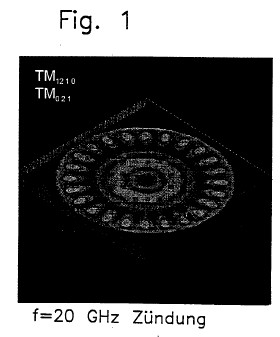
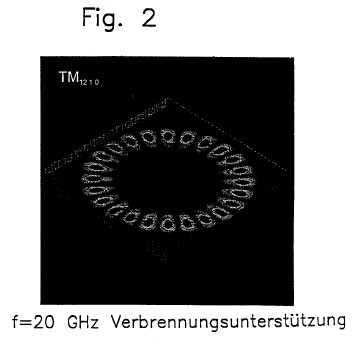
The combustion chamber of a gasoline engine is turned into a resonant microwave cavity. A microwave impulse, generated by a magnetron, heats the air-fuel mixture and produces a spark at the ignition point. After the initial ignition, a second microwave pulse supports residual combustion, ensuring full burn of rich or lean mixtures.
Detailed Description
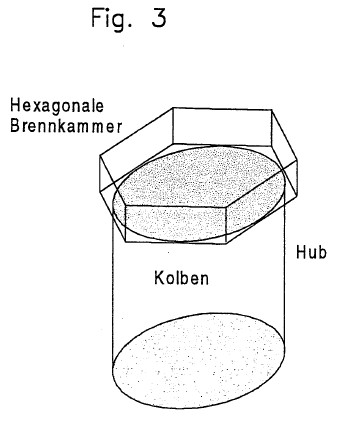
A microwave source (magnetron) is coupled to the engine's combustion chamber, which is dimensioned so that its natural resonant frequency matches the microwave frequency. When the engine reaches the ignition point, a short-duration microwave pulse is emitted. The microwave energy dielectric-heats the gasoline-air mixture, raising its temperature to near-ignition levels, and simultaneously creates a high-voltage spark to trigger combustion. After the first combustion event, a second microwave pulse of the same frequency and adjustable duration is applied to the remaining unburned gases and fuel, exciting higher-order cavity modes that sustain the combustion process. The system claims to ignite both rich and lean mixtures faultlessly and to burn them completely, resulting in a virtually pollution-free vehicle.
Principles
- Dielectric heating
- Resonant cavity excitation
- Spark ignition
- Microwave pulse shaping
Scientific Domains
Materials
- Metal (steel/aluminum) combustion chamber
- Magnetron (microwave source)
- Ceramic dielectric components (optional)
- Gasoline fuel
- Air
Mechanisms of Action
- Microwave energy heats the air-fuel mixture
- Resonant cavity concentrates microwave energy
- High-voltage spark ignites the mixture
- Post-ignition microwave pulse sustains residual combustion
Energy Sources
Applications
- Automotive gasoline engines
- Other internal combustion engines
Claimed Performance
Rich and lean air-gas mixtures are faultlessly ignited and completely combusted; the vehicle is described as virtually pollution-free.
Limitations
- Integration of a high-power magnetron into engine architecture
- Thermal management of microwave components
- Potential electromagnetic interference
- Cost of microwave hardware