Goal
Provide safe drinking water without electricity or fuel by using a gravity-assisted hand-operated pump and filtration system.
Problem
Lack of access to safe drinking water in disaster-affected or off-grid areas where electricity and fuel are unavailable.
Concept Summary
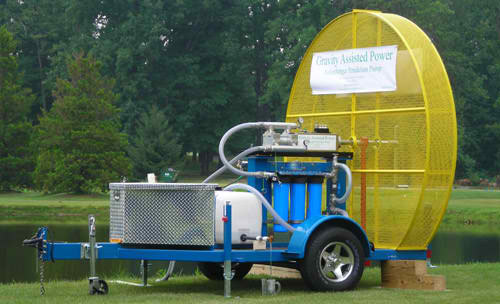
A double-reciprocating pendulum converts the force of gravity into a linear piston motion that pumps water. The pump is hand-operated, includes selectable pressure/volume settings, and can be combined with Aquathin filtration and reverse-osmosis modules to produce up to 1,000 gal/h of clean drinking water.
Detailed Description
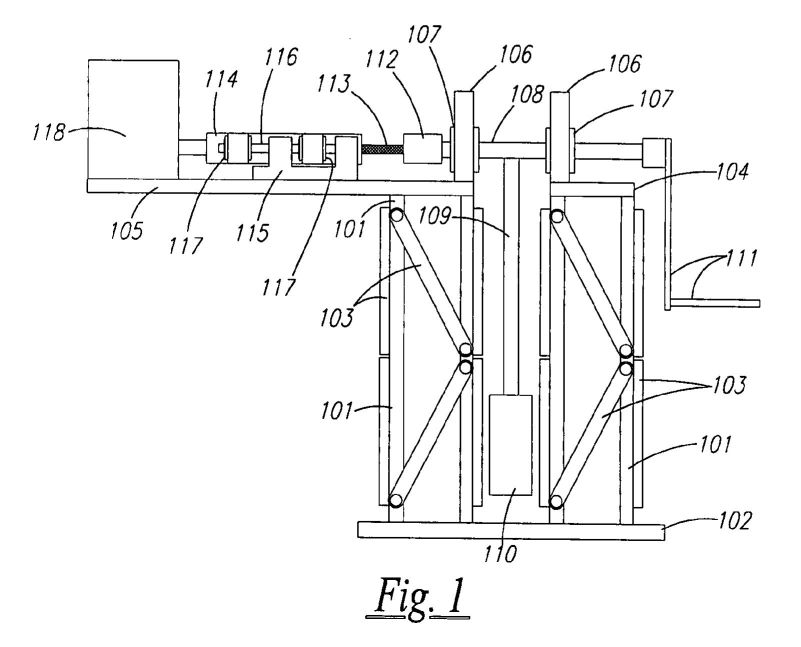
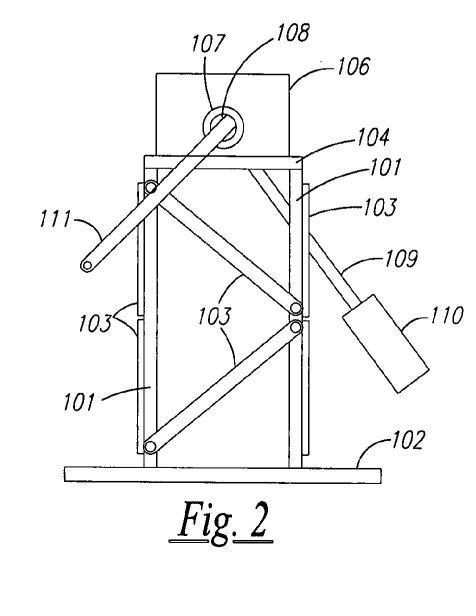
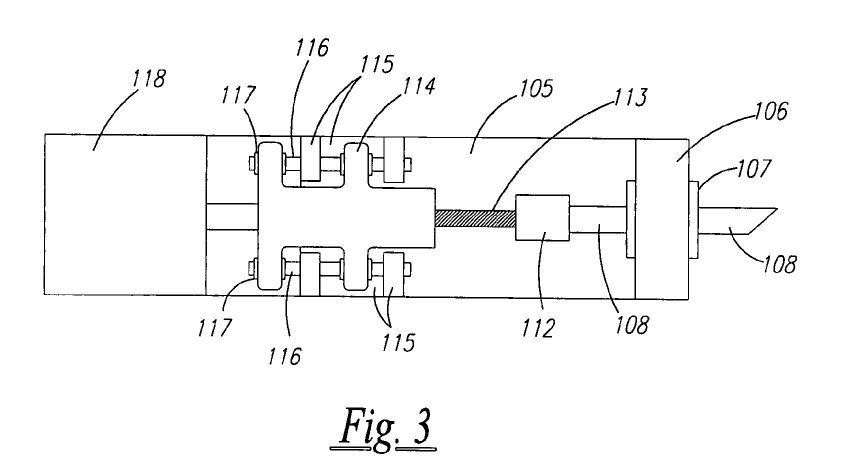
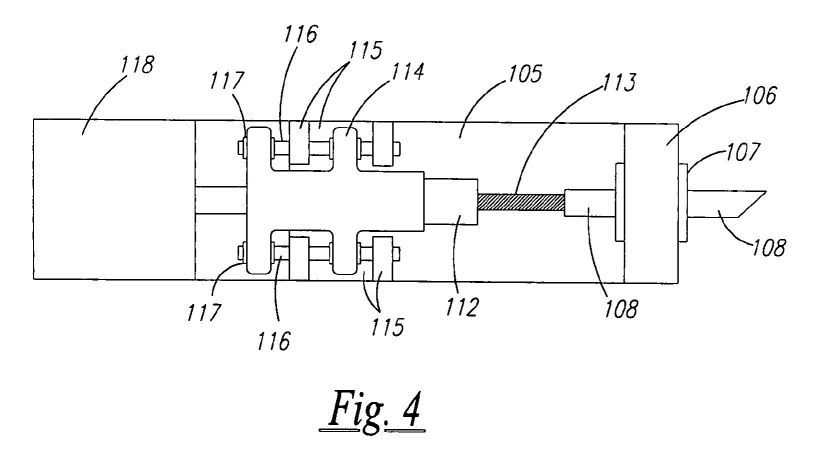
The Feltenberger Pendulum Pump (GP210) uses a rigid-arm pendulum whose axle reciprocates linearly as the pendulum swings. The axle is attached to a piston rod that pushes and pulls the pump piston, delivering water on both the in-stroke and out-stroke. Four pressure/volume (P/V) settings are selected via a selector pin, allowing the operator to trade pressure for flow. A gravity-assist reduces operator fatigue because only a short intermittent push is needed each swing. The pump can lift water about 25 ft, generate 60-70 psi (sufficient for reverse-osmosis), and is paired with Aquathin's AquaShield anti-microbial membrane filter and a reverse-osmosis unit that yields 400-500 gal/day of high-grade water. The system is hand-operated, requires no fuel or electricity, and can be deployed within an hour near a water source.
Principles
- gravity assist
- pendulum reciprocation
- mechanical advantage
- pressure/volume trade-off
- filtration
- reverse osmosis
Scientific Domains
Materials
- steel
- rubber
- plastic
- anti-microbial membrane
Mechanisms of Action
- gravity-driven pendulum swing
- linear piston motion
- pressure generation via P/V settings
- membrane filtration
- reverse osmosis
Energy Sources
Applications
- disaster relief water supply
- rural irrigation
- military field water purification
- off-grid sanitation
Claimed Performance
1,000 gal/h of clean drinking water; 400-500 gal/day of reverse-osmosis water; lift height ~= 25 ft; operating pressure 60-70 psi; can serve ~4,000 people with 3 h/day operation.
Experimental Evidence
First production model deployed to Haiti (May 2010) and used to provide drinking water for ~4,000 people; demonstration to U.S. military in Tampa, Florida; video evidence of pump operation; press release stating 1,000 gal/h filtration capacity.
Replication Status
Deployed in Haiti and demonstrated to U.S. military; operational field units in use.
Limitations
- Requires continuous human effort
- Lift height limited to ~25 ft (future deep-water version planned)
- Pressure limited to 60-70 psi
- Performance depends on operator skill and pendulum arc
Red Flags
- Marketing language exceeds peer-reviewed data