Goal
Generate thrust without propellant by using a resonant microwave cavity
Problem
Eliminate the need for propellant in spacecraft, reducing launch mass and cost
Concept Summary
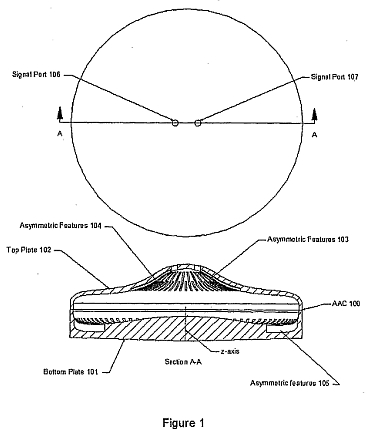
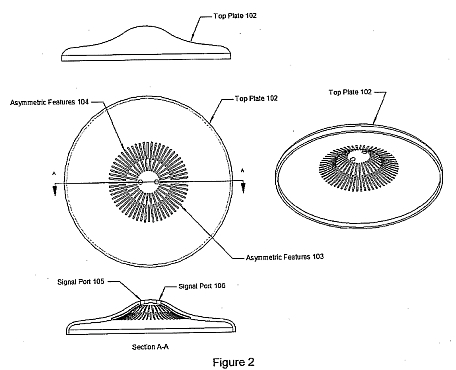
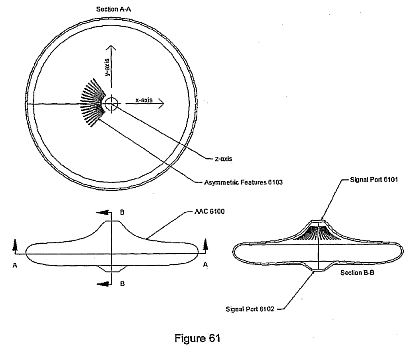
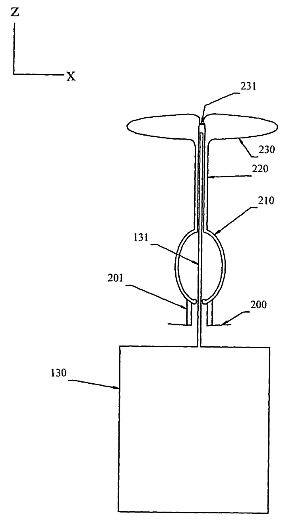
The Cannae Drive is a propellant-less electromagnetic thruster that uses a radio-frequency resonant cavity (~=935 MHz) to create an imbalance of radiation pressure inside the cavity. The asymmetric cavity design is claimed to interact with quantum-vacuum virtual plasma, producing a net unidirectional force measured in the tens of micronewtons.
Detailed Description
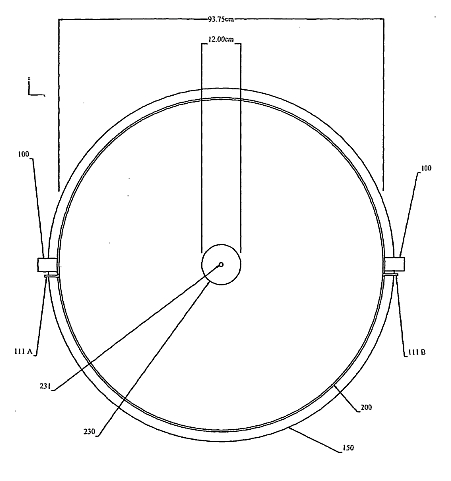
A conductive resonant cavity is excited with high-frequency RF power, establishing a standing electromagnetic wave. The cavity is deliberately axially asymmetric, causing a reduced reflection coefficient at one end plate. This creates a differential radiation pressure that, according to the inventors, results in a net thrust. NASA's Johnson Space Center tested two versions (one "null" device and one active device) on a low-thrust torsion pendulum in a stainless-steel vacuum chamber at ambient pressure. Measured thrust was 30-50 uN, well above the instrument's sub-10 uN sensitivity. The test campaign lasted eight days, with manual frequency control and verification using an RF load to rule out non-cavity effects.
Principles
- Radiation pressure imbalance
- Asymmetric resonant cavity design
- Interaction with quantum-vacuum virtual plasma
- RF standing wave generation
Scientific Domains
Materials
- Conductive metal (e.g., copper, aluminum)
- Stainless steel (vacuum chamber)
Mechanisms of Action
- Radiation pressure
- Quantum vacuum interaction
- Asymmetric reflection coefficient
Energy Sources
Applications
- Satellite station-keeping
- Deep-space propulsion
- Spacecraft maneuvering
Claimed Performance
30-50 uN of thrust produced by a resonant cavity operating at ~935 MHz, measured with a torsion pendulum capable of sub-10 uN resolution.
Experimental Evidence
NASA Johnson Space Center's eight-day test campaign (August 2013) recorded 30-50 uN of thrust from two RF resonant cavity devices, including a 'null' device that was not expected to produce thrust. The results were obtained using a low-thrust torsion pendulum in a stainless-steel vacuum chamber.
Replication Status
Independent testing by NASA Johnson Space Center confirmed the production of measurable thrust from the Cannae Drive cavity.
Limitations
- Very low thrust (tens of uN)
- Requires precise RF frequency control
- Experimental validation limited to laboratory tests
- No peer-reviewed publication of underlying physics
Red Flags
- Claims of quantum-vacuum interaction lack independent theoretical verification
- Potential for measurement artefacts in torsion pendulum experiments
- Limited peer-reviewed literature