Goal
Transmit audio information directly to the human nervous system without speakers or earphones.
Problem
Hearing impairment and the need for a direct brain-computer audio interface.
Concept Summary
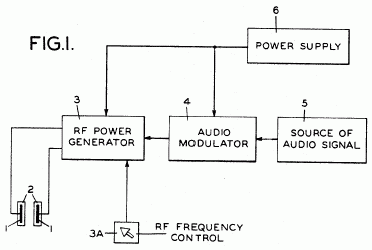
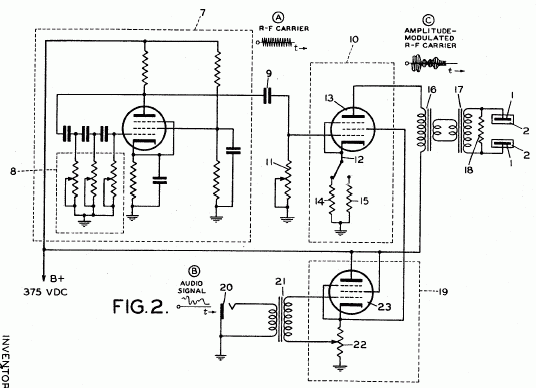
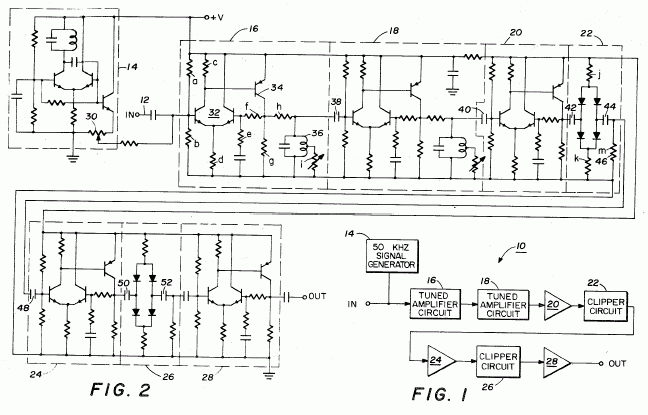
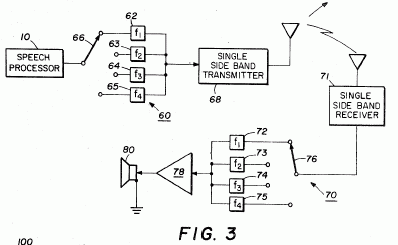
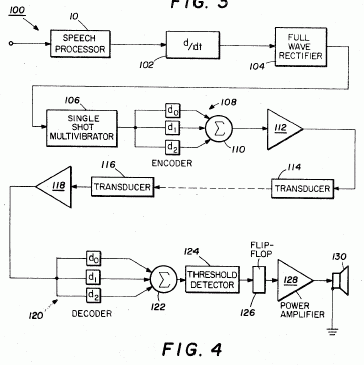
The Neurophone is a low-frequency electromagnetic transducer that converts an audio signal into a high-voltage, high-impedance carrier. The carrier is applied to skin electrodes; the electromagnetic field couples directly with the nervous system, allowing the brain to perceive the audio as internal sound.
Principles
- Amplitude-modulated high-frequency (~=35 kHz) carrier
- High-voltage (~=4 kV) low-current output
- Electromagnetic field coupling to neural tissue
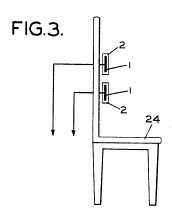
- Direct neural stimulation via skin electrodes
Scientific Domains
Materials
- Lead zirconium titanate (piezoelectric ceramic)
- Epoxy resin
- Rubber sheet
- Copper window screen
- 6L6G vacuum tube
- Transformer core (iron/steel)
- Twin-lead TV antenna cable
Mechanisms of Action
- Electromagnetic induction of neural membranes
- Direct stimulation of auditory pathways through skin-applied electrodes
Energy Sources
Applications
- Assistive hearing device for the deaf
- Neurofeedback and brain-computer communication
- Experimental auditory prosthesis
Claimed Performance
Audio is heard directly in the head with high fidelity; works on deaf subjects after prolonged exposure; operates from eight AA cells producing a 60 V square wave and a 4 kV high-impedance carrier.
Experimental Evidence
Personal demonstrations by G. Harry Stine (1979) and earlier proof-of-principle in 1962; anecdotal reports from multiple users; no peer-reviewed data.
Replication Status
Anecdotal demonstrations reported; no independent, peer-reviewed replication documented.
Limitations
- Requires high-voltage, low-current output (~=4 kV) which raises safety concerns
- Lack of peer-reviewed validation
- FDA ban on commercial production
- Unclear long-term biological effects
Red Flags
- FDA prohibition due to low-frequency RF carrier concerns
- Predominantly anecdotal evidence
- Potential for misuse as a non-medical "free-energy" claim