Goal
Provide an ultra-low-cost, portable microscope that can be mass-produced and distributed for education, citizen science, and point-of-care disease diagnostics.
Problem
Lack of affordable, rugged microscopy tools for low-resource settings and for large-scale science education.
Concept Summary
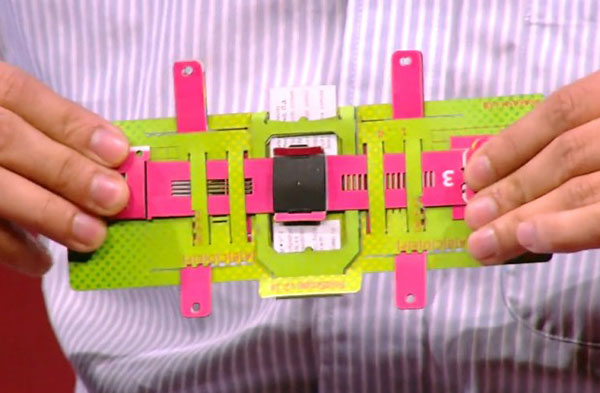
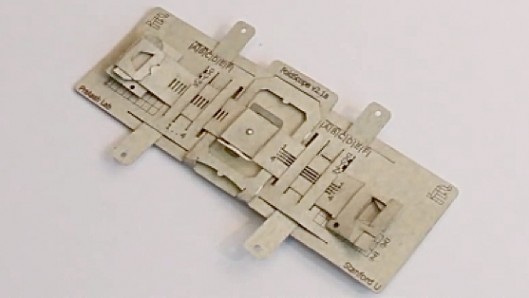
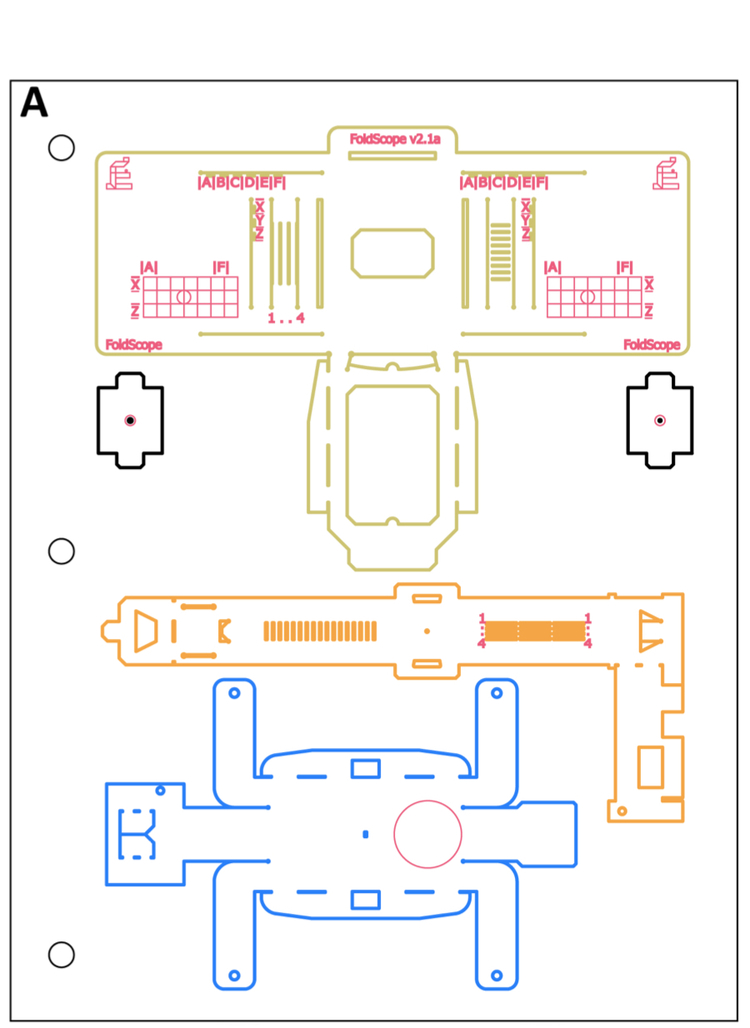
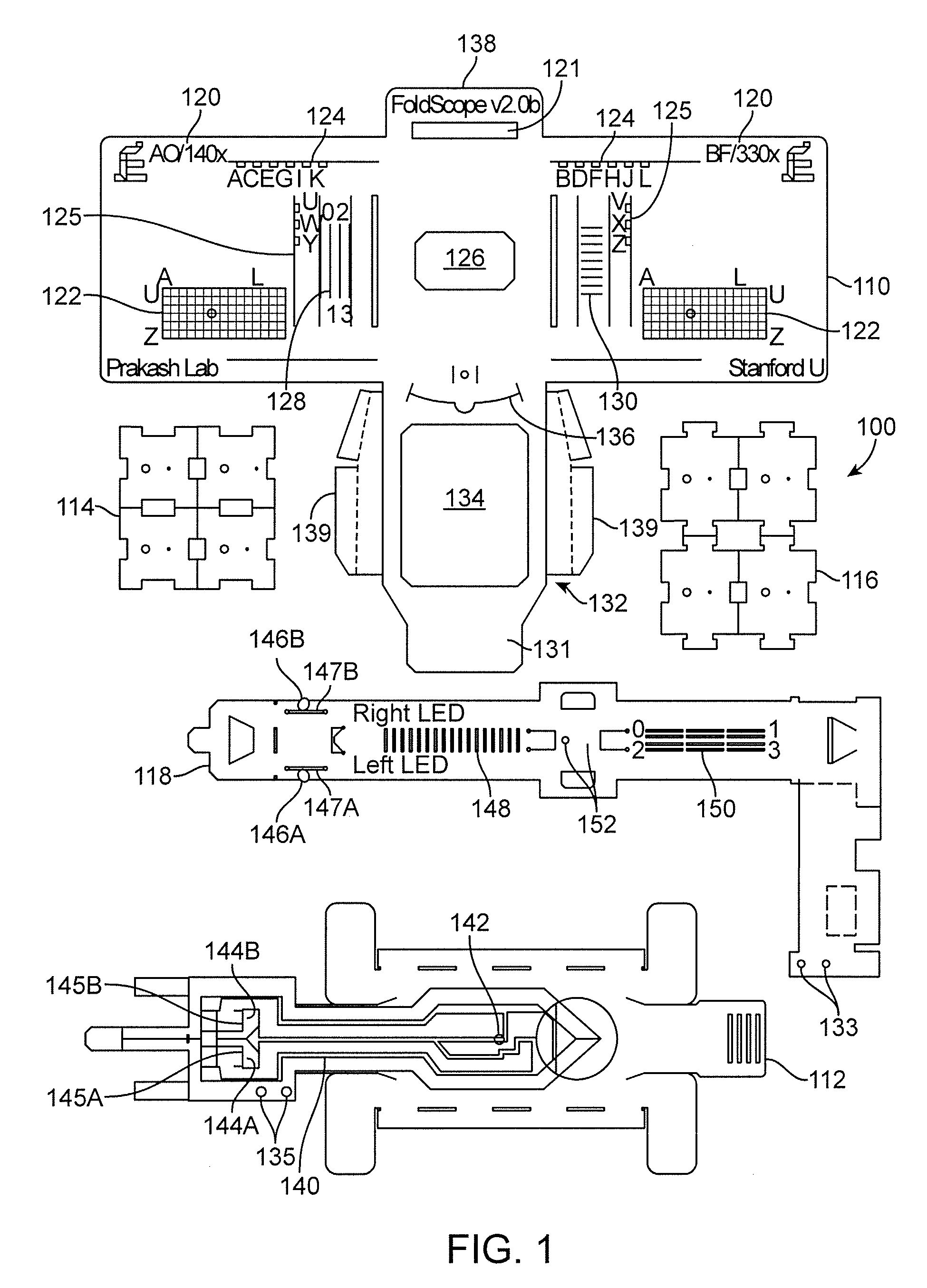
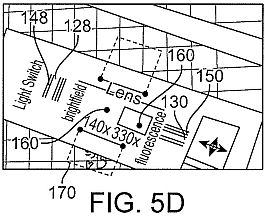
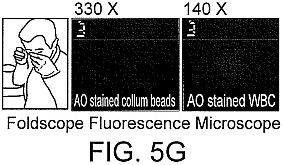
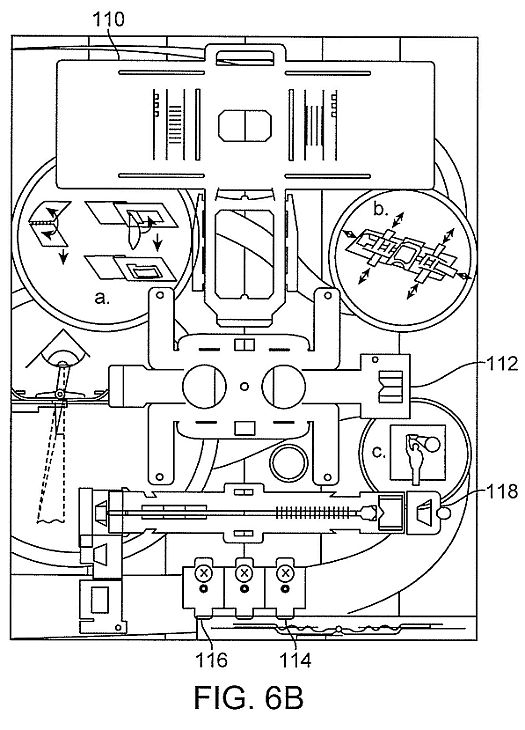
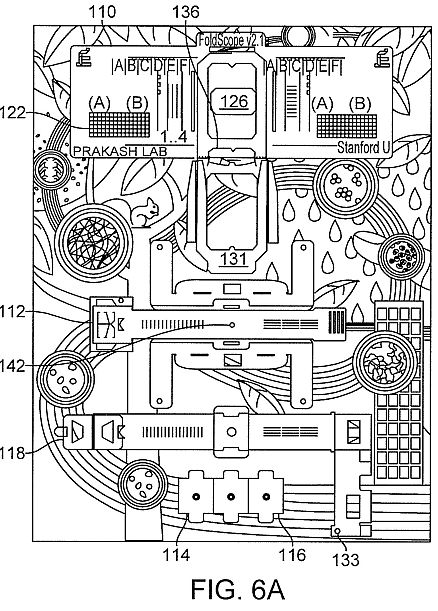
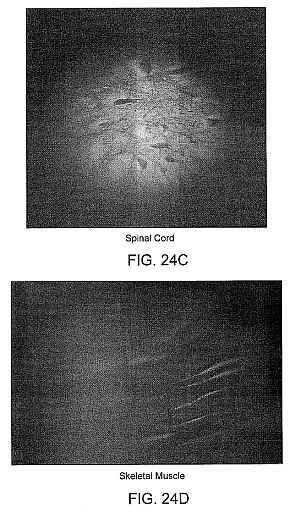
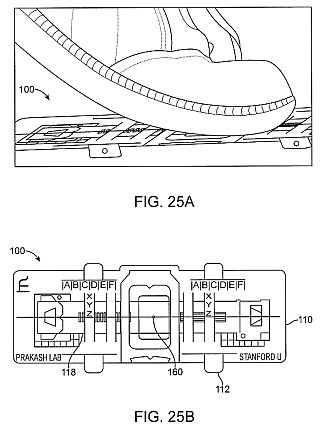
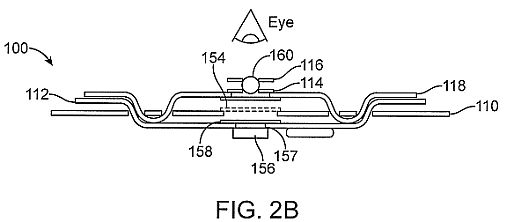
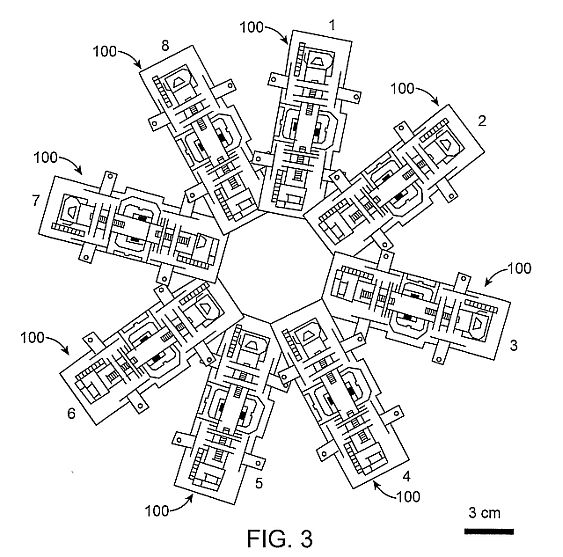
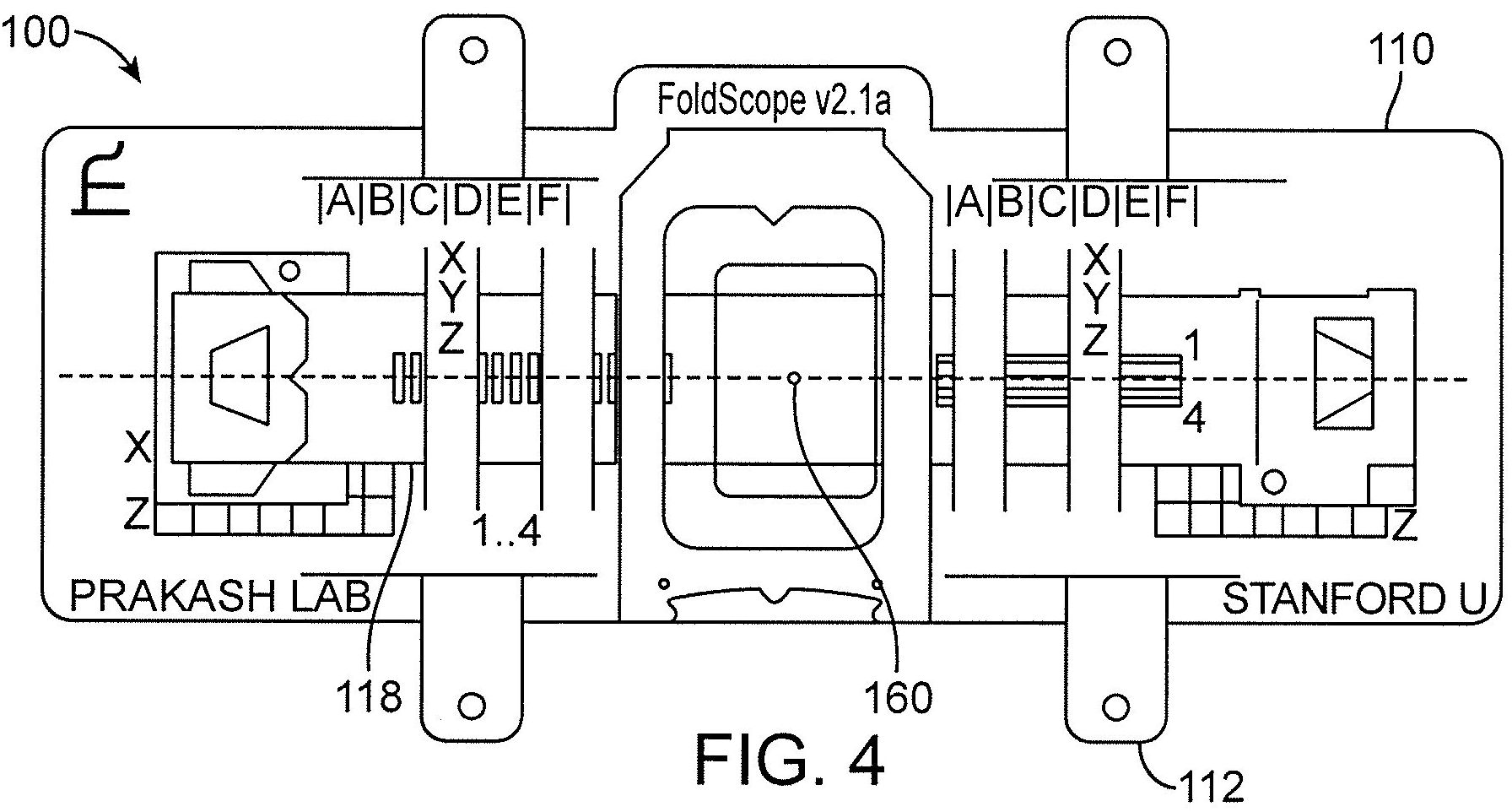
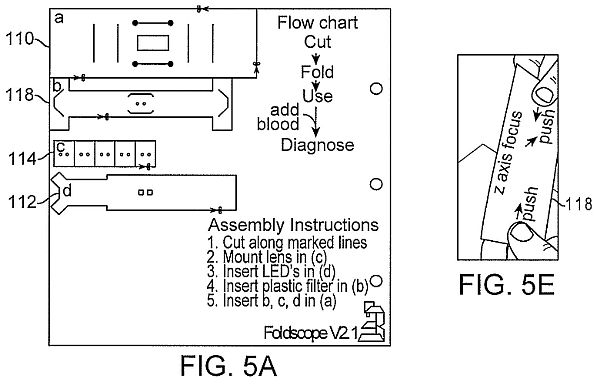
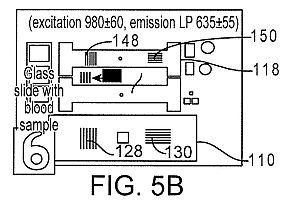
The Foldscope is an origami-based optical microscope assembled from a single sheet of cardstock, a small spherical lens, LED illumination, a diffuser, and a watch battery. Folding creates a rigid, self-aligned structure with no moving parts. The lens is held close to the eye, delivering up to 2000x magnification. Variants support bright-field, dark-field, fluorescence, and projection microscopy, and can be customized with colored LEDs and filters for pathogen detection.
Detailed Description
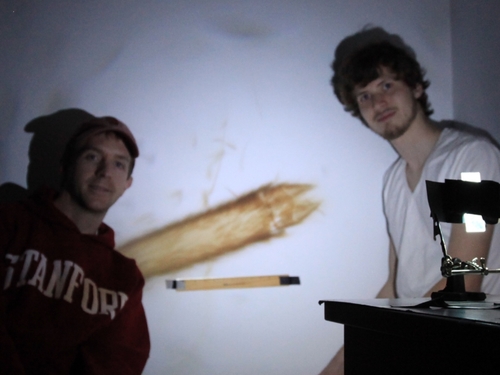
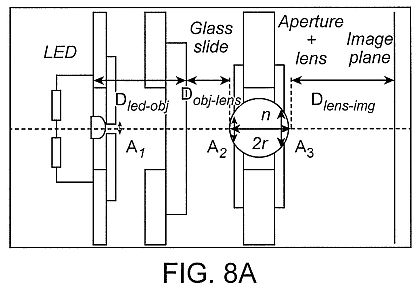
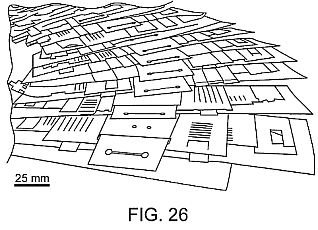
A flat sheet of layered cardstock is laser-cut and scored, then folded into a compact, bookmark-sized device. A 17-centimetre-diameter spherical glass lens is press-fit into a slot, serving as the primary objective. A paper stage holds a microscope slide, while a small LED (powered by a watch battery) provides illumination through a diffuser panel. The user flexes the paper platform to focus. The device can be mass-produced via printing and folding, is extremely rugged (survives drops and incineration), and costs roughly $0.50-$1.00 per unit. Optional accessories include colored filters, fluorescence reagents, and a simple projector attachment for wall-projection imaging.
Principles
- Origami folding for structural rigidity
- Spherical lens optics (lens held close to eye)
- Passive self-alignment via paper flexure
- LED illumination
- Modular optics (bright-field, dark-field, fluorescence)
- Low-cost mass manufacturing
Scientific Domains
Materials
- Cardstock paper
- Spherical glass lens
- LED diode
- Diffuser panel (plastic)
- Watch battery (button cell)
- Adhesive tape
- Colored optical filters
Mechanisms of Action
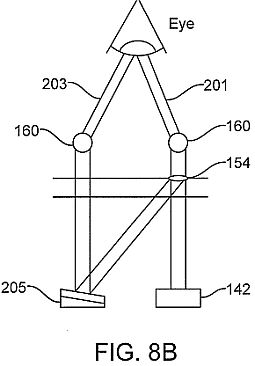
- Magnification by a small spherical lens positioned near the eye
- Illumination of specimen by LED through diffuser
- Mechanical focusing via flexure of folded paper platform
- Self-alignment of optical components through paper loops
Energy Sources
Applications
- Science education in schools
- Field diagnosis of malaria, sleeping sickness, schistosomiasis, Chagas disease
- Citizen-science microscopy
- Low-cost research in remote laboratories
Claimed Performance
Magnification up to 2000x, cost < US$1 per unit, weight ~= 8 g, durable enough to survive a 3-story drop and incineration; LED powered by a single watch battery.
Experimental Evidence
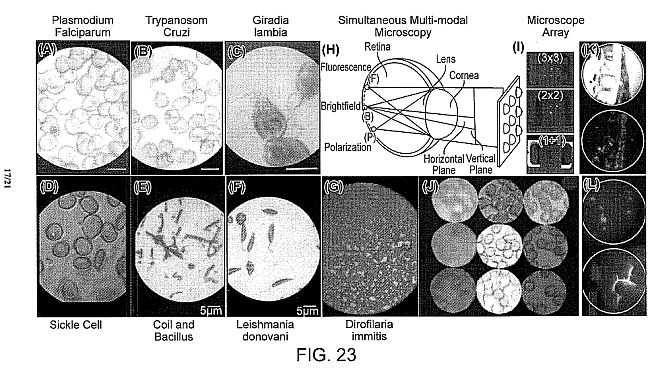
Demonstrated in Stanford bioengineering courses, field-tested in Kenya, India and Uganda, images of Giardia lamblia, Leishmania donovani and E. coli captured; 10 000 kits distributed to citizen-science projects.
Replication Status
Produced and tested; open-source design kits have been built by thousands of users worldwide.
Limitations
- Limited field of view and depth of focus
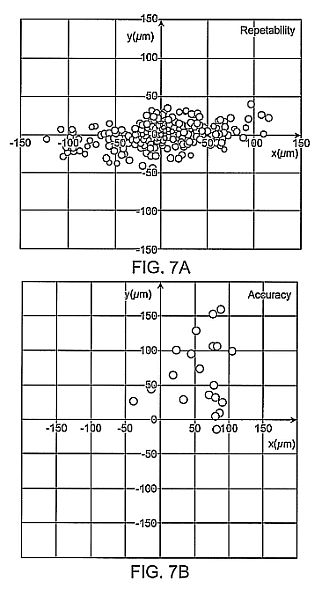
- Manual focusing may be imprecise for high-resolution work
- Dependence on external LED for illumination
- Not suitable for quantitative imaging without additional accessories