Goal
To evaluate the therapeutic potential of frankincense resin and its essential oil for treating inflammation, arthritis, cancer, anxiety and other health conditions.
Problem
Limited effective, low-side-effect treatments for inflammatory diseases, arthritis, certain cancers and mood disorders; need for natural, plant-derived medicinal agents.
Concept Summary
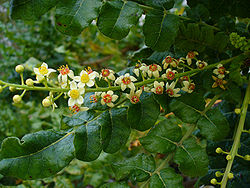
Frankincense is an aromatic resin harvested from Boswellia trees. It can be chewed, burned, or processed by steam distillation to obtain an essential oil rich in monoterpenes, sesquiterpenes, boswellic acids and incensole acetate. Preliminary laboratory and small-scale clinical studies suggest anti-inflammatory, analgesic, anxiolytic and anticancer activities, although robust clinical evidence is lacking.
Detailed Description
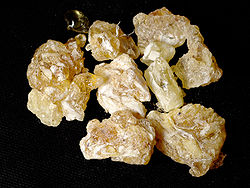
The resin is harvested by striping the bark of Boswellia trees, allowing the exuded tears to harden. The hardened tears are sorted and may be used directly (chewed) or subjected to steam or hydro-distillation to produce an essential oil. Chemical analysis shows the oil contains ~75 % monoterpenes and sesquiterpenes, along with boswellic acids (e.g., AKBA) and incensole acetate. In vitro studies report apoptosis induction in cancer cell lines, while animal studies show reduction of anxiety-like behavior. Small human pilot trials have reported improvements in osteoarthritis pain and ulcerative colitis symptoms. The exact active constituent(s) remain unidentified, and the mechanisms are thought to involve modulation of inflammatory pathways, HPA-axis regulation, and direct cytotoxic effects on tumor cells.
Principles
- Phytochemistry
- Anti-inflammatory activity
- Anticancer activity
- Aromatherapy / anxiolytic effect
Scientific Domains
Materials
- Boswellia resin (tears)
- Essential oil (steam-distilled)
- Boswellic acids (e.g., AKBA)
- Incensole acetate
Mechanisms of Action
- Inhibition of cyclo-oxygenase and 5-lipoxygenase enzymes
- Modulation of hypothalamic-pituitary-adrenal (HPA) axis
- Induction of apoptosis in cancer cells
- Reduction of pro-inflammatory cytokine production
Applications
- Anti-inflammatory therapy
- Arthritis pain relief
- Adjunct cancer treatment
- Anxiety and mood disorder relief
Claimed Performance
Reduces inflammation and pain in arthritis; alleviates anxiety in mice; induces apoptosis and suppresses viability of bladder, ovarian and other cancer cells in vitro; may improve ulcerative colitis symptoms.
Experimental Evidence
Pilot human studies (osteoarthritis, ulcerative colitis) reported symptom improvement; mouse studies showed anxiolytic effects of incensole acetate; in vitro cell-culture experiments demonstrated cytotoxicity of AKBA and other boswellic acids against cancer cell lines; limited pharmacokinetic data on 11-keto-I2-boswellic acid absorption.
Replication Status
No independent replication reported; findings are limited to early-stage laboratory and small-scale clinical pilot studies.
Limitations
- Lack of large-scale, peer-reviewed clinical trials
- Variability in resin composition between species and harvest batches
- Potential allergic reactions to resin components
Red Flags
- Claims of cancer cure without peer-reviewed evidence
- Press releases overstating efficacy before independent validation