Goal
Provide a maneuverable aerial target for anti-aircraft gun training.
Problem
Need for a moving, aerobatic target that can simulate aircraft maneuvers to improve gunners' accuracy.
Concept Summary
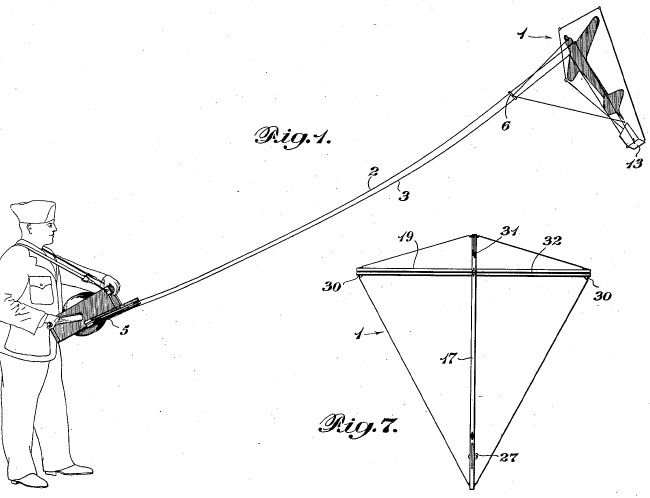
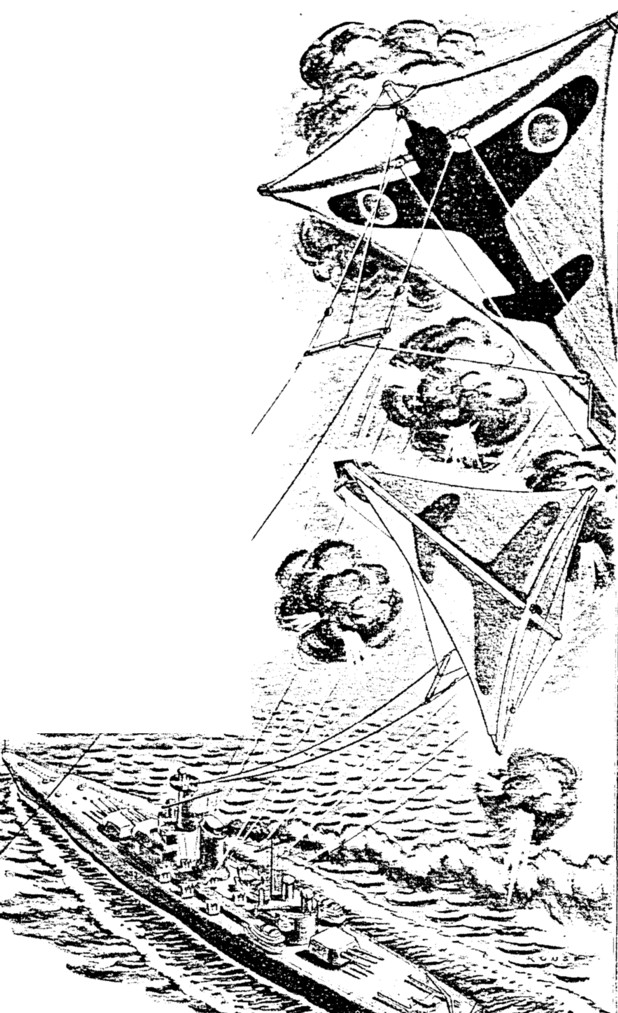
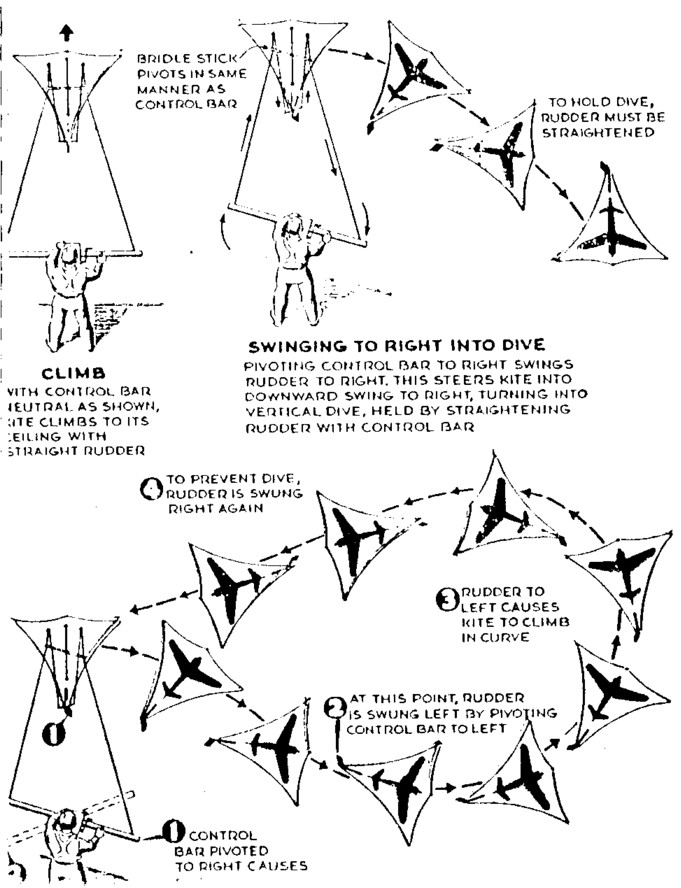
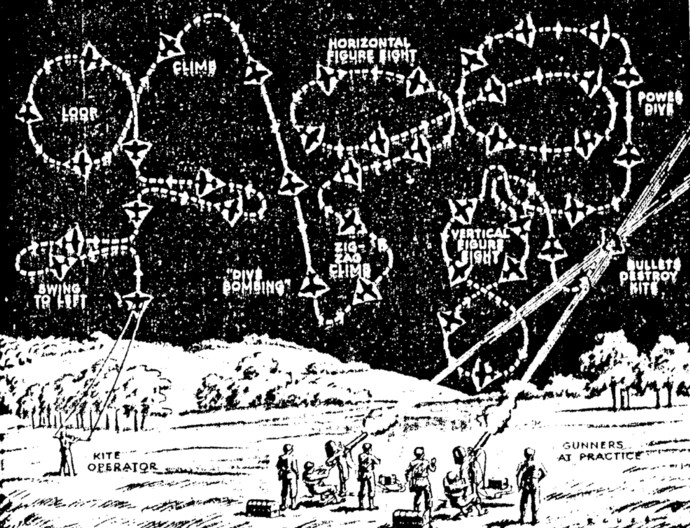
A kite designed without a tail that uses a bowed spar, vertical fin, and rudder controlled from the ground by twin lines and a reel. The kite can perform loops, dives, climbs, and figure-8s, mimicking aircraft maneuvers for realistic anti-aircraft training.
Detailed Description
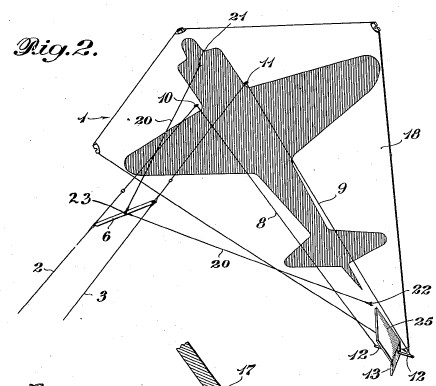
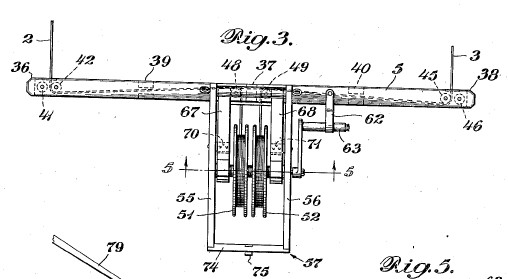
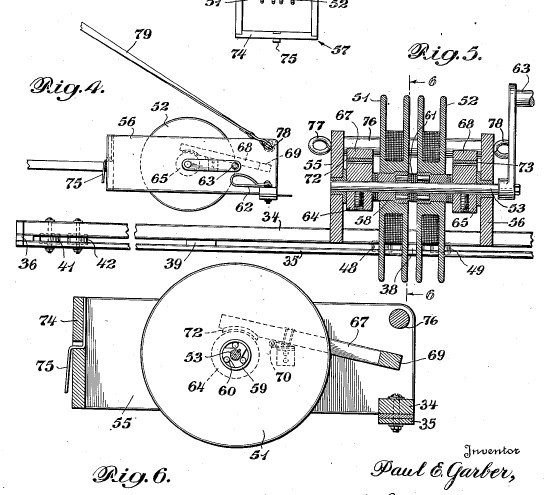
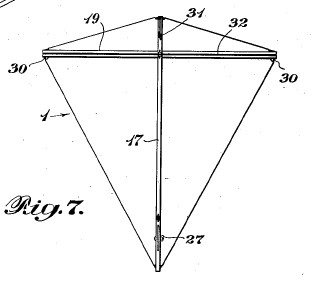
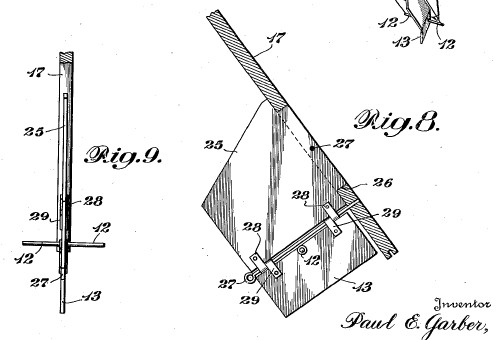
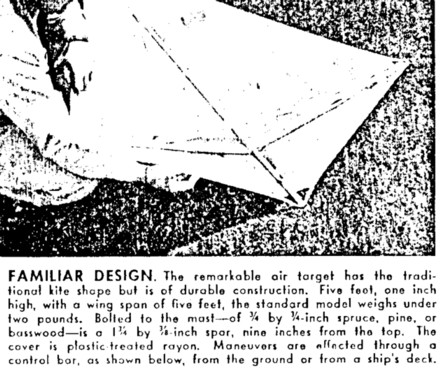
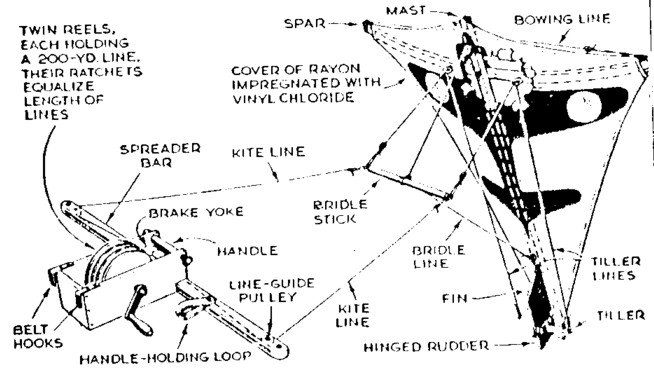
The kite is a two-stick, diamond-shaped Eddy-type structure with a bowed cross spar that acts as a weight carrier. A vertical fin and hinged rudder are attached near the lower mast; the rudder is moved via control cords linked to a ground-based control bar and reel system. Tensioned lines and a boltrope keep the covering fabric taut. The operator manipulates the control bar to alter line tension, causing the rudder to deflect and the kite to execute aerobatic maneuvers. The kite is painted with an airplane silhouette for realistic targeting.
Principles
- Aerodynamic lift
- Control surface deflection
- Tension-adjustable spars
- Ground-based line control
Scientific Domains
Materials
- Covering fabric (canvas or similar)
- Wooden sticks (mast and spar)
- Metal bolts and screw eyes
- Boltrope (cord)
- Metal pulleys and clutch components
Mechanisms of Action
- Wind provides lift to the kite
- Bow-shaped spar creates vertical keel for stability
- Rudder deflection via ground-controlled lines changes heading
- Fin provides lateral stability
- Reel system allows rapid tension adjustment
Energy Sources
Applications
- Anti-aircraft gun training
- Aerial signaling
- Sport kite flying
Claimed Performance
The kite can perform loops, vertical/horizontal figure-8s, steep dives and climbs, and ordinary turns; gunnery officers report a hit rate of 1 in 50 shots.
Experimental Evidence
Demonstrated to Navy and Army officers; adopted by the U.S. Navy and Army; production of at least 1500 units and a quarter-million kites for training.
Replication Status
Manufactured and used by military forces; production continued after adoption.
Limitations
- Requires sufficient wind
- Operator must manage ground lines
- Performance limited in calm conditions