Goal
Replace gasoline with water-derived hydrogen/oxygen as fuel for internal-combustion engines.
Problem
Reliance on gasoline, fire-hazard risk of stored hydrogen, and need for a readily available fuel source.
Concept Summary
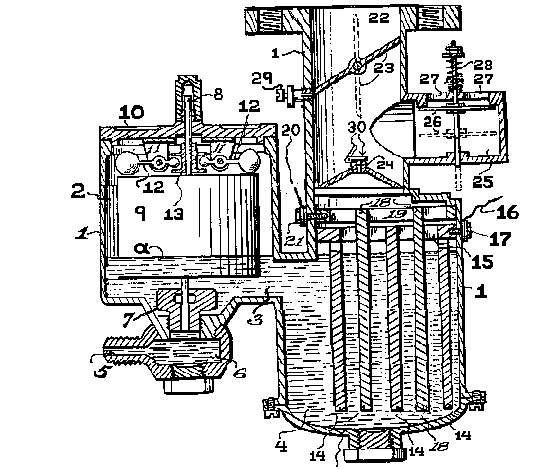
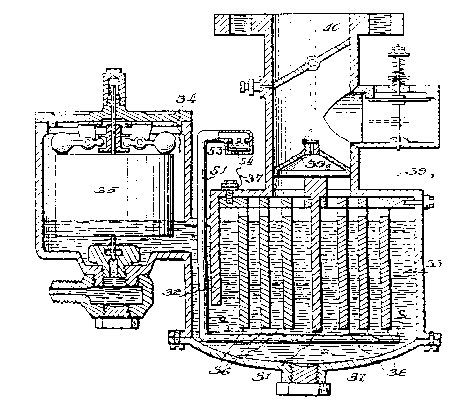
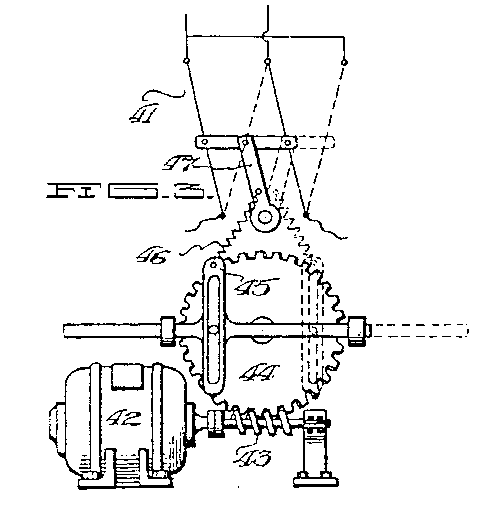
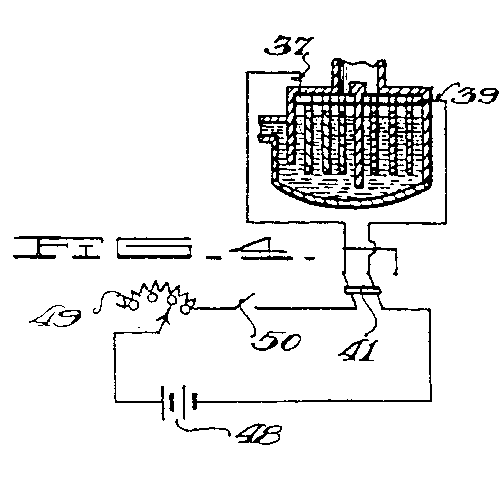
The invention uses an electrolytic carburetor that splits water into hydrogen and oxygen by passing an electric current through an electrolyte solution. The gases are mixed with air and fed directly into the engine cylinders, eliminating the need for a separate fuel tank. A pole-changing mechanism alternates electrode polarity to control gas evolution, while a generator (about double the normal capacity) supplies the required electricity.
Principles
- Electrolysis of water
- In-situ generation of hydrogen/oxygen mixture
- Direct injection of combustible gases into engine cylinders
- Periodic reversal of electrode polarity (pole changer)
Scientific Domains
Materials
- Bakelite (carburetor housing)
- Lead
- Weak sulphuric acid (electrolyte)
- Water
- Metal electrode plates (e.g., steel or copper)
Mechanisms of Action
- Electrical current splits water into H_2 and O_2 at immersed electrodes
- Hydrogen and oxygen are drawn into a gas passageway by a partial vacuum and mixed with intake air
- The mixed gas-air mixture is delivered to the combustion chambers
- A pole changer periodically reverses electrode polarity to alternate gas evolution
Energy Sources
Applications
- Automotive fuel substitution
- Portable power generation (conceptual)
Claimed Performance
Instantaneous start in any weather, elimination of fire hazards, cooler engine operation, and sufficient power and speed; demonstrated several minutes of operation and claimed continuous operation for more than 48 hours.
Experimental Evidence
A working model ran a four-cylinder engine for several minutes with varying speeds and multiple starts/stops; the inventor asserted a 48-hour continuous run.
Replication Status
Demonstrated only by the inventor; no independent replication reported.
Limitations
- Requires substantial electrical power to split water
- Hydrogen handling safety concerns
- Low overall efficiency compared with conventional fuels
- No independent testing or peer-reviewed data
Red Flags
- Claims of "no fire hazards" despite on-board hydrogen production
- Lack of quantitative performance data
- No independent verification of the 48-hour continuous run