Goal
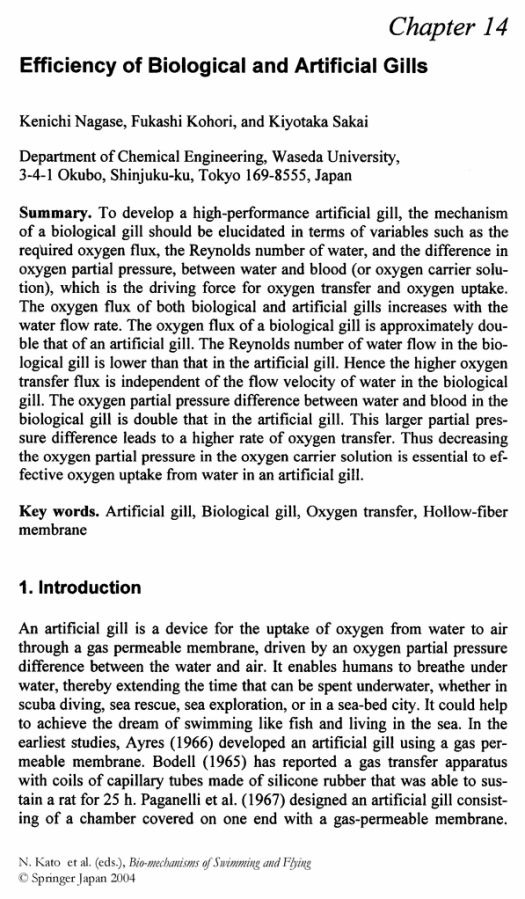
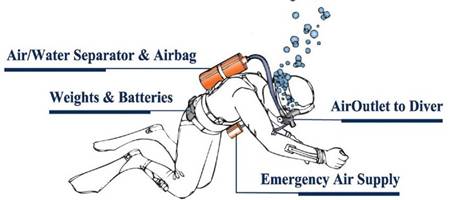
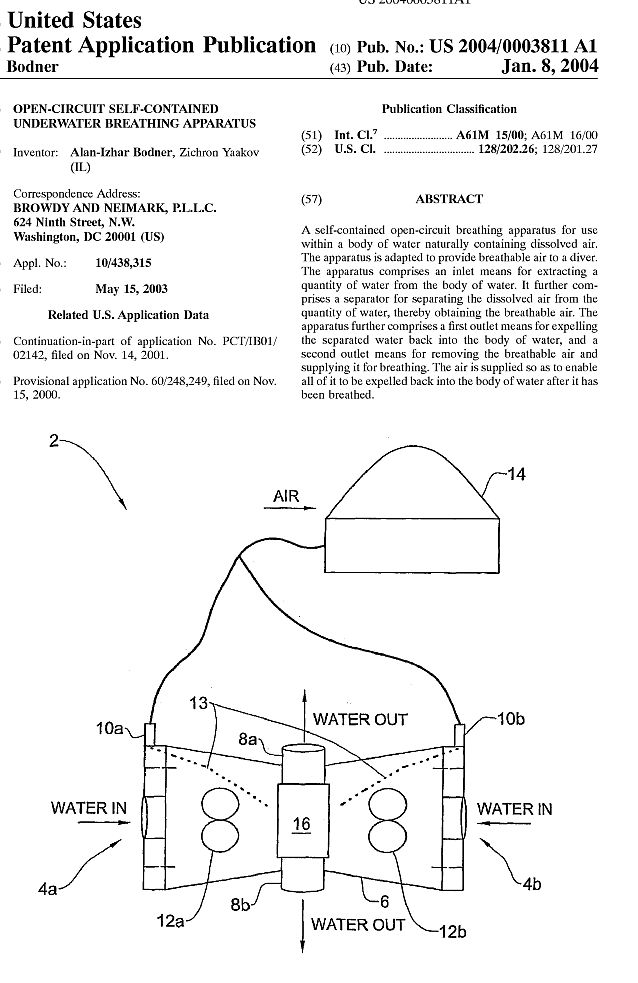
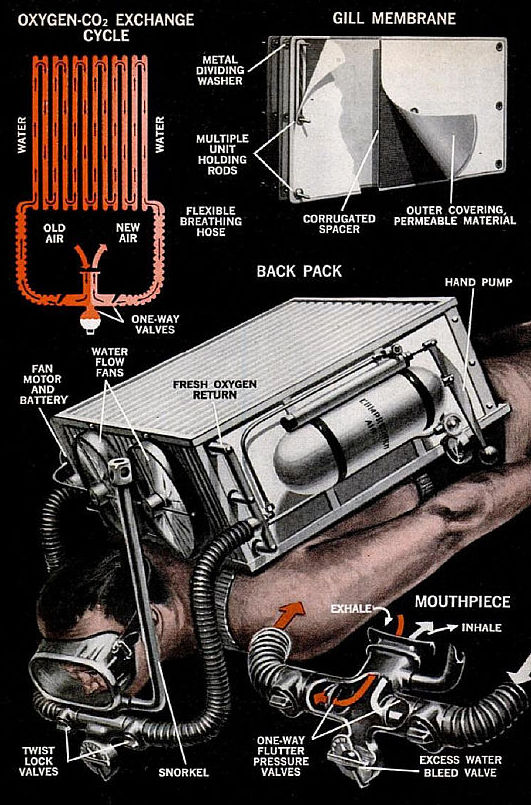
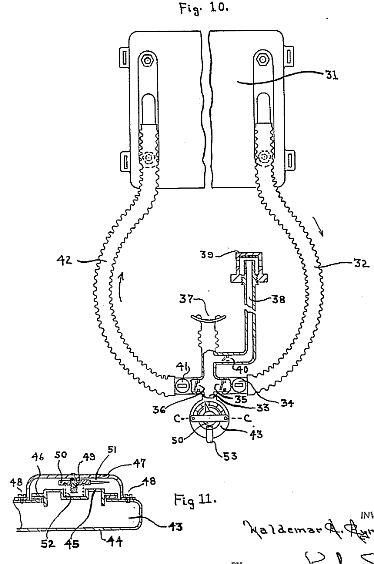
Provide a self-contained underwater breathing system that extracts dissolved oxygen from water and removes carbon dioxide from exhaled breath, eliminating the need for surface-supplied air tanks.
Problem
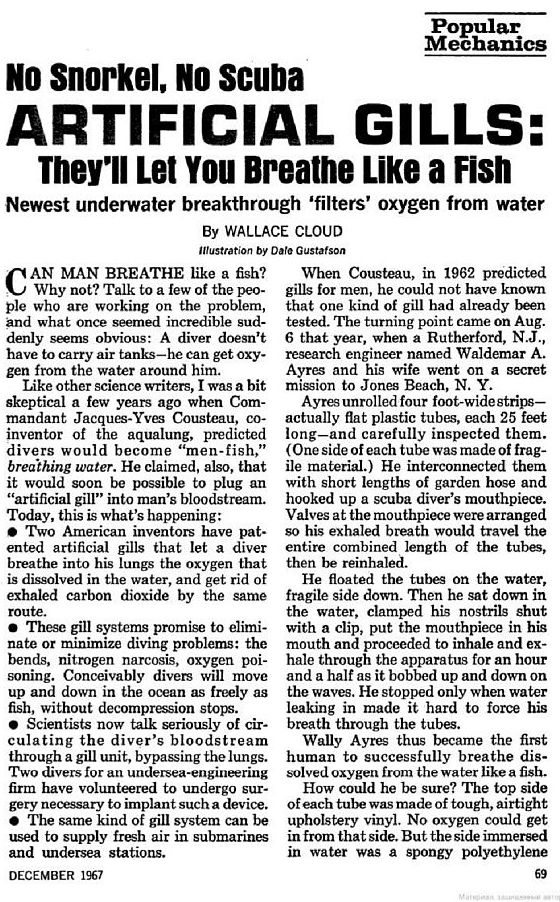
Current scuba and surface-supplied breathing equipment limit freedom of movement, require bulky air tanks, and depend on surface support; a system that uses ambient water oxygen would overcome these constraints.
Concept Summary
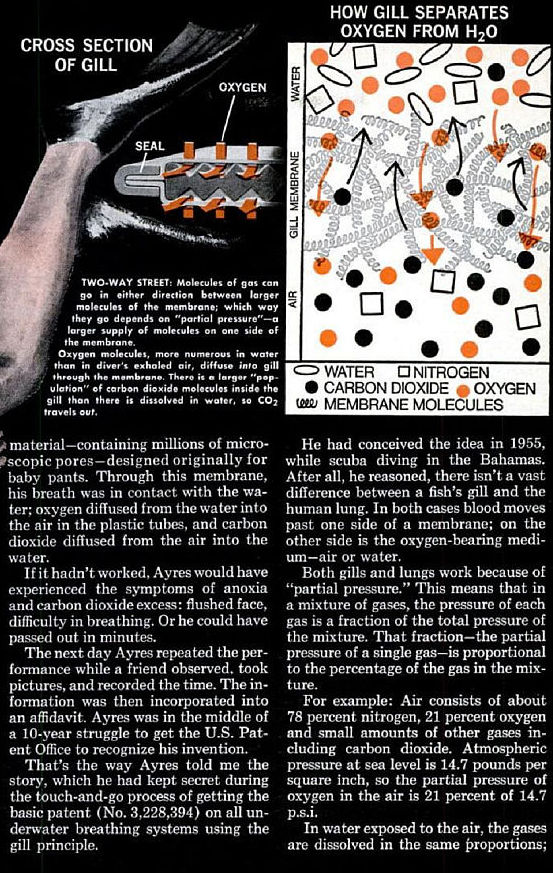
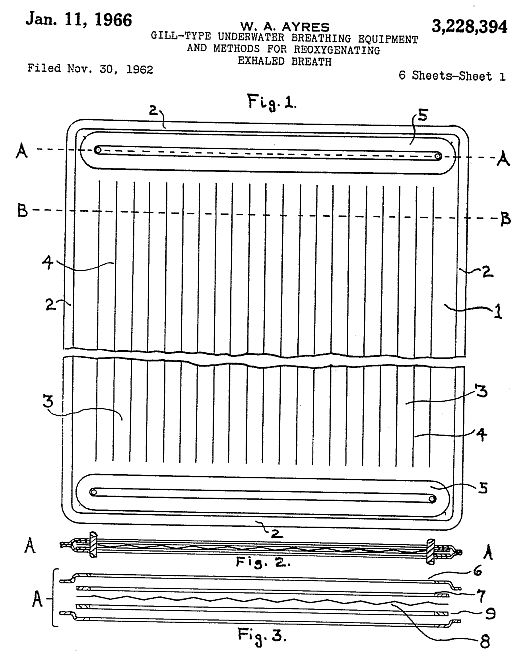
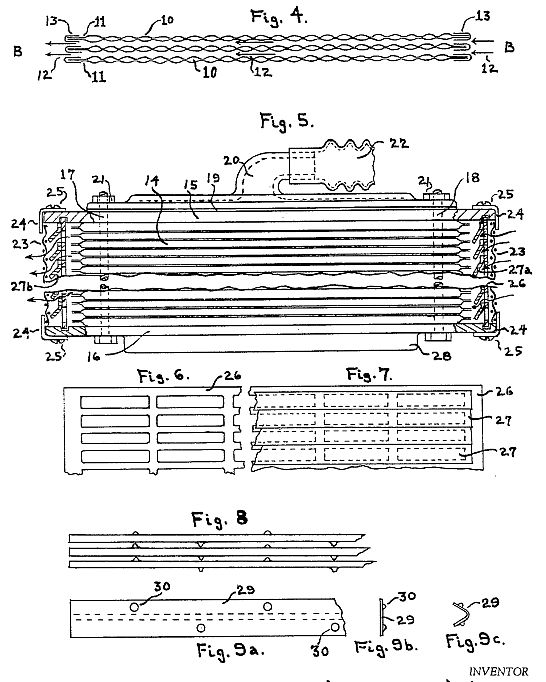
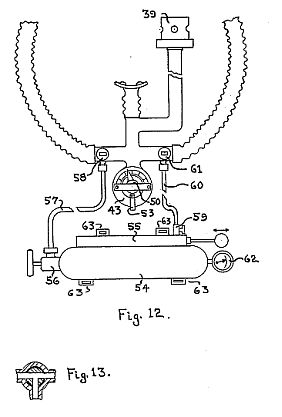
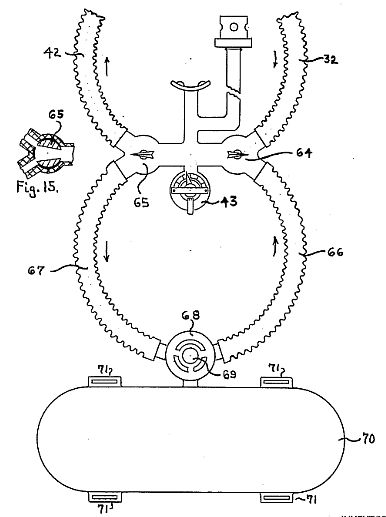
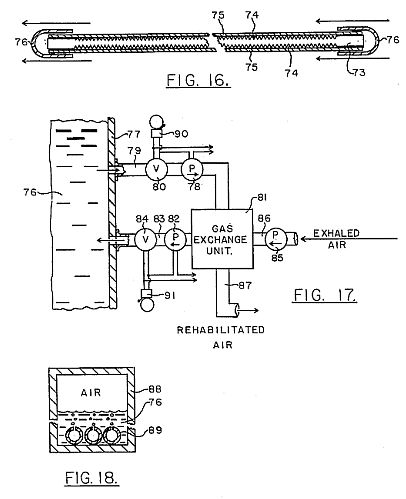
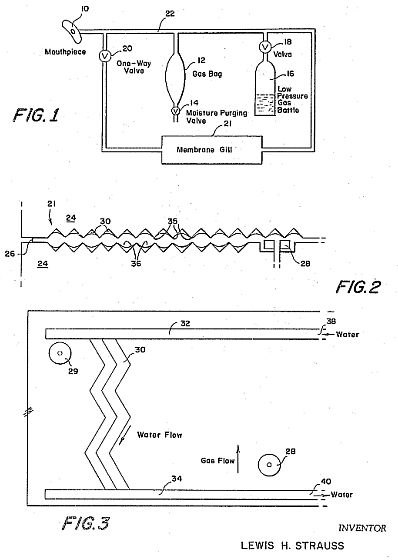
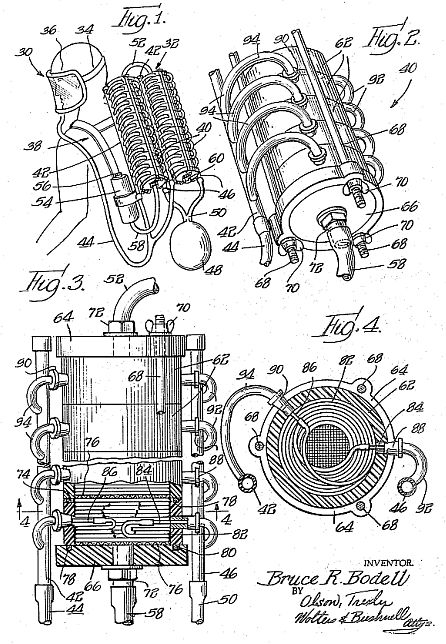
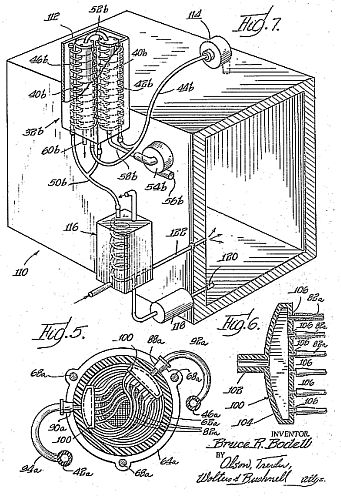
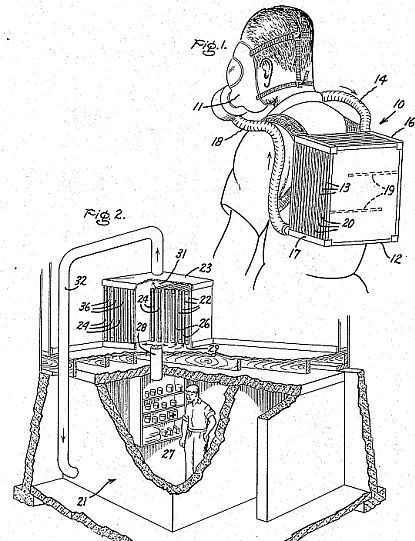
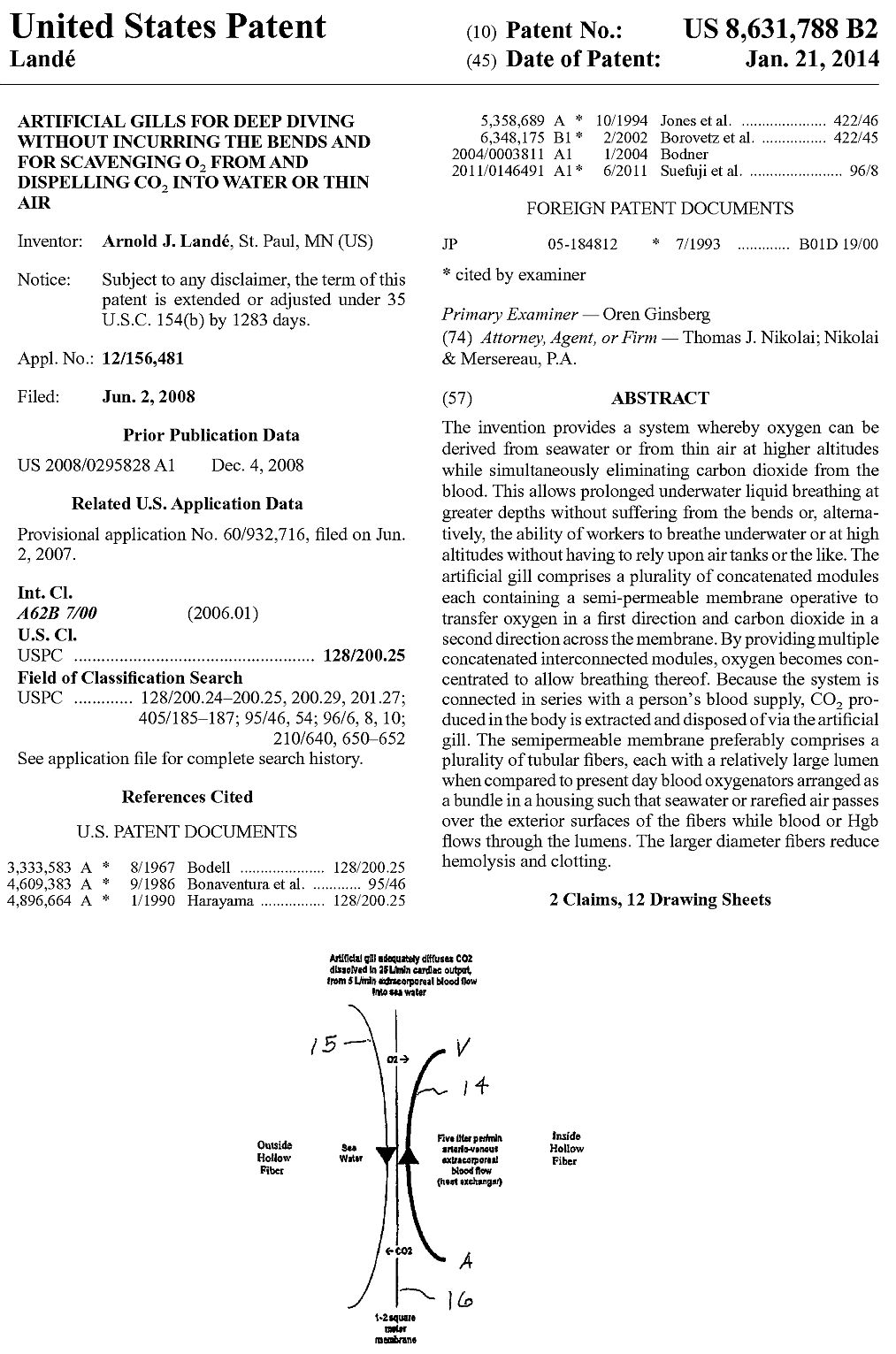
The invention uses a man-made gas-permeable membrane immersed in water to create a pressure gradient that drives dissolved oxygen into the breathing circuit while allowing carbon dioxide from the exhaled air to dissolve into the surrounding water, producing a closed-loop rebreathing system.
Principles
- Partial pressure diffusion of gases across permeable membranes
- Henry's law for gas solubility in water
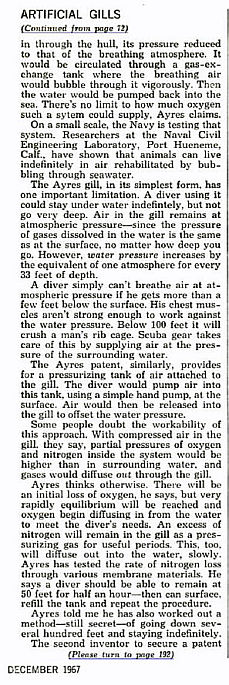
- Pressure equalization between breathing circuit and ambient water
Scientific Domains
Materials
- Gas-permeable polymer membrane
- Spacer elements
- Valve components
Mechanisms of Action
- Oxygen diffuses from water through a polymer membrane into the breathing loop
- Carbon dioxide diffuses from exhaled air through the same membrane into water
- Pressure gradients maintain net gas flow in desired directions
- Valve system can supplement fresh gas when water oxygen is insufficient
Applications
- Underwater diving
- Underwater construction and salvage
- Marine scientific research
Experimental Evidence
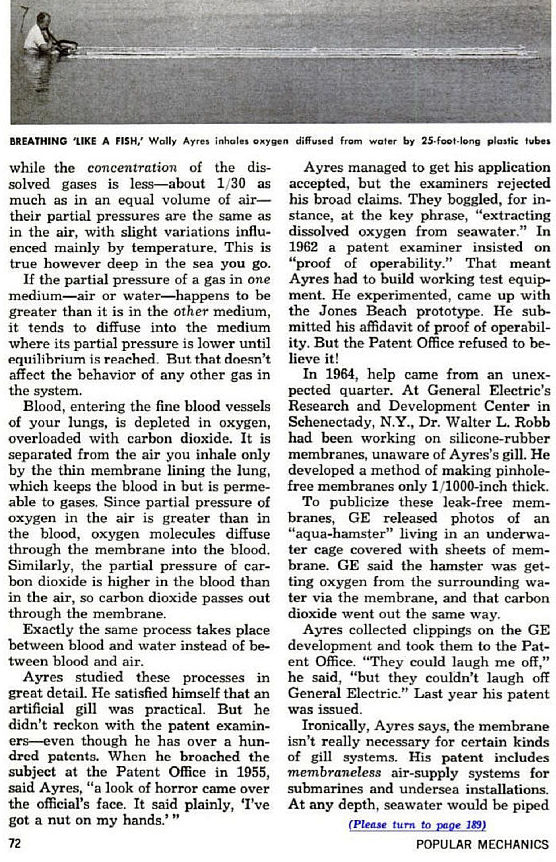
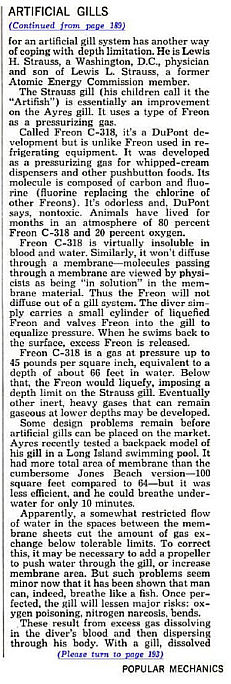
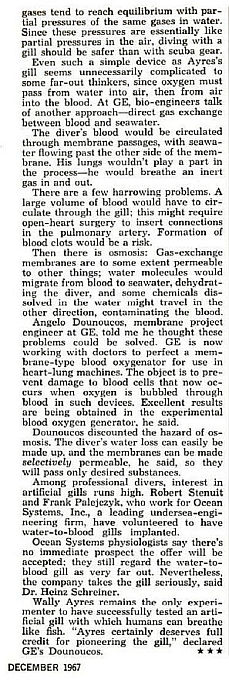
The inventor states that "successful tests, repeated for witnesses and for photographing, where I demonstrated test equipment I designed and built, whereby, for a substantial period of time, I exhaled into and inhaled from a closed breathing circuit where my exhaled breath and CO extracted from it and was dissolved in sea water, and where dissolved oxygen was extracted from the sea water and replenished my exhaled breath, and I rebreathed such rehabilitated air over and over again."
Limitations
- Performance depends on dissolved O_2 concentration in water
- Potential membrane fouling or damage
- Limited to depths where pressure equalization is feasible
Red Flags
- No quantitative performance data provided
- No independent verification or peer-reviewed studies cited
- Claims rely on anecdotal demonstration