Goal
Create a material that combines high strength and toughness with flexibility for use in artificial ligaments, tendons, and other load-bearing applications.
Problem
Conventional hydrogels are weak and brittle, while traditional high-strength fibers lack elasticity; a need exists for a biocompatible, water-rich material that is both tough and stretchable.
Concept Summary
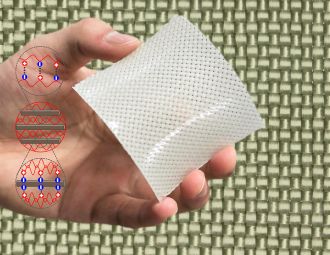
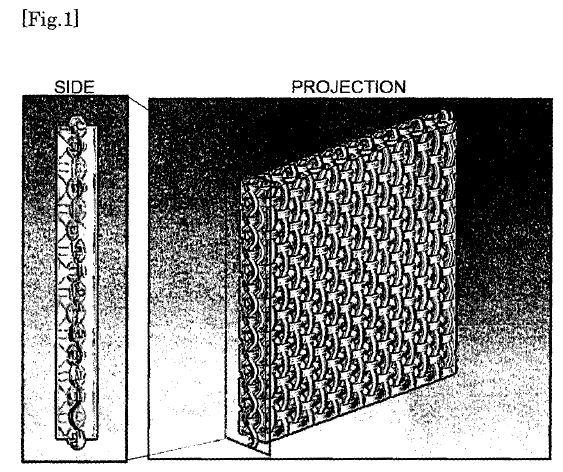
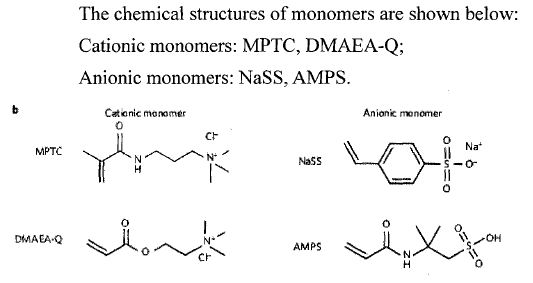
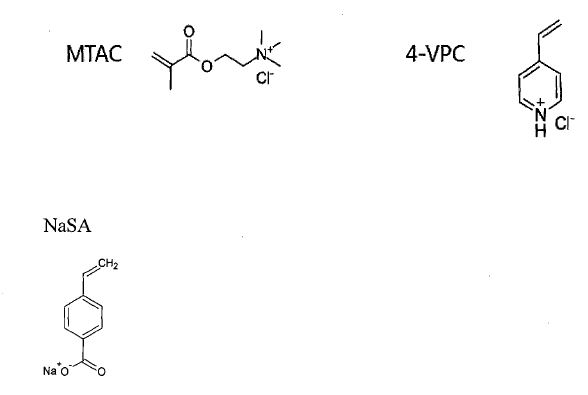
A composite is formed by immersing a woven glass-fiber fabric in a polyampholyte (PA) hydrogel precursor solution, then polymerizing to coat the fibers with a tough, ionic-bonded hydrogel matrix. The resulting fabric-hydrogel composite exhibits synergistic toughening, achieving tensile strength and energy-to-break values far exceeding those of the individual components.
Detailed Description
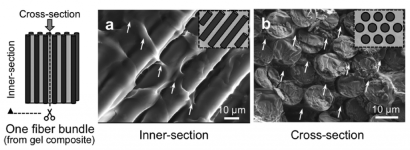
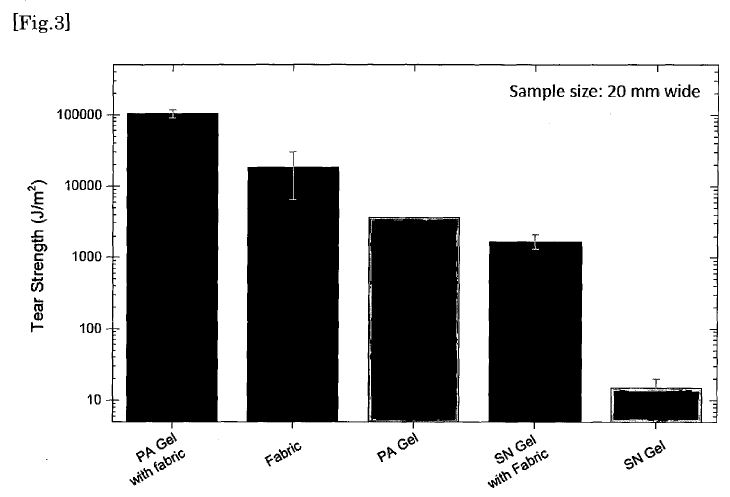
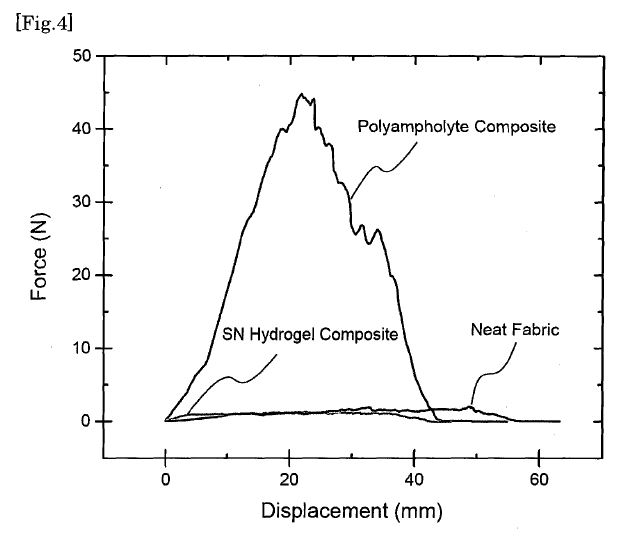
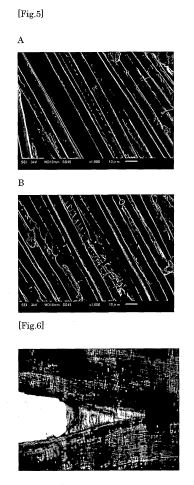
The fabrication process involves (a) preparing a monomer mixture for a polyampholyte hydrogel, (b) immersing a glass-fiber fabric (~=10 um fiber diameter) in the solution, and (c) initiating polymerization to form a hydrogel coating that fills interstitial spaces and creates dynamic ionic bonds with the fibers. Mechanical testing shows the composite is up to five times as strong as carbon steel (energy to break), 25x tougher than the bare glass-fiber fabric, and 100x tougher than the hydrogel alone. SEM images reveal the polymer matrix bridging neighboring fibers, while the ionic interactions dissipate energy during fracture, giving the material high toughness and flexibility.
Principles
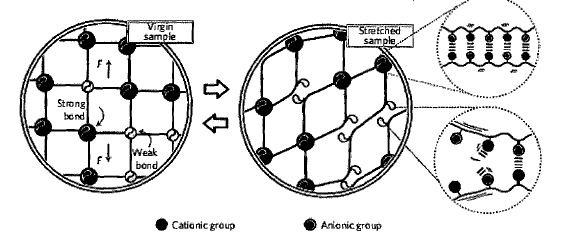
- Dynamic ionic bonding between polyampholyte hydrogel and glass fibers
- Energy dissipation in the soft hydrogel matrix
- Load transfer via polymer matrix filling interstitial spaces
- Synergistic toughening through fiber reinforcement
Scientific Domains
Materials
- Glass fiber fabric
- Polyampholyte hydrogel (PA gel)
- Water
Mechanisms of Action
- Dynamic ionic bonds increase interfacial adhesion and dissipate fracture energy
- Hydrogel matrix absorbs and distributes stress across fibers
- Fiber network provides high tensile load-bearing capacity
Applications
- Artificial ligaments and tendons
- Wearable fashion and high-strength textiles
- Tear-resistant gloves
- Bullet-proof vests
- Medical bandages and wound dressings
- Soft prosthetic devices
Claimed Performance
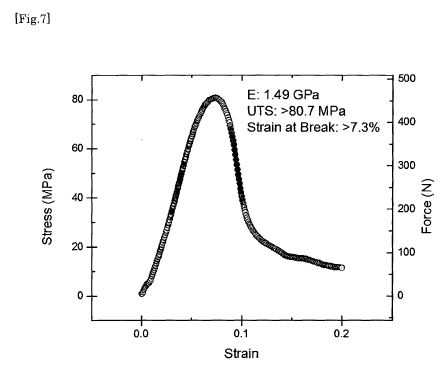
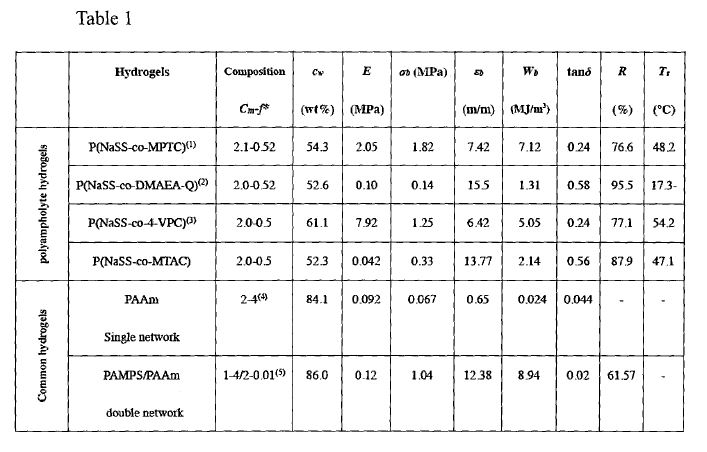
5 x stronger than carbon steel (energy to break), 25 x tougher than glass-fiber fabric, 100 x tougher than pure hydrogel; tensile modulus up to 606 MPa, toughness ~=250 000 J m^-^2.
Experimental Evidence
Mechanical testing reported in Advanced Functional Materials (Jan 2017) and Materials Horizons (2015) showed tensile modulus 606 MPa, toughness 250 000 J m^-^2, tear strength 1/465 N mm^-^1. SEM images confirm polymer matrix filling interstitial spaces and bonding fibers.
Replication Status
Demonstrated in laboratory by Hokkaido University researchers; no independent third-party replication reported.
Limitations
- Long-term stability of water-rich hydrogel in physiological conditions
- Scalability of immersion-polymerization manufacturing process
- Potential biodegradation or leaching of hydrogel components