Goal
Convert DC electrostatic fields from the atmosphere into usable electrical energy and generate propulsive force for levitation/flight.
Problem
Harvesting electrical power from atmospheric electrostatic potential without mechanical input and providing thrust without fuel.
Concept Summary
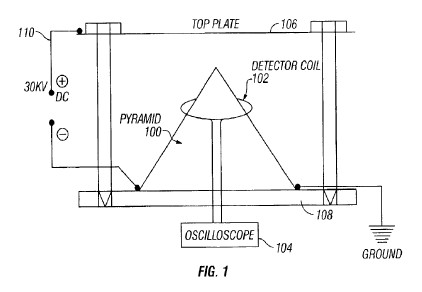
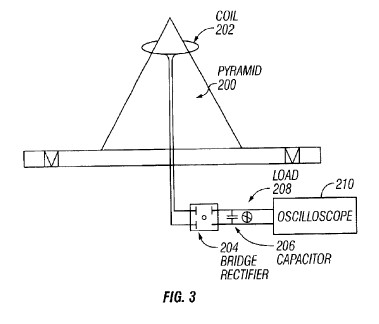
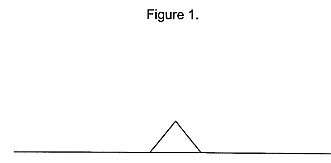
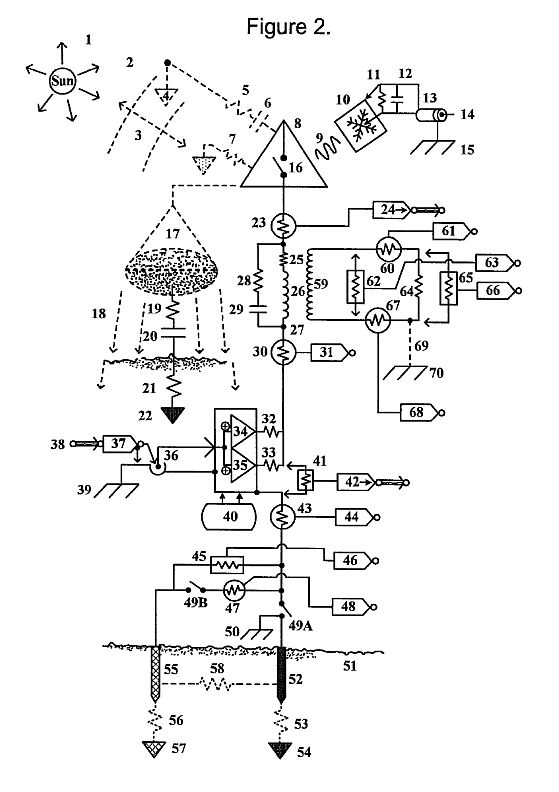
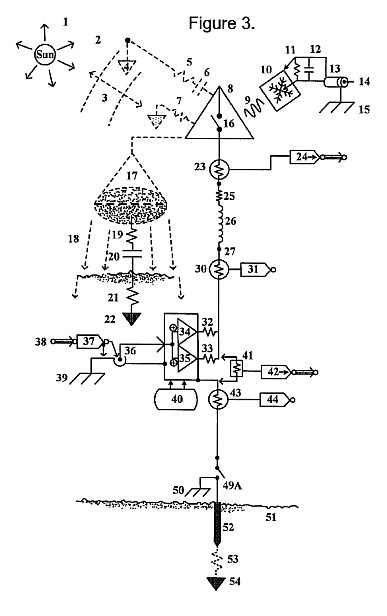
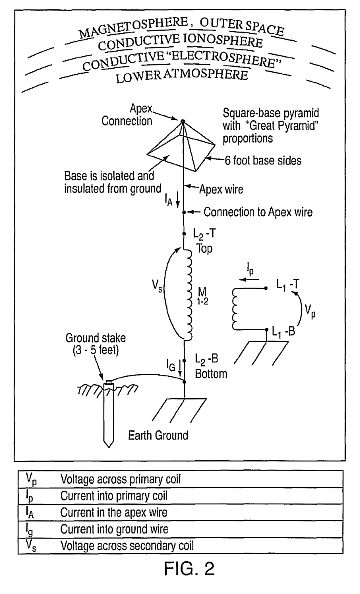
A pyramid-shaped capacitor is charged with a high-voltage DC field. An insulated coil wrapped around the pyramid picks up a regular alternating signal induced by the static field. The coil output is rectified and stored as DC electricity. In an inverse configuration, a conductive tip and auxiliary ball-shaped capacitors create a thrust force, enabling levitation.
Detailed Description
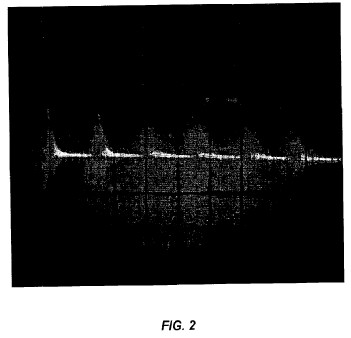
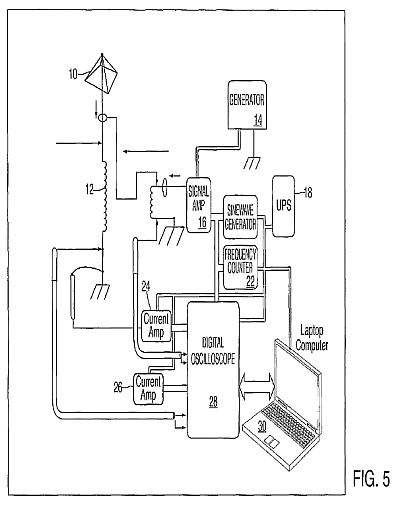
The invention uses a metallic pyramid electrode (~=100-150 m tall for 30 kV) with an insulated copper coil wrapped around its surface. A ground plate and a high-voltage DC source establish a static electric field between the Earth's surface and the ionosphere. When the field is present, the coil detects a regular clock-like AC signal, which is rectified with a diode bridge and stored in a capacitor or battery. Experiments showed higher rectified voltage for a pyramid electrode versus a box-shaped electrode, and the signal disappears when the pyramid is placed inside a Faraday cage. The same geometry, with a conductive tip and three retractable ball capacitors attached to the base, is claimed to produce a propulsive force by electrostatic repulsion. Measurements cited include atmospheric voltage gradients of 200-300 V/m, short-circuit currents of ~10 uA at 150-550 m altitude, and power on the order of 1 W in fair-weather conditions.
Principles
- Electrostatic induction
- Electromagnetic induction
- Rectification
- Capacitive coupling
- Electrostatic thrust
Scientific Domains
Materials
- Conductive metal (e.g., aluminum or copper) for pyramid electrode
- Insulated copper wire for coil
- Dielectric insulator (plastic/epoxy) for coil coating
- Silicon or germanium diodes for rectifier
- Electrolytic or film capacitors
- Battery (optional storage)
Mechanisms of Action
- Static electric field induces AC in coil
- Diode bridge rectifies AC to DC
- Charge redistribution between pyramid and auxiliary capacitors creates thrust
- Capacitive voltage difference between Earth surface and ionosphere drives current
Energy Sources
Applications
- Remote power generation
- Levitation and thrust vehicles
- Low-power sensor networks
Claimed Performance
The pyramid electrode produces a measurable AC signal that can be rectified to DC; voltage buildup is higher than with a box-shaped electrode. The device can generate thrust sufficient for levitation of a vehicle. Atmospheric electric fields could, in principle, supply power on the order of watts to kilowatts.
Experimental Evidence
A regular clock-like signal was observed on an oscilloscope when a 30 kV DC field was applied; the signal vanished inside a Faraday cage. Rectified voltage increased over 1 hour when the coil was connected to a storage capacitor. Published atmospheric measurements show 10 uA short-circuit currents at 150-550 m altitude, corresponding to ~1 W of power.
Limitations
- Requires very large structure (~=100 m) to achieve sufficient voltage
- Low power density (~=1 W) under fair-weather conditions
- Dependence on atmospheric electric field strength and weather
- High voltage safety concerns
- No independent verification or peer-reviewed data
Red Flags
- Extraordinary claim of free energy from ambient electrostatic field
- Lack of peer-reviewed experimental data
- No independent replication reported
- Potential misunderstanding of atmospheric electric field magnitude