Goal
Efficiently heat, evaporate, and mix fluids by converting mechanical energy into heat through controlled cavitation and shock-wave generation.
Problem
High energy consumption, scale buildup, and limited capacity in conventional fluid-heating, evaporation, and mixing processes.
Concept Summary
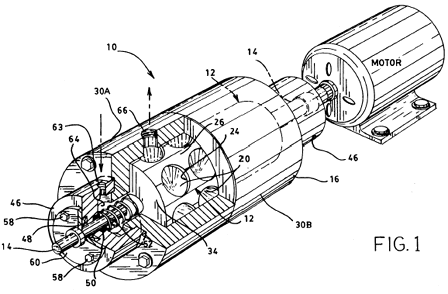
A rotating cylindrical rotor with surface irregularities creates pressure differentials that form and collapse microscopic bubbles (cavitation). The collapsing bubbles generate shock waves that directly heat the fluid and increase mass-transfer rates for mixing, eliminating the need for external heat-transfer surfaces and reducing scale formation.
Detailed Description
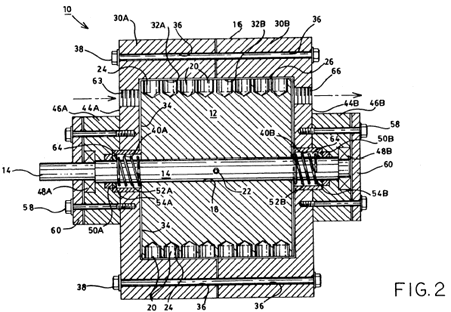
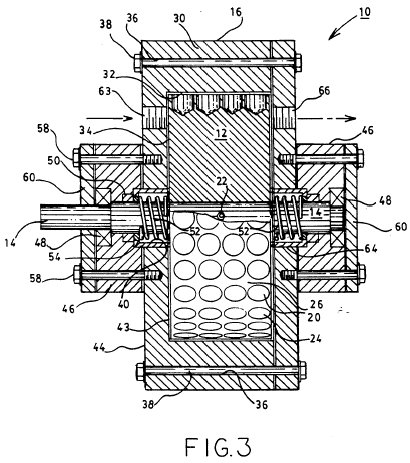
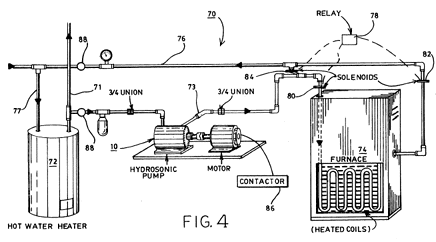
The ShockWave Power (SP) generator draws fluid into a housing where it passes over a high-speed spinning cylinder. The geometry of holes in the cylinder and the clearance to the housing produce pressure zones that cause tiny bubbles to form and implode. These implosions emit shock waves that convert the rotor's mechanical energy into thermal energy, heating the fluid in-situ and enhancing gas-liquid mixing. The device contains no conventional heat-transfer surfaces, so metal parts stay cooler than the fluid, preventing scale. An ultrasonic cleaning effect also occurs on metal surfaces. The system can be powered by an electric motor and is claimed to achieve heat output exceeding the electrical input by 30-70 % in laboratory demonstrations.
Principles
- Cavitation
- Shock-wave generation
- Mechanical-to-thermal energy conversion
- Sonoluminescence (theoretical)
- Enhanced mass transfer
Scientific Domains
Materials
- steel
- aluminum
Mechanisms of Action
- Bubble formation and collapse
- Shock-wave propagation in liquid
- Direct heating of fluid by shock-wave energy
- Increased interfacial area for mixing
Energy Sources
Applications
- industrial heating
- steam generation
- evaporation processes
- large-scale fluid mixing
- HVAC hot-water supply
Claimed Performance
Over-unity heat generation of 30 % (117 % efficiency) in a 20-minute test; later tests reported power coefficients of 157 %-168 %; commercial installations report ~30 % reduction in electricity bills.
Experimental Evidence
Jed Rothwell's 1994 test: 4.80 kWh electricity input produced 19,050 BTU (5.58 kWh) heat output (117 % efficiency). Subsequent tests showed 157 % and 168 % power coefficients. Year-long field use in Atlanta public buildings showed a 30 % drop in utility bills.
Replication Status
Limited independent verification; demonstrations by Rothwell and installations in several public facilities, but no peer-reviewed studies.
Limitations
- Reliance on precise rotor geometry and clearance
- Limited independent validation of over-unity claims
- Potential wear of rotating components
- Scalability to very large industrial plants not demonstrated
Red Flags
- Over-unity claims without peer-reviewed evidence
- Potential for fraud or misinterpretation of energy measurements
- Lack of transparent, reproducible testing protocols