Goal
Capture atmospheric electric currents and convert them into usable electrical power for lighting, heating, and industrial use.
Problem
The need for a renewable, on-site source of electrical energy without relying on conventional fuel or grid infrastructure.
Concept Summary
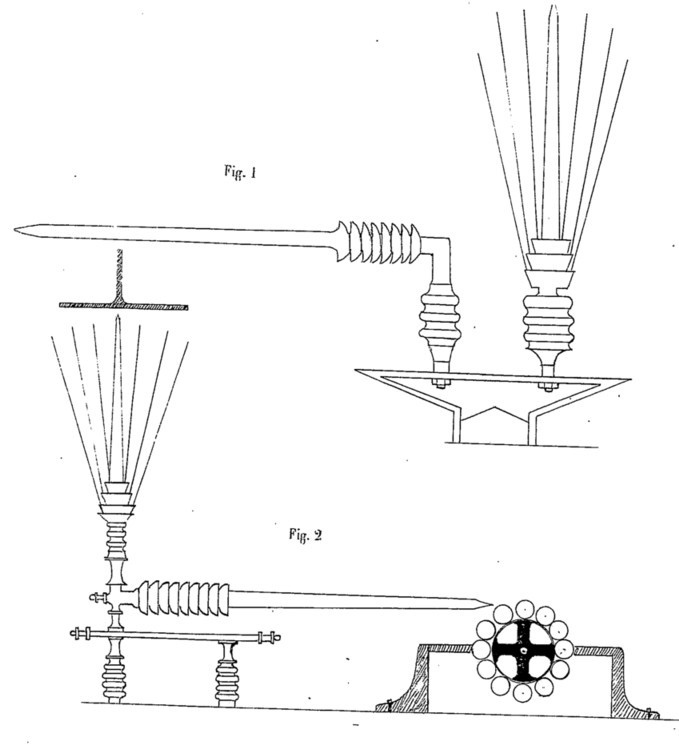
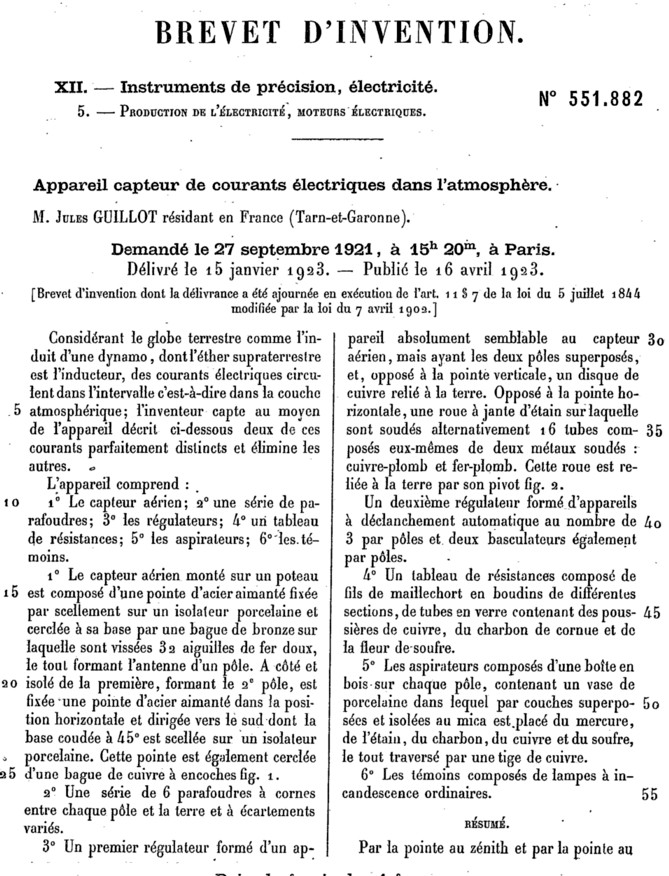
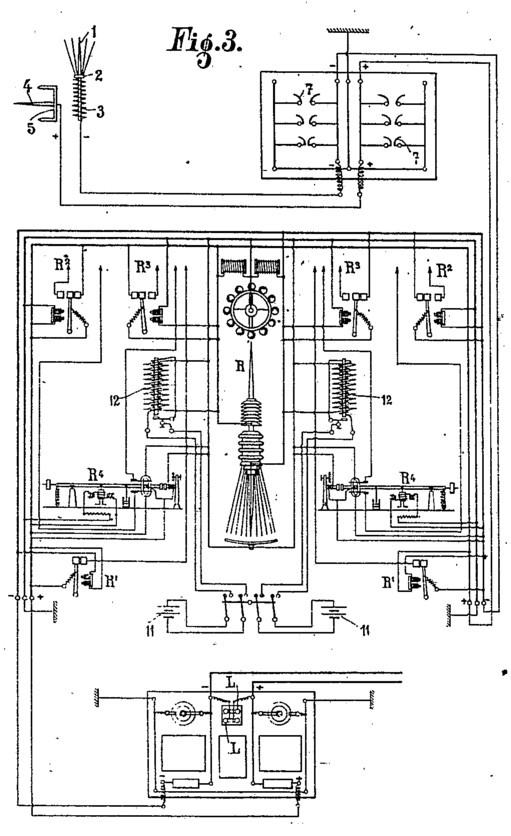
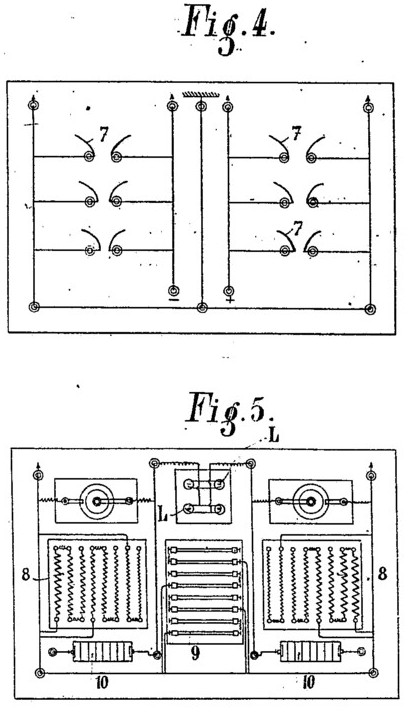
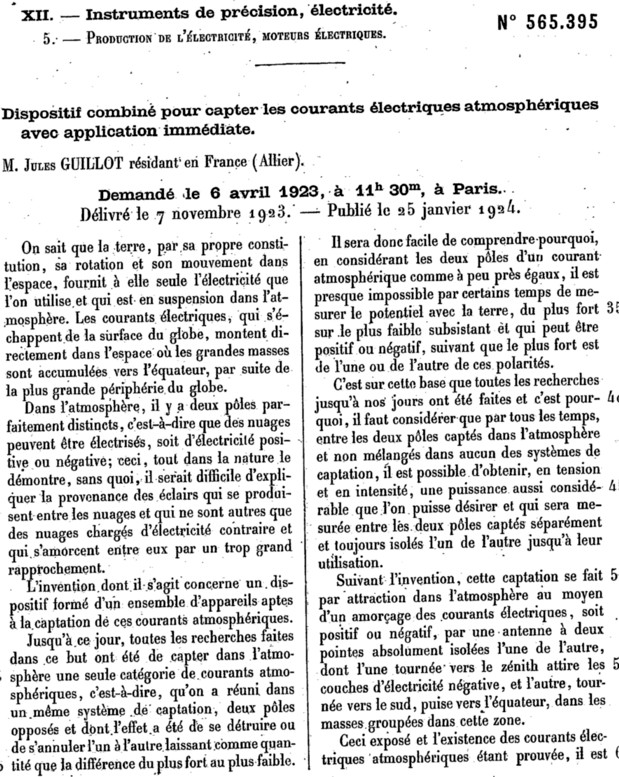
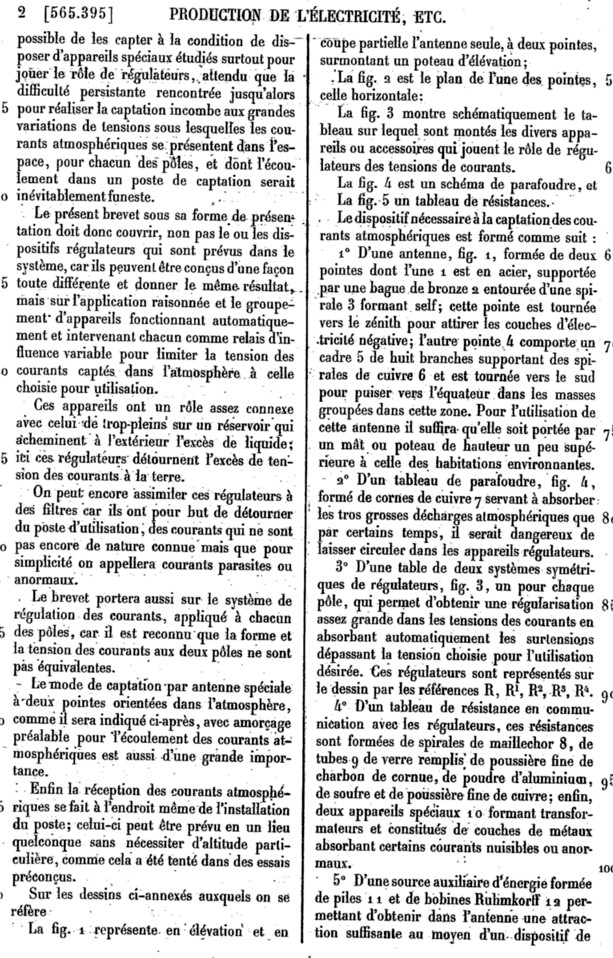
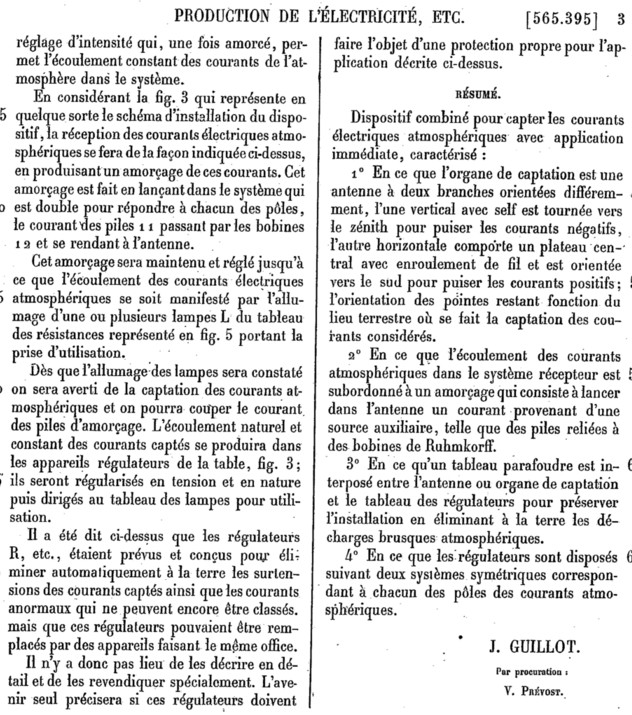
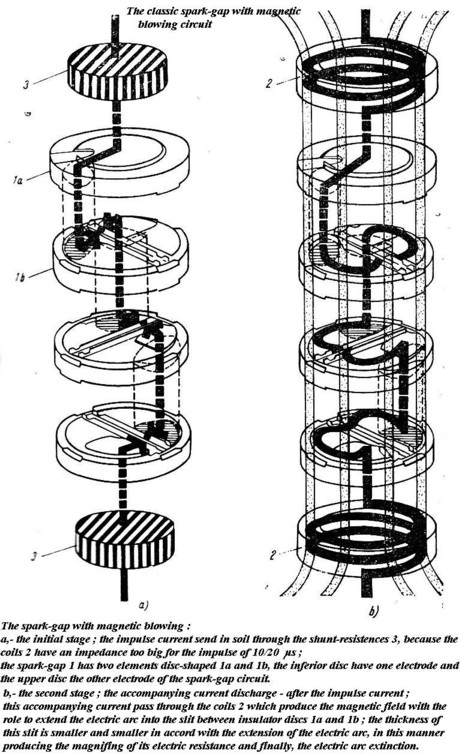
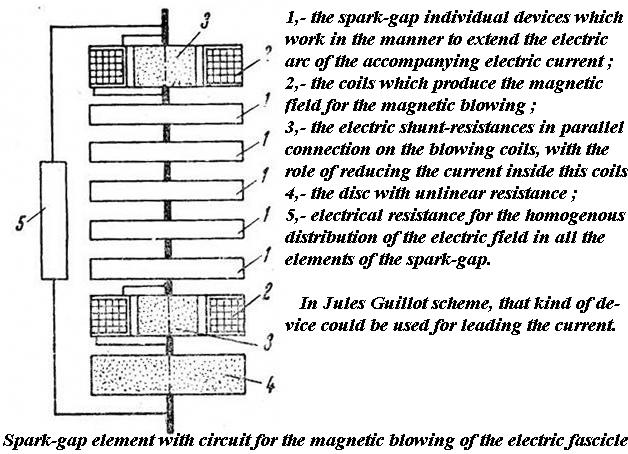
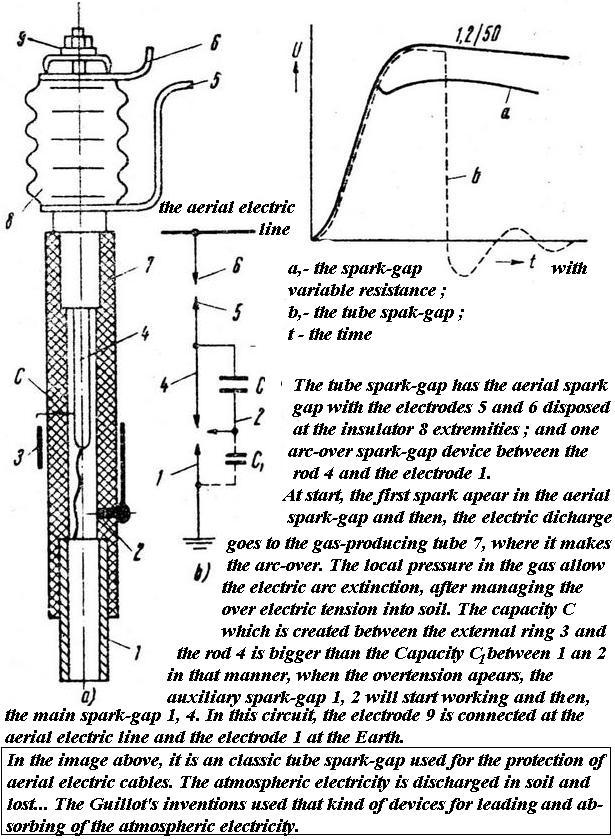
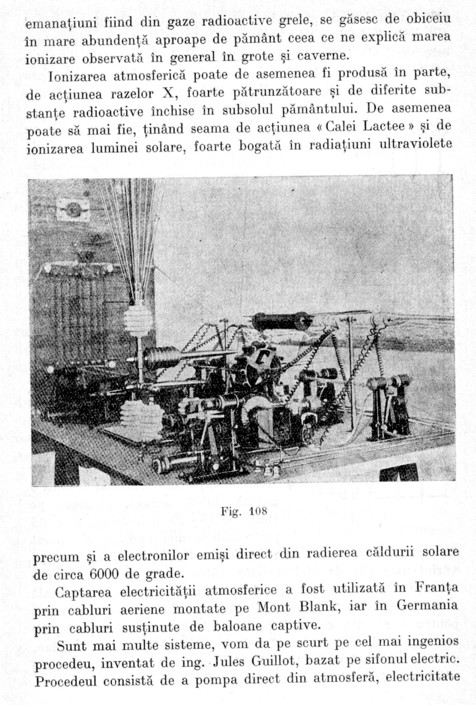
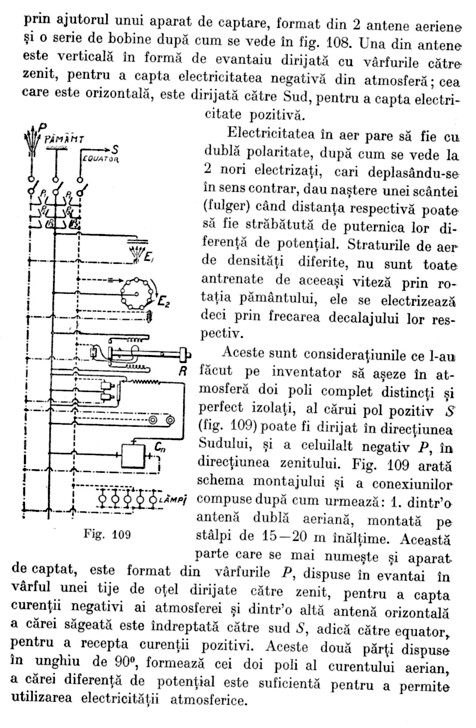
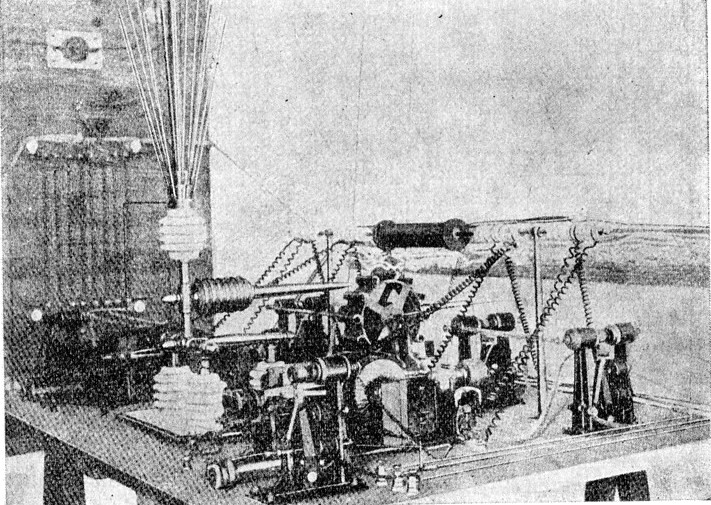
The Guillot system uses a tall vertical antenna with fan-like rods to collect negative atmospheric charge and a horizontal antenna oriented southward to collect positive charge. The two separated armatures feed into voltage regulators, resistors, and "electric siphons" that create a magnetic field to transport the ionized fluid. Lightning-rod protection, surge arrestors, and auxiliary power supplies are incorporated. The collected charge is then delivered to conventional copper wiring for practical loads.
Principles
- Electrostatic collection of atmospheric ions
- Voltage induction with altitude
- Magnetic field assistance via electric siphons
- Regulation of high-voltage currents
Scientific Domains
Materials
- magnetic steel
- porcelain insulator
- bronze ring
- soft iron
- copper
- tin
- copper-lead alloy
- iron-lead alloy
- glass tubes
- copper dust
- coal
- sulfur
- mercury
- wood
- mica
Mechanisms of Action
- Vertical antenna gathers negative ions from the zenith
- Horizontal antenna gathers positive ions from the south/equator direction
- Electric siphons create a magnetic conduit for ion transport
- Resistive and regulatory circuits limit and condition the harvested current
Energy Sources
Applications
- Remote power generation
- Off-grid lighting and heating
- Industrial motor drive
Claimed Performance
~=2.5-3 kW with a 20 m high collector (~=3 m^2 surface); ~=300 W with a 2 m tall collector.
Experimental Evidence
The article states that the Guillot device generated about 2.5-3 kW with a 20 m antenna and about 300 W with a 2 m collector, but provides no independent measurements or peer-reviewed data.
Limitations
- Power output depends heavily on weather, altitude, and ion density
- Tall structures (~=20 m) are required for higher power
- No documented long-term durability or safety testing
- Potential lightning strike hazards despite protection
Red Flags
- Lack of independent, peer-reviewed experimental data
- Reliance on historical patents without modern validation
- Potential overestimation of available atmospheric current density