Goal
To provide a simple, low-cost visual stimulus that entrains brain alpha waves and induces a hypnagogic, meditative state.
Problem
Lack of accessible, non-pharmacological methods for inducing relaxation, altered consciousness, or therapeutic visual stimulation.
Concept Summary
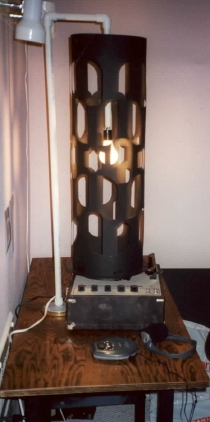
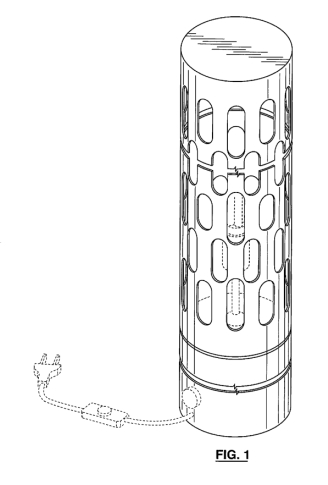
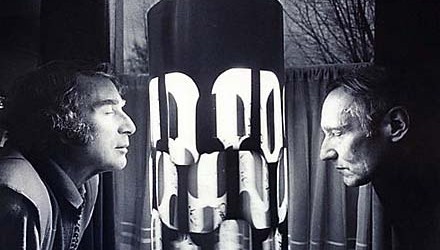
The Dreamachine is a stroboscopic flicker device built from a slit-patterned cylinder mounted on a motor-driven turntable. A light bulb inside the cylinder emits pulses of light that pass through the slits at a frequency of roughly 8-13 Hz (or ~20 Hz at 78 RPM), which matches the brain's alpha-wave range. Users view the flickering light with their eyes closed, producing vivid visual phenomena and a relaxed mental state.
Detailed Description
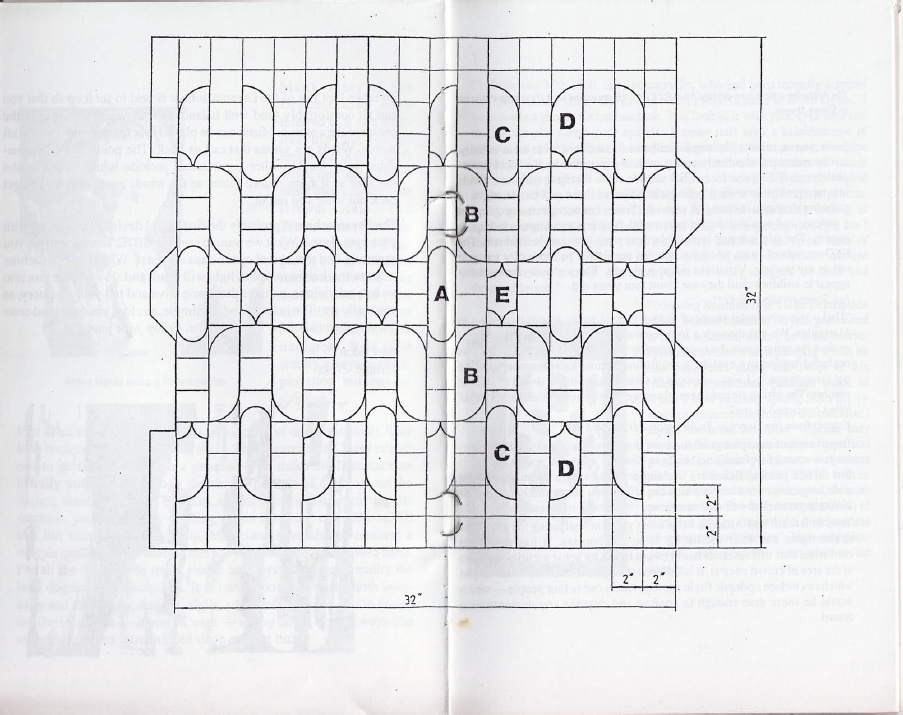
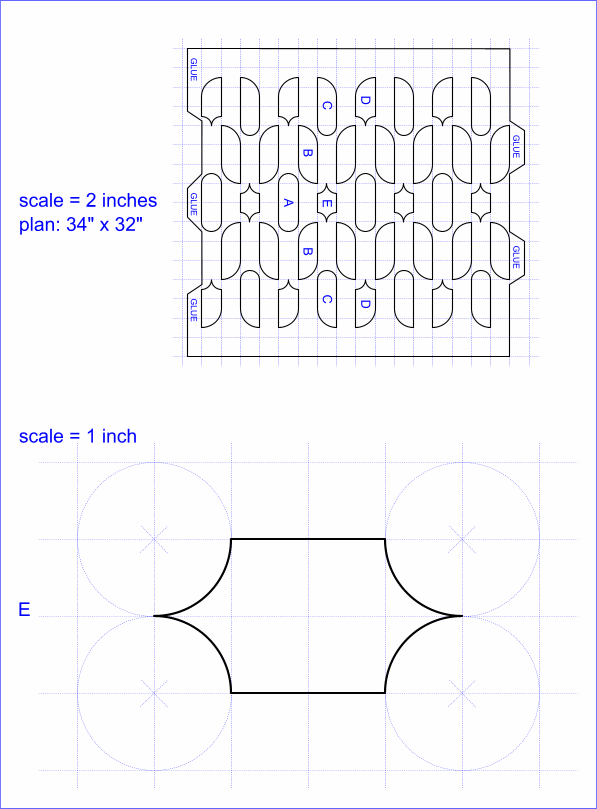
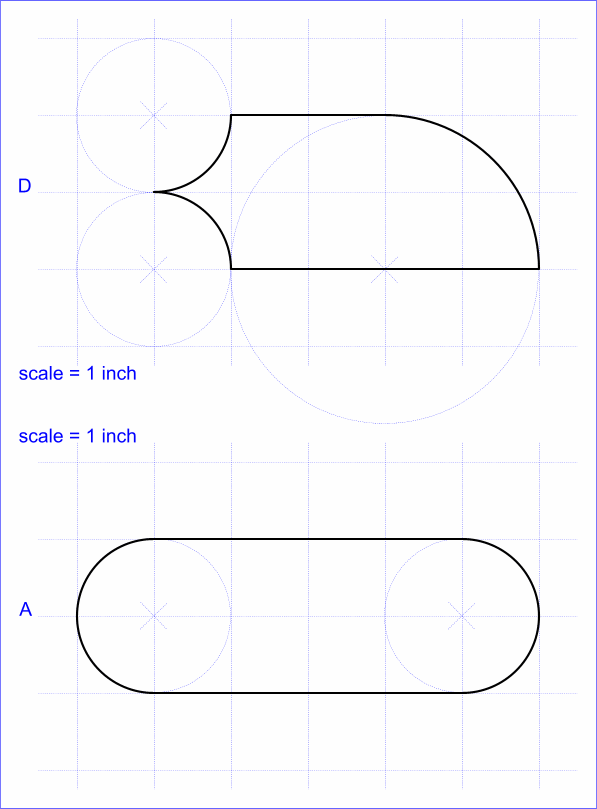
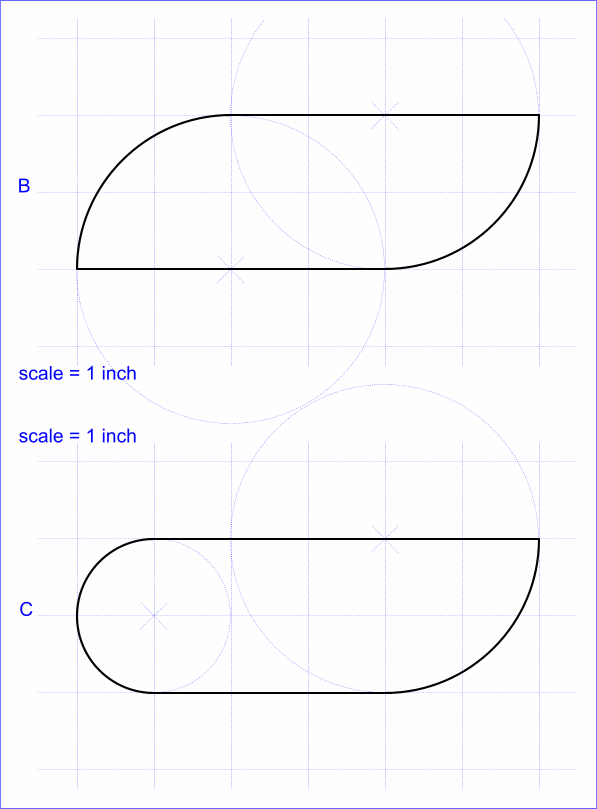
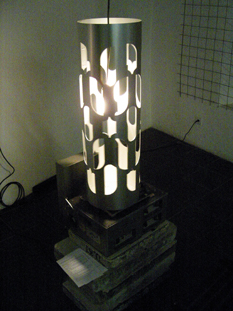
A sheet of heavy paper or cardboard is cut into a cylindrical light-shade with a series of precisely spaced slits. The cylinder is glued into a tube, placed on a record-player turntable (78 RPM or 45 RPM) and a bare incandescent bulb (15-50 W) is suspended near the centre of the tube. As the turntable rotates, the light shines through the slits, creating a flickering stimulus on the closed eyelids. The flicker frequency is determined by the rotation speed and slit spacing (~=20 Hz at 78 RPM, ~=21 Hz at 45 RPM with modified pattern). Users sit close to the tube, dim ambient lighting, close their eyes, and experience evolving color patterns, kaleidoscopic shapes, and a sense of altered perception. The device is inexpensive, DIY-friendly, and has been reproduced in exhibitions, online plans, and modern LED-based versions.
Principles
- Stroboscopic flicker
- Alpha-wave entrainment
- Visual stimulation of the optic nerve
Scientific Domains
Materials
- Heavy paper or cardboard
- Glue
- Incandescent light bulb (15-50 W)
- Record-player turntable (78 RPM or 45 RPM)
- Electrical cord
Mechanisms of Action
- Pulsating light through closed eyelids stimulates the optic nerve
- Temporal frequency of the flicker matches endogenous alpha-wave oscillations
- Entrainment of cortical activity leads to hypnagogic visual phenomena
Energy Sources
Applications
- Therapeutic relaxation
- Meditation aid
- Art installations
- Experimental visual perception studies
Claimed Performance
Flicker frequency of 8-13 Hz (or 20-21 Hz at 78/45 RPM) corresponding to alpha brain waves; users report vivid color visions, relaxation, and hypnagogic states.
Experimental Evidence
Anecdotal reports from Gysin, Sommerville, and later users; a cited seizure risk of 1 in 10 000 adults and ~2 in 10 000 children; no peer-reviewed quantitative studies presented.
Replication Status
Multiple DIY builds, exhibitions, and modern LED versions have been documented; plans and instructions are publicly available.
Limitations
- Not safe for individuals with photosensitive epilepsy
- Effects are subjective and not scientifically quantified
- Requires a turntable or motorized rotation platform
Red Flags
- Claims based primarily on anecdotal evidence
- Potential seizure risk for photosensitive users